
The “collapse” series, launched at the close of Tammuz (late July 2025), began with questions and with cisterns that, God complains, “can hold no water.” In the ensuing weeks, we’ve marked institutional destruction with the mourning and introspection of Av and Elul; we’ve focused on relationship repair and building of shaky new structures through Tishrei’s Days of Awe and Sukkot; and we closed out one Torah reading cycle at Simchat Torah, leading once again into exile, murder, communal violence, catastrophic flood, family conflict, and social scattering.
Now, 14 weeks on, as the Torah portion calls “Lekh Lekha [Go for, or to, yourself!]” (Gen 12:1), this series on repentance in a time of collapse comes to its close. I originally imagined the series as leading toward the high holidays, but the new year came with so many uncertainties… and so I held off, waiting for a logical end point. This closing came for me, sadly, when Tzedek Chicago, where I had been an active member for some years, used my “Al Chet for Institutions” at Yom Kippur services without any plans for organizational teshuvah. (For anyone interested, I formally resigned on October 27 and posted a further update on October 31 after the congregation separated with the second of its foundational co-cantorial soloists.)
Lekh Lekha: Go where?
At the beginning of Elul, Jeremiah’s haftarah questions invited us into a wake-up call and conversation for the season of repentance. The haftarah for Lekh Lekha, Isaiah 40:27-41:16, also begins with a question:
לָמָּה תֹאמַר יַעֲקֹב וּתְדַבֵּר יִשְׂרָאֵל נִסְתְּרָה דַרְכִּי מֵיְהֹוָה וּמֵאֱלֹהַי מִשְׁפָּטִי יַעֲבוֹר׃
Why do you say, O Jacob,
Why declare, O Israel,
“My way is hid from GOD,
My cause is ignored by my God”? — Isaiah 40:27
Jewish Publication Society commentary notes how this differs from “the theological motif that God deliberately hides [the divine’s] face from [God’s] creatures as an expression of anger or rejection (cf. Deut 31:18; Ps. 44:25)” and identifies the question as a “quote from a communal lament, bemoaning a lack of knowledge” (The JPS Bible Commentary: Haftarot, 2002. Michael Fishbane, citing Claus Westermann, 1969).
The Torah portion itself asks: “Whence do you come [אֵי־מִזֶּה בָאת]? and where do you go?” [וְאָנָה תֵלֵכִי] (a messenger of YHVH of God to Hagar, Gen 16:8).
Both questions seem fitting for this point in our collapse travels.
In addition, the haftarah offers a kind of bookend for the cistern images which began this series. Back then, God chastised the people for having abandoned “Me, the fountain of living waters, and hewed them out cisterns, broken cisterns, That can hold no water” (Jer 2:13). Now, the people are addressed as “Seed of Abraham my friend” or “…who loved me” [זֶרַע אַבְרָהָם אֹהֲבִי] (Isa 41:8).
We’ve spent weeks considering forms of collapse around us and cisterns that no longer seem to hold water. Now we are reminded that, whatever may be broken around us, the seed of relationship with the divine is still available.
This is the tenth in the series, “Calendar Notes for a Summer of Collapse“
NOTE
UPDATE October 31, 2025: Over the past four months, Tzedek Chicago has separated the congregation from both long-time co-cantorial soloists: in one case, using the vague “intractable differences” explanation often employed in quashing union/labor disputes; in another case, using specific language about misuse of power which seems directly contradicted by structures of the organization. While I do not deny any individual’s experience of harm, I have witnessed enough problematic uses of power within the organization by those making the public declarations to be wary of how these actions have been taken and announcements made. At this point, although I am deeply grateful for individual relationships I have made over the years and cannot rewrite history to remove my contributions to the congregation, I must re-evaluate any association with the congregation as an entity.
More at “Stepping Away“

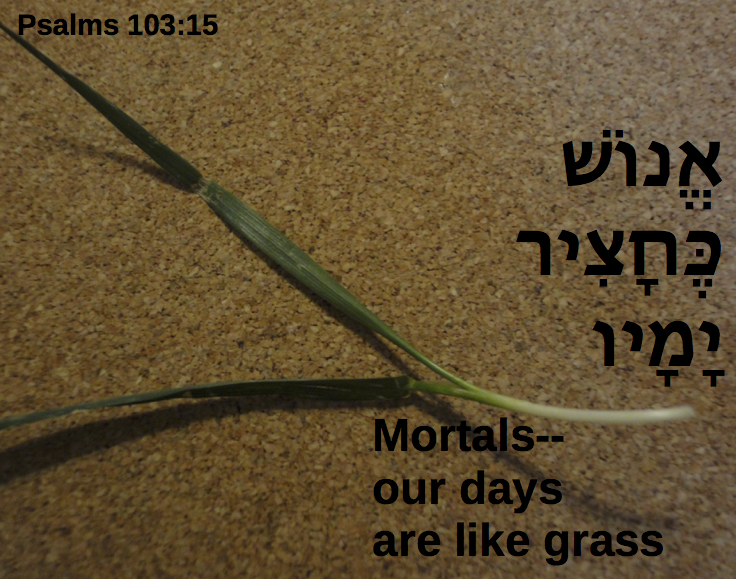 Meanwhile, though – in the way each yahrzeit seems to bring its own new facet of blessing – this year I recall another aspect of that lens. I remember Dad teaching me to notice how the strongest blades of grass, when pulled gently from the ground, would yield a hidden, moist taste treat. He helped me recognize that the greenish-white part of a watermelon, the stuff closest to the rind – that so many people toss away – is often the sweetest. And together, on many a horridly hot summer day, we witnessed how sitting absolutely still could call up a breeze more cooling than anything produced by a fan, electric or paper.
 "A Song Every Day"