Some thoughts and resources for exploring the Torah portion, Kedoshim (Leviticus 19:1-20:27; occasionally spelled “K’doshim” or starting with “Q”). This is part of a series of weekly “gathering sources” posts, collecting previous material on the weekly Torah portion, most originally part of a 2010 series called “Opening the Book.”
Due to differences in holiday observances, Torah reading schedules begin to diverge in some congregations with the holiday of Passover. Kedoshim is next read on May 4, beginning with minchah on April 27, in Israel and Reform calendars; it is next read in orthodox, Conservative, and many other congregations on May 11, beginning with minchah on May 4.
Some thoughts and resources for exploring the Torah portion, Acharei Mot (Leviticus 16:1-18:30; also sometimes: Aharei Mot or Aharei Mos). This is part of a series of weekly “gathering sources” posts, collecting previous material on the weekly Torah portion, most originally part of a 2010 series called “Opening the Book.”
Due to differences in holiday observances, Torah reading schedules begin to diverge between Movements with the holiday of Passover. Acharei Mot is next read on April 27, beginning with minchah on April 20, in Israel and Reform calendars; it is next read in orthodox, Conservative, and many other congregations on May 4, beginning with minchah on April 27.
Some thoughts and resources for exploring the Torah portion, “Metzora,” Leviticus 14:1-15:33. Also spelled: M’tzora or M’tsora, sometimes Metsora or Mezora. This is part of a series of weekly “gathering sources” posts, collecting previous material on the weekly Torah portion, most originally part of a 2010 series called “Opening the Book.”
Metzora is next read beginning at minchah on Shabbat 4/6/19 (Shabbat Tazria). NOTE: Although most there are usually four posts for a portion, this series was written in a year when Tazria and Metzora were read together as a double portion, so there are only two posts on Metzor (and two on Tazria).
Something to Notice — How “natural” or ordinary was menstruation in the ancient world?
Great Source — L. Hoffman on original, gender neutral purity rules
Pool of a medieval mikveh in Speyer, dating back to 1128 (Chris 73, Wikicommons)
Some thoughts and resources for exploring the Torah portion, “Tazria,” Leviticus 12:1-13:59. (Not many alternative spellings — occasionally: Thazria.) This is part of a series of weekly “gathering sources” posts, collecting previous material on the weekly Torah portion, most originally part of a 2010 series called “Opening the Book.”
Tazria is next read beginning at minchah on Shabbat 3/30/19 (Shabbat Shemini). NOTE: Although most there are usually four posts for a portion, this series was written in a year when Tazria and Metzora were read together as a double portion, so there are only two posts on Tazria (and two on Metzora).
Some thoughts and resources for exploring the Torah portion, “Shemini,” Leviticus 9:1-11:47. (Sometimes spelled “Sh’mini” or “Shmini.”) This is part of a series of weekly “gathering sources” posts, collecting previous material on the weekly Torah portion, most originally part of a 2010 series called “Opening the Book.”
Shemini is next read beginning at minchah on Shabbat 3/23/19 (Shabbat Tzav).
What does change taste like? [this page updated on 3/18/21]
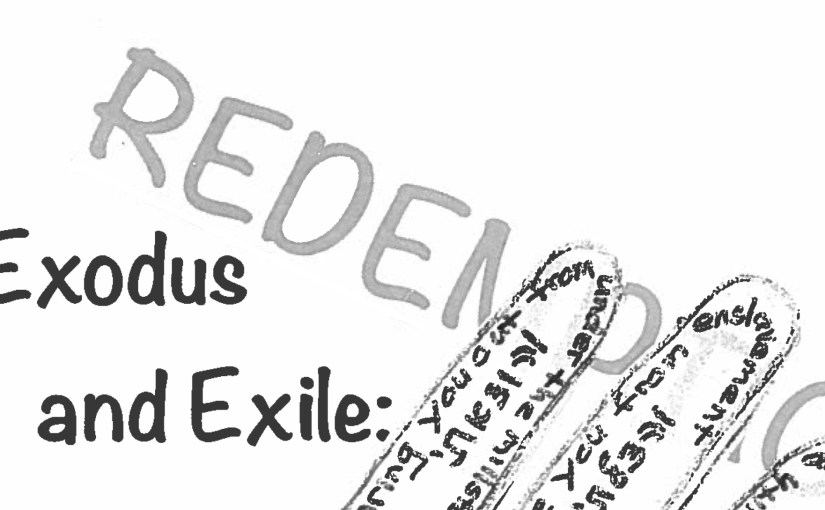
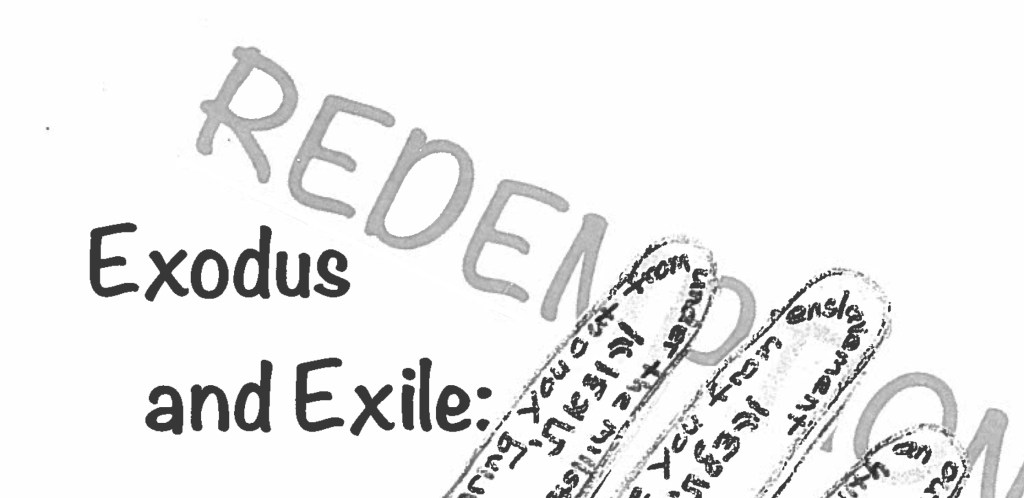
How do we know whether we’re really getting out of that narrow place of servitude or just dragging the whole of that mythical Egypt with us but calling it change? This year [2019], approach Passover with some new imagery, focusing on how we build coalition and move together toward redemption. It starts, this short book suggests, in being honest about how the “millstone that is Egypt” affects different populations differently: In the fight for racial justice in the U.S., we are NOT all marching together from the same starting point — that millstone has been weighing differently on Black and brown and white populations for many decades.
Exodus and Exile: Thoughts on Coalition and Redemption focuses on what it means to leave a place, people, or ideas behind and head out toward something that works better for everyone. It is meant to prompt some new thinking, particularly around racial justice issues.
A PDF download is available here, free of charge. UPDATE: Print copies are now available (See below). If you are able to contribute to the cost of this project, please consider doing so through the “A Song Every Day” Support link.
The book will be challenging to some for different reasons. It was challenging to me for many reasons, too. I am still considering this a BETA version with the hope that a fuller work, including additional perspectives, will develop in time. Comments and suggestions are welcome.
Some Essential Connections and Thanks
Thanks to Rabbi Gerry Serotta, director of the Interfaith Council of Greater Washington [former, now retired], for much support and teaching over the years and, in particular, for encouragement and ideas that helped shape this project. Thanks to Norman Shore, independent teacher of Torah in the DC area, for his support and teaching over many years and, in particular, for encouragement and corrections as my thinking evolved on the blog, “A Song Every Day.” Thanks to Rabbi Hannah Spiro, of Hill Havurah, for her enthusiasm and detailed comments on an earlier version.
Thanks also to Barbara Green, Bob Rovinksy (z”l), Norman Shore, and others who have supported “A Song Every Day” financially. And thanks to readers of earlier versions for comments and corrections and to those who contributed thoughts over the years, on the blog and via Facebook or other platform, on related topics.
I am also deeply appreciative of the work of every author quoted here, living or not. I am in particular dept to Rabbi Arthur Waskow, Phyllis Trible, Galit Hasan-Rokem, Rabbi Shais Rishon (MaNishtana), and Marc Dollinger. I am also grateful to DC’s Cross-River (Black-Jewish) Dialogue for helping hone my thinking.
All errors of interpretation, spelling or grammar, or any other kind are mine.
ORDERING AND DOWNLOAD
Download Exodus and Exile: Thoughts on Coalition and Redemption. (PDF HERE)
Print copies are available for a contribution of $6 or more, to help defray printing and other hard costs. Please use Support link and be sure to include your postal address. [2021 note: email songeveryday (at) gmail (dot) com to check on availability.]
Some thoughts and resources for exploring the Torah portion, “Tzav,” Leviticus 6:1-8:36. (Sometimes spelled “Tsav” or maybe “Zav.”) This is part of a series of weekly “gathering sources” posts, collecting previous material on the weekly Torah portion, most originally part of a 2010 series called “Opening the Book.” Tzav is next read beginning at minchah on Shabbat 3/16/19 (Shabbat Vayikra).
A Path to Follow — on taking out the ashes and Seder night misgivings
Some thoughts and resources for exploring the Torah portion, “Vayikra,” Lev 1:1-6:7, which also begins the new book, Vayikra/Leviticus. Posting a little early for anyone who wants to get (re-)oriented as we leave the Book of Exodus and enter The Book of Leviticus. (Less variation in transliteration for this portion, but sometimes appears at “Va-Yikra” with a hyphen, older sources sometimes use “W” rather than “V” for that initial vav, so wayikra.)
This is part of a series of weekly “gathering sources” posts, collecting previous material on the weekly Torah portion, most originally part of a 2010 series called “Opening the Book.”
Great Sources — some general background sources on the Book of Leviticus/Vayikra
Great Sources — Chapters into Verse and Charles Reznikoff
This is part of a series of weekly “gathering sources” posts, collecting previous material on the weekly Torah portion, most originally part of a 2010 series called “Opening the Book.”
This is part of a series of weekly “gathering sources” posts, collecting previous material on the weekly Torah portion, most originally part of a 2010 series called “Opening the Book.”







 "A Song Every Day"