
Capital punishment and garment fringes. These topics bump against each other in this week’s Torah portion. And the juxtaposition prompts reflection: How do the corners of a garment relate to incarceration and execution? Does grappling with one of the heaviest of issues for our society outweigh other pressing concerns? Amid a constant stream of urgent death penalty crises, where do day-to-day activities and obligations fit? How might these apparently disparate topics inform one another?
This week’s portion is Shelach (Numbers 13:1 – 15:41). It’s an eventful section, full of conflict and disaster, death and the promise of more death-as-punishment to come. The portion concludes with instructions regarding ritual fringes (Num 15:37-41) which comprise the third paragraph of the Shema recitation in most traditions. Immediately prior to that is an incident involving citizens’ arrest, followed by detention and execution, ordered by God and implemented by the entire community (Num 15:32-36). (Verses below)
A lot of teaching over the centuries addresses connections between the law violation in Num 15:32 and the adjacent commandment to wear fringes, tzitzit. One thread of commentary treats tzitzit as a reminder of all the commandments, including Shabbat; the suggestion is that tzitzit can help avoid another violation, like that reported in 15:32. Here, I suggest using the tzitzit for a different reminder.
Keep Them in Mind
The current month of Sivan 5785 / June 2025 is set to include six executions in the US with more ahead. We have already lost 23 individuals to execution in 2025 (29 in the Jewish year of 5785). Meanwhile:
- Some of us go about our daily lives without much attention to capital punishment happening in our names and with our tax dollars;
- Some of us are concerned about specific cases and/or the death penalty itself; we sign petitions, lobby officials, engage in related prayer and protest;
- Some of us, inside or outside, are deeply affected by relationships with those on Death Row and/or victims of capital crimes;
- And some of us are on Death Row, regularly experiencing dehumanizing treatment, watching fellows separated for Death Watch and mourning for those executed — often very different individuals from those convicted decades earlier.
We might shift between “some” categories over time or live within more than one. And, just in case the idea that “some of us are on Death Row” seems odd to you, please consider: If you are reading this, you are at least vaguely connected to me (Virginia Avniel Spatz), and that means you two degrees of separation from a Jew on Death Row and another degree away from many others. As with all things in our inequitable society, some among us can live whole lives — in some cases, generations of lives — without personally knowing someone on Death Row or serving a life sentence. But none of us is truly unconnected.
When gathering the four corners to recite the Shema — or at another time that works in our practice — we can hold these “some” categories, within our communities and/or within ourselves, together for a few moments.
Tied Together
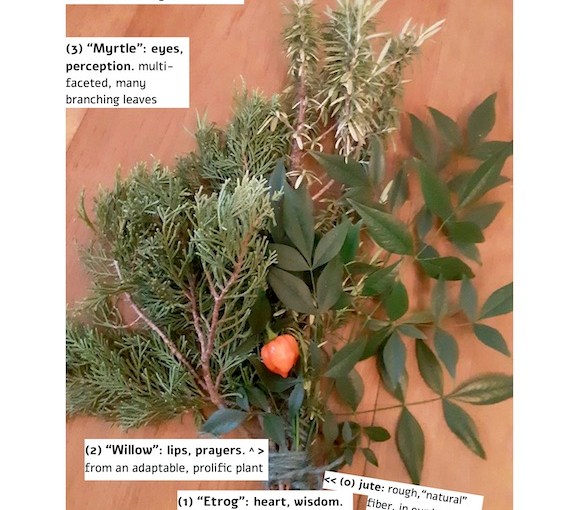
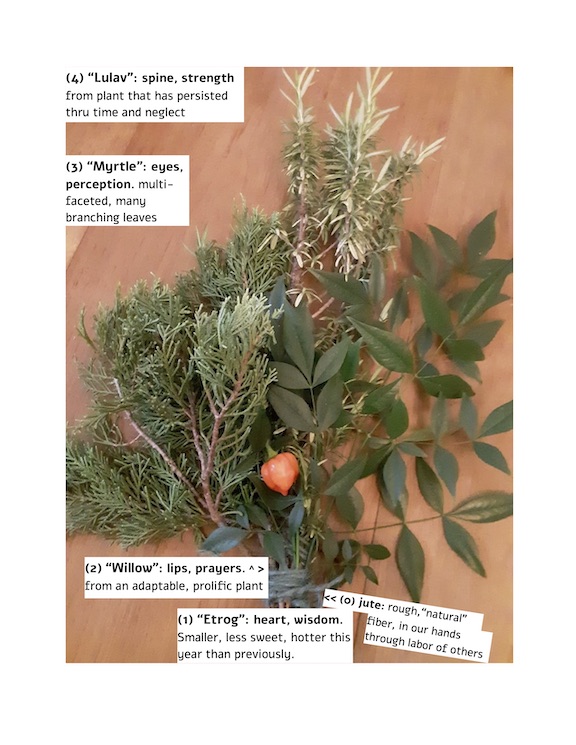
As an aid to considering how we are all connected, I share “Tied Together: A meditation on fringes, whom we center, and communal work ahead” (PDF: Tied Together). This meditation focuses on carcerality more generally, rather than on the death penalty specifically. It also suggests categories of vision that might transform our current system.
![picture of tallit, folded to show four fringes, labeled: asurim [bound] + l'yad [adjacent] + bachutz [outside] + lo nikhla [not impacted] 317+44+106+132= 599](https://songeveryday.org/wp-content/uploads/2025/06/tzitzit-graphic-for-blog.png)
Alt text: picture of tallit, folded to show four fringes, labeled: asurim [bound] + l’yad [adjacent] + bachutz [outside] + lo nikhla [not impacted]; 317+44+106+132= 599; see PDF for more on graphic and meditation.
This post is concerned primarily with shifting some Jewish awareness toward those most immediately affected by the death penalty in the US. Those interested can learn about ways to get involved here: Death Row and Everyday Torture, general links re: Death Penalty and L’Chaim! Jews Against the Death Penalty and Matir Asurim.
To aid, perhaps, in connecting, a few words from my chevruta, Ronald W. Clark, Jr., on Florida’s Death Row:
[Anthony Wainwright] was talking about how good the other burrito was, so I gave him mine. We were talking at the time his warrant was signed, it was 3:54 pm when the front door popped and Wainwright said, they just signed my warrant. I said no! I stuck my mirror out and sure enough there they all are coming down. When they got down here in front of his cell Wainwright said, I already know. Can I take my tablet?* They told him you can take your address book. He had been so stressed out since I got up here. I had heard about it before I even moved up here, guys were telling me at rec that he was stressed out thinking his warrant would be signed. When I got up here, I actually got to see it first hand. That brother couldn’t get it off his mind. Guys up here thought he was paranoid. But I knew from talking to him that he had a legitimate concern.
…Then Friday they signed Michael Bell’s death warrant. They have him scheduled for July 15th. I know him as well. Tommy [Thomas Lee Gudinas] has nine days to live. This Governor is trying to stack the bodies up to walk his self into the Whitehouse. Rick Scott murdered 28 men to get into the U.S. Senate, DeSantis feels that if he out does Scott he will get the Presidency. And he’s on pace to shatter that with two executions a month.
— Ronald W. Clark, Jr., UCI Florida
private correspondence, [May 16 and June 16, 2025) shared with permission
*When a death warrant is signed, the individual is taken from Death Row to “Death Watch,” where their connections are lost to others inside and to those outside, through their electronic tablets.
In closing, may this week’s Torah reading serve as reminder that our obligations extend to all of our community, incarcerated or not, on Death Row or not.
Numbers 15:32-41
Everett Fox (Schocken, 1995) translation, adapted with the more common “YHVH” for Fox’s “YHWH” and including a few phrases from the Hebrew. Visit Sefaria for full text and other translations:
15:32: Now when the Children of Israel were in the wilderness,
they found a man picking wood on the Sabbath day.
33: They brought him near, those who found him picking wood,
to Moshe and to Aharon, and to the entire community;
34: they put him under guard [va’yanichu oto bamish’mar, וַיַּנִּיחוּ אֹתוֹ בַּמִּשְׁמָר]
for it had not been clarified what should be done to him.
35: YHVH said to Moshe:
The man is to be put to death, yes, death;
pelt him with stones, the entire community, outside the camp!
36: So they brought him, the entire community, outside the camp,
and they pelted him with stones, so that he died,
as YHVH had commanded Moshe.
37: YHVH said to Moshe, saying:
38: Speak to the Children of Israel and say to them
that they are to make themselves tassels [tzitzit, צִיצִת]
on the corners of their garments, throughout their generations,
and are to put on the corner tassel a thread of blue-violet [tekhelet, תְּכֵלֶת].
39: It shall be a tassel for you,
that you may look at it [u-r’item oto, וּרְאִיתֶם אֹתוֹ ]
and keep-in-mind [u-z’khartem, וּזְכַרְתֶּם ] all the commandments of YHVH
and observe them,
that you not go scouting-around after your heart, after your eyes
which you go whoring after;
40: in order that you may keep-in-mind [l’ma’an tizk’ru, לְמַעַן תִּזְכְּרוּ ]
and observe all my commandments, [va’asitem et-kol-mitzvotai, וַעֲשִׂיתֶם אֶת־כׇּל־מִצְוֺתָי]
and [so] be holy to your God! [vi’hayitem kedoshim le’loheikhem, וִהְיִיתֶם קְדֹשִׁים לֵאלֹהֵיכֶם]
41: I am YHVH your God,
who took you out of the land of Egypt, to be a God to you;
I am YHVH your God!
Guard / Imprison
The Hebrew in Num 15:34 uses the expression “put him under guard [va’yanichu oto bamish’mar].” The Aramaic translation uses the verb “אֲסוּרִים, asurim [imprisoned].” This is the same Aramaic verb used in Num 11:28, where Joshua calls on Moshe to restrain (or detain or contain) Eldad and Medad, using a different expression: “כְּלָאֵם, k’la’eim.” Verse 11:28 is one of the rare uses in the Torah of the root kaf-lamed-alef — the root of “carceral,” “prison,” and related words in modern Hebrew.





 "A Song Every Day"