The Climb Up

We’re past, just barely, the lowest point in the Jewish calendar. The climb up from the bottom won’t be easy or swift. This post invites a pause at this point of transition between moments “of affliction” and those “of comfort.” (Calendar note below)

This post is part 4 of in series: “Calendar Notes for a Summer of Collapse

The first “haftarah of affliction” (prophetic reading of warning in lead-up to Tisha B’Av) is Jeremiah 1:1 – 2:3. In this passage, God’s conversation with Jeremiah begins with the prophet in the womb (1:5) and then protesting that he is still a youth and “doesn’t know how to speak” (1:6). It closes with a message of God’s nostalgia a long-past honeymoon period with Yisrael (Jer 2:2-3), more positive in divine recollection than in what the Torah tells us of those “wilderness years.”

The third haftarah of affliction, Isaiah 1:1-27, speaks of the People as rebellious children (1:2) and expresses frustration and despair. But it also offers instruction and hope. (See also “How?! A Roadmap for Transformation” post and PDF).) In one noteworthy expression, God proposes a kind of joint process: “Lekhu nah v’nivakh’cha [לְכוּ־נָא וְנִוָּכְחָה], Let us please walk/move together and let’s understand this.” There’s a lot to unpack here, in terms of power dynamics — see also Computing Failures and Babylon. But one key element seems to be that, even in the midst of disaster, there is a way out.

The middle haftarah of affliction, centering on Jer 2:4-28, includes a verse that seems to resonate with many of us this year in particular:

כִּי־שְׁתַּיִם רָעוֹת עָשָׂה עַמִּי
אֹתִי עָזְבוּ מְקוֹר מַיִם חַיִּים
לַחְצֹב לָהֶם בֹּארוֹת בֹּארֹת נִשְׁבָּרִים
אֲשֶׁר לֹא־יָכִלוּ הַמָּיִם׃

For My people have committed two evils: They have forsaken Me, the fountain of living waters, and hewed them out cisterns, broken cisterns, That can hold no water.

— Jer 2:13 (JPS 1917 trans, more translations at Sefaria); previous discussion

…Some of these remarks were shared in a slightly different form with Tzedek Chicago for Tisha B’Av 5785 and build on learning within that community…

Ancient-looking stone well, with wooden cover/shelter build on top. Image via Bernd via pixaby
Stone well with wooden cover. Image by Bernd via Pixabay

Moving Toward Post-Upset Relationship

One way to view this series is as a relationship growing up: That is, it begins in reading 1 with an unrealistic view of relationship — as is common both at the start (when expectations may be great) and later on (in missing the good old days that never were) — of romantic sort as well as in collectives and communities. It closes in reading 3 with the instruction to “Learn to do good” (Isaiah 1:17), which refuses to let the relationship just whither, and the request (1:18) that we work this out together to move ahead… in what might seem like a more equitable and/or realistic relationship.

In the middle, we have God acknowledging brokenness — cisterns that are not functioning in nourishing ways — while simultaneously reminding us that we have access to the source, the Fount of Living Water. As if God were saying, through Jeremiah: “You’ve already got Torah, but human language and problems have realy messed up how you’re perceiving and acting on it: You’re trying to hold Torah in shapes that broke long ago.”

The point is, I think, is that we are not without resources and power. In fact, God seems to be furious that we cannot figure out how to use what we have in ways that nourish everyone.

As Rabbi Brant Rosen, at Tzedek Chicago, and Rabbi Jessica Rosenberg, who helped teach the “Facing Collapse Together” workshop, and many others have said recently: Some things we used to rely on are broken beyond repair, and maybe that’s good.

We’ve got a complex set of traditions that we have to sift through to find what still holds water, so to speak. We’re going to have to find some kind of new container for Torah. We have to do this together in community, even as so many structures and relationships are stretched to the brink, if not beyond. The world is putting so much stress on each of us individually, and ripping at our collectives, so we’re going to have to work harder to be sure that we’re building community that honors each of our participants and helps us figure out how to create cisterns that reflect and nourish all.

Shifting Power

Part of the struggle is in learning how to function in, with, and in opposition to power…. which reminds of this prayer-song, published more than four years ago —

— and somehow more poignant, now, as Jews continue to grapple with what influence we have or do not have in government wherever we are (DC doesn’t even have a Senator or voting representation in the House); what avenues are open to stopping US support for genocidal war and land-grab in Gaza AND the West Bank; and what collaborative efforts are possible, given our shifting communal boundaries.

Maybe we’ve got to approach the border, like that sea, anew and find a new song.

Calendar Note:

Here, for anyone interested, is a summary of the time periods known as “The Three Weeks,” “the Nine Days,” and “the Nine Days of Jerry” (or the “Days Between”):

Haftarot of Affliction and Comfort:

Jeremiah 1:1-2:3 was read this year on Shabbat Pinchas, July 19, 2025.

Jeremiah 2:4-28 was read this year on Shabbat Mattot-Masei (July 26). Ashkenazi tradition ends with Jer 3:4; Sephardic tradition ends with Jer 4:1-2; some communities include additional verses for Rosh Chodesh Av.

Isaiah 1:1-27 was read this year on Shabbat Devarim (Shabbat Chazon), August 1.

Haftarot of Comfort begin with Isaiah 40:1-26, read in 5785 on August 9, on Shabbat Nachamu, and continue through Av and Elul toward the high holidays.


How?! A Roadmap for Transformation

Calendar Notes for a Summer of Collapse — Part 3 (of 10) — songeveryday.org

The “Hows” of this season outline a difficult journey, built into the Jewish calendar. Following this annual journey can remind us that
building community is hard work that can easily get off track.

PDF download — “How?! A Roadmap

— This piece originally appeared in Matir Asurim’s 5783 Tisha B’Av Mailer —

“How” is the sort of word that is used a lot without getting much attention. But this small, often overlooked word is important to a time of transformation in the Jewish calendar. The word creates a kind of roadmap for heading into, and climbing out of, Tisha B’Av, the lowest point of the Jewish calendar.

“How [Eikhah]” is the first word, and the Hebrew title, of the Book of Lamentations, read on Tisha B’av. It is also a key word in the Torah and prophetic readings for “Shabbat Chazon,” the sabbath of vision, right before. Together, the “how” readings cover a lot of emotional territory.

In English, “how” can be used to express different ideas:

Frustration: “How are we supposed to do this?!”

Disbelief: “How could this happen?

Despair: “How awful!”

Questioning: “How does this work?”

The Hebrew word “eikhahhas similar uses in the Bible, generally, and in readings of this season:

Frustration: Moses re-telling complaints about the People’s behavior in the wilderness:

Eikhah/How can I, alone, bear the trouble of you!……the burden, and the bickering!”
— Deuteronomy 1:12, Torah reading for Shabbat Chazon

Disbelief: God criticizing the People in Isaiah’s prophecy, set in 8th Century BCE:

Eikhah/How has the faithful city become perverse?…She was full of justice
righteousness lived in her. But now murderers — “
— Isaiah 1:21, prophetic reading for Shabbat Chazon

Despair: mourning destruction of the First Temple and exile, 6th Century BCE:

Eikhah/How lonely sits the city!…”
Once great with people! She was great among nations, now alone and vulnerable.
Once a powerhouse, now just one of the ruled.” — Lamentations/Eikhah 1:1,* reading for Tisha B’Av

Questioning: Jews trying to find meaning and move forward through disaster:

“How did we get here?” and “How do we go on?”
— centuries of Jewish teaching about destruction and tragedy

(Bible translations adapted from Jewish Publication Society 1985)

These “Hows” outline a difficult journey, built into the Jewish calendar. Following this annual journey can remind us that building community is hard work that can easily get off track.

How did we get here?

The Book of Deuteronomy opens with Moses and the People at the end of a forty-year journey. They stand on the river’s edge, imagining life on the other side. When they first escaped into thewilderness, a “promised land” seemed just around the corner. Decades later, the People have been through a lot. Mosesis listing their mistakes and his disappointments, crying:

“How can I manage this burden!(Deut 1:12)

This is a community in trouble and out of balance. Maybe not all that different from our own?

The Book of Isaiah opens a long time later, on the other side of the river. But the vision of a “promised land” now seems like a nightmare. Isaiah tells the People they are focused on the wrong things and have become a burden, even to God:

“Your rituals are a burden to me…Your hands are full of blood.” (Isaiah 1:14-15).

The prophet’s harsh words point to a whole nation troubled, out of balance, and wondering: How could dreams of justice and righteousness go so deeply wrong?

In Lamentations, the Temple is in ruins, and the People face exile. Vision of a “promised land” seems in the past. Tisha B’Av mourns loss of dreams and hopes, as well as lives and homes. This won’t be the only time in history that Jews ask: “How?! How did our visions turn into this painful mess?!” We have always struggled to share burdens in our communities. We’ve always fallen short of our visions. That is one message of the “How” readings. But it’s not the only message.

How do we go on?

The “How” readings also tell us that we are expected to do better, as individuals and society:

Learn to do good.

Devote yourselves to justice;
Aid the wronged.
Uphold the rights of the orphan;
Defend the cause of the widow
–Isaiah 1:17


Where did our ideas of community fail in the past? What visions must we mourn? Shabbat Chazon prompts us to envision something truly new, and imagine steps toward needed change. Tisha B’Av reminds us to expect failure and to mourn our losses. But the calendar nudges us forward.

There are seven weeks from Tisha B’Av to the new year. The “How” readings give us our homework, well in advance. We have work to do. And that work starts with “Learn.”


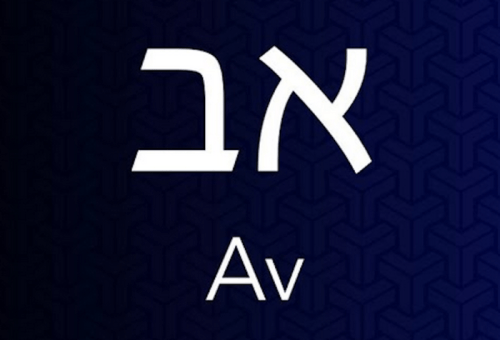
Image: Hebrew word Eikhah in Hebrew characters, plus English “How?! How? How!

Nine Days of Curiosity

Many teachings surrounding Tisha B’Av and destruction of the Temples focus on “baseless hatred” — sinat chinam [שנאת חנם] — as a cause. Some focus on rifts between Jews; others take a wider view of community harm. But many threads of such Jewish teachings ask us to use The Nine Days, the period between Rosh Chodesh Av and Tisha B’Av, to reflect on what needs repairing in our various communities.

We might consider these the Nine Days of Curiosity. And one place to pursue such curiosity is the career of Rabbi Akiva mentioned in part 1 (“Summer Breather, Toward Fall“). We can reflect on the “plague of disrespect” that affected 12,000 pairs of his students (B. Yebamot 62b) and consider what this legend teaches.

We might ask, for example: How could anyone miss such a widespread problem under their care? Were the students masking their true feelings? Was there a wider culture of disrespect at work? How were Akiva and the students affected by the difficult political climate in which they were trying to function?

We might also ask: Who among the students saw that there was a problem? Did they approach the teacher? Did they seek out other students? Whose responsibility is a communal problem, small or widespread?

These are just a few questions to spark curiosity for the month of Av.

Shabbat Shalom and Chodesh Tov

Summer Breather, Toward Fall

Calendar Notes for a Summer of Collapse

Part 1 (of 10)

Download PDF version — Summer Breather, Toward Fall


The Jewish calendar’s springtime is full:

  • Purim, Passover and the Omer Period, then Shavuot;
  • The months of Adar, Nisan, Iyar, and Sivan mark, on the one hand, winter’s overturning, the early (barley) and the later (wheat) harvests; on the other:
  • unveiling of hidden power, the beginnings of Liberation, the path to Sinai, and Revelation.

After all that, Tammuz holds one minor fast day.

The 17th of Tammuz starts the semi-mourning period of “The Three Weeks” (see below). And that period leads into preparations for the High Holidays and “THE festival” of Sukkot in the fall.

Tammuz itself offers a kind of breather. And For Times Such as These suggests it is a good month to ask:

What’s growing in your garden now?
What is feeding you? What does the sun have to offer?
Where do you see signs of what’s been destroyed in your communities?
What destruction needs attending to?
How are the hurts of your communities/histories manifesting in the collective body?
What grief is unresolved and impacting your community?
— Rabbi Ariana Katz & Rabbi Jessica Rosenberg. For Times Such as These: A Radical’s guide to the Jewish Year (Wayne State University Press, 2024), p.249

As Tammuz comes to a close — the month ends this year on July 25 — we can still ponder, carrying our answers or remaining questions into the next phase of the calendar.

The new month of Av begins on Shabbat, July 25-26 (2025) and For Times Such as These suggests that we ask:

NOTE: Av questions relating to love and sex seem better suited to the post-mourning days of the month; again, see calendar notes below, and check out For Times Such as These for more on the Jewish year.

God’s Questions and Ours

God has a lot of questions for us, according to the prophet Jeremiah*:

1) what? [מַה, mem-hey, mah] — Jeremiah 2:5

2-4) where? where? where? [אַיֵּה, alef-yud-hey, ayyeh] — Jer 2:6, 2:8, and 2:28

5) why? [מַדּוּעַ, mem-dalet-vav-ayin, madua] — Jer 2:14

6-7) whatsoever? or what-in-any-way? [מַה־לָּךְ, mah+lamed-kaf] — twice in Jer 2:18

8) how? [אֵיךְ, alef-yud-kaf, eikh] — Jer 2:23

Interrogatives are not unusual in biblical Hebrew. But eight in the space of 24 verses has an impact. Together, the piled up questions turn this passage into a kind of awareness demand.

Three of these interrogatives — what, where, and how — are part of questions we might already be asking ourselves, and each other, for the months of Tammuz and Av (see page 1).

In addition, the final question, Eikh [How?], hints at a theme in the next week’s readings, which are dominated by “Eikhah / How?!” as lament.

It’s important to ask specific, seasonal questions — and lean into the lament they raise. And it can be oddly comforting to know that the Jewish calendar is designed to stress this need. But it can also be helpful to imagine a less specific dialogue with the divine, one centered around questions as wake-up call: What? Where? Why? What-in-any-way? How?

———–

*Jeremiah 2:4-28 plus 3:4 is read as the second “haftarah of affliction” in preparation for Tisha B’Av. When, as in 5785/2025, the reading comes on Rosh Chodesh Av, two verses about new moons are added to close the haftarah: Isaiah 66:1, 66:23.

** For language geeks and trivia lovers: The form of “where” in Jeremiah 2 is lengthened from the simpler alef-yud, אַי. The Brown-Driver-Briggs biblical dictionary adds about this form:

used of both persons & things (but never with a verb [contrast אֵיפֹה (eifo, alef-yud-pei-hey)]; oft. in poet. or elevated style, where the answer nowhere is expected…

————————-

Broken Cisterns, Holding Water

Amid all the questions, this chapter of Jeremiah includes the following divine complaint:

כִּי־שְׁתַּיִם רָעוֹת עָשָׂה עַמִּי
אֹתִי עָזְבוּ מְקוֹר מַיִם חַיִּים
לַחְצֹב לָהֶם בֹּארוֹת בֹּארֹת נִשְׁבָּרִים
אֲשֶׁר לֹא־יָכִלוּ הַמָּיִם׃

For My people have committed two evils: They have forsaken Me, the fountain of living waters, and hewed them out cisterns, broken cisterns, That can hold no water.

— Jer 2:13, (JPS 1917 translation — a little old-fashioned, but chosen for its rhythms)

Water is often linked with Torah and with healing. So God’s complaint might be understood as accusing the people of failing to value God’s teaching and healing, and of creating faulty containers, unsuitable for gathering and preserving God’s life-giving offerings.

A related passage in Proverbs is used for much commentary on Torah, water, and healing:

שְׁתֵה־מַיִם מִבּוֹרֶךָ
וְנֹזְלִים מִתּוֹךְ בְּאֵרֶךָ׃

יָפוּצוּ מַעְיְנֹתֶיךָ חוּצָה
בָּרְחֹבוֹת פַּלְגֵי־מָיִם׃

Proverbs 5:15) Drink water from your own cistern [borkha],
Running water from your own well.

16) Your springs will gush forth
In streams in the public squares. [Revised JPS 2023]

These teachings, attributed the Talmud’s Rabbi Akiva, focus on the idea of bor [pit/cistern]:

In this season of contemplating all that is broken, in and around us, the Jeremiah and Proverbs images and Rabbi Akiva’s teaching are worth reflection. Here are some questions for this particular season:

  • In what ways have our Torah-containers broken, over time and more recently?
  • Are all such breaks “bad”? How might cracks help us move forward differently?
  • Have we (individuals, communities, society) forsaken divine teaching? How? And, if so, how might we remedy that?
  • What kinds of containers do we need for communal Torah today?
  • What kind of work is required to build what is needed?
  • How does the imagery in Prov 5:15-16 differ from that found in Jeremiah?
    • — Is one vision more universal than the other?
    • — Is either more hopeful?
    • — Many translations, including RJPS, opt for “your own cistern” and “your own well” rather than just “your cistern” and “your well.” What is “ours” or “our own”?
    • — Does sticking to our (own) Torah caution us from “bad” teaching? limit us in some way? Or does it encourage us to bring out our (own) Torah?
    • How does Akiva’s imagery differ from that in the biblical passages?
  • — How does Torah/water get into the cistern in the two sets of images?
  • — A pit may contain no water to start with, but is all Torah poured in by scholars?
  • — Consider, too, this story about Akiva himself, water, and a bor:

Speaking of Broken Things

Akiva (c. 50 – 135 CE) is a huge figure in the Talmud and later lore. For this summer of collapse, it’s particularly worth noting that Akiva was a controversial figure in the politics of responding to Roman occupation and that two of the most quoted stories about him involve major tragedy: his 24,000 students who died in a plague of disrespect (B. Yebamot 62b), and “the four who entered Paradise” (B. Chagigah 14b: Wikipedia’s basic page on the legend of Pardes is pretty useful).

The latter story brings us back to stones and water — in a strange, mystical way:

[Akiva told his fellow travelers:] When you reach the stones of pure marble, don’t say, “Water! Water!” As it states, “One who speaks falsehood shall not endure before My eyes” [Psalms 101:7] — Babylonian Talmud, Chagigah 14b

Four men entered pardes [paradise]: Ben Azzai, Ben Zoma, Acher ([“Other”], Elisha ben Abuyah), and Akiva. We are told: “Ben Azzai looked and died; Ben Zoma looked and went mad; Acher destroyed the plants [became a heretic]; Akiva entered in peace [or wholeness, “shalom”] and departed in peace” (B. Chagigah 14b again). Many teachers assume that this means Akiva was of superior mind or spirit. But the story does raise the question: What does it mean to survive in wholeness amid such disaster, for near friends and so many others? Returning to the For Times Such as These questions for Tammuz:

Where do you see signs of what’s been destroyed in your communities?

What destruction needs attending to?

How are the hurts of your communities/histories manifesting in the collective body?

What grief is unresolved and impacting your community?


Toward Tisha B’Av, “Within the Straits,” and Then Beyond: Calendar Notes for Tammuz and Av and Elul — here as PDF (if anyone needs another format for accessibility, please advise) —

Download Toward Tisha B’Av

And So?

Reading the three texts of Shabbat Chazon [Vision] and Tisha B’av together can easily feed a sense of despair:

On this Shabbat of Vision, we stand at the river’s edge, imagining the world on the other side, the one our ancestors were, decades before, led to believe was just around the corner. And yet, as Deuteronomy opens, we are listening to Moses describe all the ways we’ve already disappointed and erred since taking those first tentative steps toward what we hoped would be better days. “How?! How can I bear the trouble/burden [torach] of you?” Moses moans (Deut 1:12; see PDF in previous post).

On this same Shabbat, we are treated to the prophet Isaiah’s speech from across the river, inside that imagined world. He, too, is explaining just how thoroughly we’ve failed, turning vision into a burden even God cannot bear: “[Your rituals] are become a burden [torach] to me…Your hands are full of blood.” (Isaiah 1:14-15). “How?! How did a dream of justice and righteousness become a city of murderers?” (1:21, paraphrased)

With Eikha, that imagined world has collapsed, and we are on the road out of the ruins. “How?! How did what once appeared so vibrant turn into this painful mess?!”

It seems that we’ve been crying, “How?! How did things get this bad?!” for so long that we might as well simply declare that nothing ever changes, that people are just as rotten to one another today as they were in Isaiah’s time or King Josiah’s or at the time of Exile, and our problems have been basically the same for 2700 years.

But we can also understand these three readings — offered to us at the lowest point in the Jewish calendar — as an age-old acknowledgement that there will always be failures, that the better days envisioned will always be ahead, that we are always facing an ending…with, we must hope, a new beginning beyond it.


“Where is the ‘so’?”

In the kinot for Tisha B’av, Chapter 13 offers a series of verses beginning “אֵי כֹּה” [ei ko], translated as “Where is the [ko-based] promise…?” (Sefaria offers the Hebrew for Chapter 13 but no translation.) Rabbi Joseph Soloveitchik’s commentary, found in Koren Mesorat HaRav Kinot (Koren, 2010), explains:

In this kina, Rabbi Elazar HaKalir treats the word eikha as though it were a composite word consisting of two separate words, ei and ko, and therefore, the meaning of the word is not “how?!” but rather “where is the ko, the ‘so'”? Where are the promises that God made to the Jewish people using the word ko?
–p.318

The author of the kina is asking, R’ Soloveitchik says, why the promises were not fulfilled, and ultimately God responds: “Do not worry, the ko will be realized; sooner or later there will be no need to ask Eikha” (p. 327).

Maybe, however, we should read “where is the ‘so’?” from another angle: For nearly 3000 years, we’ve been warned that there is blood on our hands and work to be done. And so?

And so: 1) “Cease to do evil.” 2) “Learn to do good.” 3) “Devote yourself [to repair]” and, only then, 4) Atone/seek restoration of relationship.

Rabbi Nachman of Breslov taught: “If you believe that you can destroy, believe that you can repair.” (Meshivat Nefesh #38). We will always mess up, and always be called to keep going.

Vision, Blood, and Learning

UPDATED 8/7/22 evening with note on transliteration and link to epilogue

Three challenging Bible passages come together in the Jewish calendar in the next two days:

  • Devarim (Deut 1:1-3:12), the first portion in the Book of Deuteronomy (Deut 1:1-3:12);
  • Isaiah 1:1-27, the prophetic reading which gives this Shabbat it’s special name, “Shabbat of Vision,” or Shabbat Chazon; and
  • Eikha, the Book of Lamentations, read on Tisha B’av.

In some years, there are several days between Shabbat Chazon and Tisha B’av — offering a chance for us to take the admonitions to heart before entering into the deepest day of mourning the Jewish calendar and then beginning the slow climb toward the new year. Some years, like this one, leave no space between that last Shabbat of Affliction (or Admonition) and Tisha B’av. So we’re about to enter a complicated couple of days.


Historical and Literary Context

A bit of history is useful for viewing the confluence of readings for Shabbat Chazon and Tisha B’av:

  • Eikha/Lamentations is probably, current scholarship says, from the middle of the 6th Century BCE, although some parts may be older; the book as a whole is traditionally ascribed to the prophet Jeremiah (c. 650-570 BCE).
  • Jeremiah was active at the time of King Josiah (c.640-609 BCE), from the 13th year of the young king’s reign through Exile and the destruction of the First Temple. Substantial portions of the Book of Deuteronomy are also linked with King Josiah’s era.
  • The prophet Isaiah lived a century earlier, with the year 733 BCE a prominent date for his vision… which led him to criticize focus on ritual when what is required is tending to those in need:

Your new moons and your appointed seasons My soul hates…
Your hands are full of blood (stained with crime).
…Seek justice, relieve the oppressed….
How [Eikha] is the faithful city…once full of justice,
righteousness lodged in her, but now murderers!
–Isa 1:14-17, 1:21


How?!

That mournful cry, beginning with the word “Eikha” in Isaiah 1:21, is echoed in both Deuteronomy and the book of that name.

For the record, “eikha” appears only the once in Isaiah, four times in Eikha, and five times in Deuteronomy, plus twice in Jeremiah and once each in four other books of Tanakh. (See handout, “Eikha and Chazon,” below).

Isaiah’s vision prompts us to consider any number of collective crimes. The compressed time period of Shabbat followed immediately by the day of mourning makes it difficult to process or respond. But Isaiah doesn’t just leave us with blood on our hands; he suggests a way forward:

Learn to do good.
Devote yourselves to justice;
Aid the wronged.
Uphold the rights of the orphan;
Defend the cause of the widow.

Isaiah 1:17 (see “Isaiah page one” handout, also below)

We can read this message as a simple “do better.” And, of course, that is what we are being told to do. But we must also heed that first commandment: Learn.

For nearly 3000 years, Isaiah has railing at us that we have blood on our hands. And for just as long, the prophet has been telling us that the first step — before trying to undertake the work of justice, provide aid, uphold anyone’s rights, or defend the most vulnerable — is to learn.

We can inform ourselves about the problems and issues. We can listen to the voices of those most affected by crimes in which we have participated, however inadvertently. We can get to know what solutions others are already working to implement. We can learn more about Jewish history, practice, and philosophy to shore up our ability to respond Jewishly — and/or steep ourselves in other traditions that inspire us.

For nearly 3000 years, Jewish tradition has been calling us to do better by learning better.


TRANSLITERATION NOTE: The Hebrew word ” איכה ” is pretty commonly transliterated “eicha” (and this blog often used that spelling in the past); eikha is used here, though, in an effort to make clear the distinction between the chet of “[חזון] chazon” and the khaf of “eikha.”


TOP

PDF Handouts

Handout for Hill Havurah, six-page-PDF includes both “Eicha and Chazon” (5 pages) and “Isaiah page one” (1 page) in one document. Also below: separate pieces.

——-

Eicha and Chazon (five-page-PDF, originally prepared for Temple Micah in 2019 and re-shared with Hill Havurah and Tzedek Chicago in 2022) —

——-

Isaiah page one — (one-page-PDF) three translations for Isa 1:15-18 and some definitions.

BACK

Whence Comes Help: After Tisha B’av

With Tisha B’av behind us, we are meant to be climbing upward, from the calendar’s deepest point, toward the new year. But how can we begin the climb while disasters mount around us and reasons to mourn continue to grow? Psalm 121 speaks to a moment such as this. I’ve found myself turning again and again in recent days to the Nefesh Mountain version of “Esa Einai.” And to this idea that there is stability, despite the constant change…even the mountains are shifting:

“Change is ceaseless, and transformation knows no pause. The dynamism both exhilarates and exhausts the spirit; no wonder that we seek stability amidst this endless process.” Thus writes R’ Everett Gendler in a commentary on Psalm 121. He then suggests that Psalm 121’s expression “mei-ayin” — usually translated as “from where?” — carries “echoes of the Creative Nothingness, the Divine Void, the AYIN” and that God’s four-letter Name [YHVH] hints at “stability amidst ceaseless process.” (Full comment found in Kol Haneshamah: Shabbat Vehagim. Reconstructionist Press, 1996, p.215.)

Thanks to Nefesh Mountain for creating their uplifting music, and for permission to share their “Esa Einai” along with this commentary as part of an effort to begin looking upward.

Learn more about Nefesh Mountain, and check out their newest album, “Songs for the Sparrows,” just released in June.

Eicha for my city and others, 5781

Alas! How lonely sits the city
Once great with joyful people!
New horrors fill horizons now
while old pain never left
Each new loss diminishes
the streets themselves bereft

Bitterly we weep all night
cheeks wet with tears unseen
If we are to join together,
we must widen this choir of woe
When some cries are background noise
what’s the meaning of “friend” and “foe”?

City crying out with loss:
six-year-old child shot to death
joining a list, far too long,
of youth killed in past years.
Community grief so deep for some
while others escape most tears.

Down our roads, more peril
desolation, violence, fear
systems that crush and jail
separate, cage, and hate
Borders come in many shapes
Too often closed, that welcome gate

Evidence mounts. But do we act?
ICE camps remain; racism persists.
Policing prospers, yet safety eludes
Some thrive, while too many do without.
Must we ignore some of our truths
in chasing a joint goal to shout?

Forging coalition is struggle, tougher in anguish.
Inside affliction, can we hear another cry?
It is painful and complex, but we must keep trying
trying to heed the whole sound
I know you can hear it, God once declared loudly:
that voice of a sibling crying up from the ground

–V. Spatz, songeveryday.org CC-BY-SA


Back in 2019, a number of Jewish communities were marking Tisha B’av with vigils and protests, attempting to demonstrate that Jews will not turn our backs on refugees arriving in this country and on immigrant neighbors already here. The original “Eichah: for my city and maybe for yours” (2019) asked us to consider the following:

  • Recognize many ways our country has long separated families, caged and brutalized people?
  • Cry with our local, national and international communities, refugees and not, who lend different voices to the chorus of “How lonely sits this place!”?
  • Send prayer energy to our many beleaguered communities, near and far?
  • Commit to exploring, in the days to come, ways in which we are complicit in so much suffering and ways we might take up action for repair?

On this Tisha B’av, 7/18/21, DC-area Jews please acknowledge:

  • Nyiah Courtney, age 6, shot to death in Ward 8 on 7/16/21 (the 108th homicide in DC, 2021)

And remember:

  • Makiyah Wilson, age 10, shot to death in Ward 7 on 7/16/18
  • Karon Brown, age 11, shot to death in Ward 8 on 7/18/19

Here is the 2019 version, “Eichah: for my city and maybe for yours.” And here is a PDF to use and share of this version.

Eicha for my city and maybe for yours

Alas! How lonely sits the city
Once great with joyful people!
New horrors fill horizons now
while old pain never left
Each new loss diminishes
the streets themselves bereft

Bitterly we weep all night
cheeks wet with tears unseen
If we are to join together,
we must widen this choir of woe
When some cries are background noise
what’s the meaning of “friend” and “foe”?

City in despair right here,
Can Jewish space bring rest?
Refugees are some, just some,
of misery’s many faces
Public protest spreads the nation
are we stuck in narrow places?

Down our roads, more peril
desolation, violence, fear
systems that crush and jail
separate, cage, and hate
Borders come in many shapes
Too often closed, that welcome gate

Evidence mounts. Not in our name.
Closing camps, protecting neighbors and strangers –
that is work we are all called to do
But what about mutual care?
Or must we ignore some of our truths
in chasing a goal that we share?

Forging coalition is struggle, tougher in anguish.
Inside affliction, can we hear another cry?
It is painful and complex, but we must keep trying
trying to heed the whole sound
I know you can hear it, God once declared loudly:
that voice of a sibling crying up from the ground

–V. Spatz, songeveryday.org CC-BY-SA

Yes: We demonstrate publicly that Jews will not turn our backs on refugees arriving in this country and on immigrant neighbors already here. We support vigils and protest to #CloseTheCamps. Now!!
Can we not also:

  • Recognize many ways our country has long separated families, caged and brutalized people?
  • Cry with our local, national and international communities, refugees and not, who lend different voices to the chorus of “How lonely sits this place!”?
  • Send prayer energy to our many beleaguered communities, near and far?
  • Commit to exploring, in the days to come, ways in which we are complicit in so much suffering and ways we might take up action for repair?

“It is not ours to complete the task, but neither are we free to desist from it” — Pirkei Avot 2:16

Here’s a PDF of this post, should anyone want to print a single page.Eichah for my city maybe yours

Now What? Exploring Babylon Stage Two

I launched the “Exploring Babylon” project on this blog in October 2017. Stage One was to run for roughly 40 weeks, from Sukkot through Tisha B’av. WordPress statistics tell me that I’ve posted 40 times in the category, “Exploring Babylon,” although not entirely on the weekly schedule I’d originally planned, and Tisha B’av is fast — no pun intended — approaching (eve of July 21 through dark July 22).

Not sure yet what shape Stage Two will take. Comments and suggestions welcome.

Where Exodus Metaphors Fail

Meanwhile, a recent interview with the author of Black Power, Jewish Politics returns us to the basic challenge that impelled me into this project.

When I talk generally with white Jews about why Jews are involved in social justice or civil rights or racial equality, they’ll talk about this shared history of oppression.

And the problem is that American Jewish history and African-American history are 180 degrees opposite on that question. One of my African-American colleagues, he said, “If I ever go to a Seder and the Jews say that they know what it’s like because they too were once slaves in Egypt,” he’s gonna punch ’em.

Because if Jews have to go back to ancient Egypt to get the slavery metaphor, then they’ve kind of missed that American Jewish history is a story of rapid social ascent, and African-American history is the legacy of slavery. That argument is insulting, and it’s very elementary.

And, of course, I found that the people actually involved in the movement in the 50s, they knew that. And they were quite clear that they were not buying into that.
— Marc Dollinger, 6/4/18 NPR interview

In the struggle for racial and other forms of social justice, might the language and history of Exile serve where Exodus metaphors sometimes fail?

And, as we move through the month of Av and on toward a new year, how might we use ideas about exile and Babylon, in particular, to inform us?

As the source of a long intertextual journey, Psalm 137 generates the poetic vocabulary of exile: “By the waters of Babylon, there we sat down and cried as we remembered Zion.” The pleonastic “there,” repeated in the third verse, calls attention to itself by its very redundancy; syntactically superfluous, “there” defines exile as the place that is always elsewhere. Being elsewhere, being far from Zion, is the pre-text for poetry….(p.9)

With the (re)territorialization of the Jewish imagination in the twentieth century, a radical shift takes place in the relative position of ends and means, of original and mimetic space, of holy and profane, of ownership and tenancy. If exile is narrative, then to historicize the end of the narrative is to invite a form of epic closure that threatens the storytelling enterprise itself–an enterprise that remained alive, like Scheherazade, by suspending endings. Conversely, to claim an absolute place for the exilic imagination is to privilege the story as the thing itself; the map for the territory, language without referent; and to regard “nomadic writing” as the inherently Jewish vocation…. (p.14)
— Sidra DeKoven Ezrahi, Booking Passage

Again, comments and suggestions welcome.

May the mourning of the weeks ahead bring us some new light.

NOTES:
Pleonasm
Although it’s pretty clear from context, and maybe everyone else knows, I did look up “pleonasm” for my own edification. Here’s a useful and not overly ad-filled explanation of pleonasm.
BACK

Citation
Ezrahi, Sidra DeKoven. Booking Passage: Exile and Homecoming in the Modern Jewish Imagination. Berkeley, CA: University of California Press, 2000.
BACK-2