The Predator’s Tools

Building communities based on truly transformative justice requires that we strive to “put down the predator’s tools,” according to adrienne maree brown. (We Will Not Cancel Us; more here“). Considering the predator’s tools raises serious misgivings about this week’s Torah portion and many Jewish teachings centering the injunction to pursue “tzedek, tzedek [“justice, justice” or “equity, equity”]. Reflecting on inherited ideas of justice is but one aspect of exploring collapse and the possibility of (re-)building.

This is part of a series on Summer of Collapse.

Updated for more clarity of expression in the “Justice, In/Out of Context” section and addition of “Some History” section below Friday afternoon (8/29/25, around 5 ET)

Justice, In/Out of Context

The Torah portion “Shoftim [Judges]” (Deut 16:18-21:9) is composed of rules about appointing judges and other legal matters. It contains one of the most quoted verses in the Torah, which begins:

tzedek tzedek tirdof…, …צֶדֶק צֶדֶק תִּרְדֹּף
Justice, justice shall you pursue… (JPS 2006)
Equity, equity you are to pursue… (Fox/Schocken 1996)
— Deuteronomy 16:20

Teaching and preaching on this phrase is frequently separated from the context, in both narrow and wider senses.

In one narrow sense, focusing on the phrase alone and not the surrounding verses allows for generalizing the instruction beyond its most likely connection to the previous verse about accepting bribes. On another verse-specific level, many citations of “justice, justice” leave off the second half of the verse, which reads:

וְיָרַשְׁתָּ אֶת־הָאָרֶץ אֲשֶׁר־” אֱלֹהֶיךָ נֹתֵן לָךְ׃
…in order that you may live
and possess the land that YHWH your God is giving you! (Fox)
…that you may thrive and occupy the land that your God [YHVH] is giving you. (JPS)

Ignoring the bulk of the verse’s language allows for generalizing the instruction in ways the full verse doesn’t support. These specifics need not invalidate teachings centering “justice, justice.” And it’s essential to note that Torah text never stands on its own in Jewish tradition; it is interpreted and, in many cases, ameliorated by centuries of post-biblical teaching and legal rulings. Still, Shoftim reminds us that our inherited ideas of justice — in- and outside of Judaism — include ideas such as judicial death penalty (Deut 17:2-7), blood-avenging (Deut 19:11-13), “an eye for an eye” (Deut 19:21), and expectations of warfare (Deut 20).

Abolitionist efforts of any kind require serious examination of these and other punitive ideas we’re inherited and a careful look at how they frame our understanding of justice. Alicia Suskin Ostriker offers powerful teachings on the concept of justice and how it relates to Jewish theology — and ideas about the topic, more broadly.

Strange Invention

Decades ago, Ostriker remarked on the “strange invention of the Jews, God’s ‘justice'”:

It is a strange invention of the Jews, God’s “justice.” That God should be “just,” obliged to reward good men who obeyed his laws, care for widows and the poor and so forth, and punish evil ones who didn’t, was not a notion that occurred to the Egyptians, the Canaanites, the Babylonians, the Greeks. We appreciate, if we step back a bit from our theological assumptions, what a peculiar expectation it is that human justice should be intrinsic to a God, and still more odd, that human beings need to remind god about it….

…[God] was waiting for her [Job’s wife, or each of us] to issue her challenge. That is what really happens. God does not know how to be just until the children demand it….

She wants the unjustly slain to be alive and for singing and dance to come to the victims.

We already know what she wants. She wants justice to rain down like waters. She wants adjustment, portion to portion, so that the machinery of the world will look seemly and move powerfully and not scrape and scream. The children of God do not really say that God is just. But they invent the idea. They chew it over and over, holding it up to the light this way and that. And though blood drips from the concept, staining their hands, they are persistent. It is their idea. They want justice to rain down like waters. Justice to rain like waters. Justice to rain. Justice to rain.
–Alicia Suskin Ostriker, The Nakedness of the Fathers, p.232, 239, 240. Full citation below**

Ostriker was not writing from an abolitionist perspective or directly addressing the portion Shoftim. But her words point to important work we need to undertake around some basic concepts.

As we move through this period of collapse and consider which tools can still serve, it’s crucial to “take a step back” from many assumptions, in theology and beyond. As we move through Elul toward the new year, we are called to reflect on how our assumptions, and the structures built on them, contribute to harm and what steps we can take to remedy that.

Some History

For either Ostriker’s 1986 “Imagining of Justice” or the 1994 “Meditation on Justice,” a quick history reminder might be in order:

In the 1980s, gender was generally treated as a binary in- and outside of Judaism. Women’s leadership — or even full personhood — was not yet accepted in many parts of the Jewish world, although women were ordained as rabbis in some US movements beginning in the 1970s.

Keshet (For LGBTQ+ equality in Jewish life) was not founded until 1996 and, as their story reports: “Not too long ago, lesbian, gay, bisexual, transgender, and queer Jews were largely invisible in American Jewish life. Marriage equality wasn’t on anyone’s radar — certainly not on the radar of most synagogues and Jewish organizations — and there was not a single gay-straight alliance at a Jewish high school.”

Ostriker’s 1986 statement about being a Jewish woman — “I am and am not a Jew” — made sense across all Jewish movements, at that time, even in the equality-focused Havurah movement. By the time Nakedness of the Fathers was released in 1994, gender equity had advanced in some Jewish spaces; the Jewish Orthodox Feminist Alliance was still years away, however, and issues of gender and sexuality in Judaism still had (have) a long road ahead throughout Judaism.

Keeping this history in mind adds layers to the call to “take a step back” from assumptions. And Ostriker’s reminder that we have to imagine justice — and how it might relate to the divine — couldn’t be more timely…. it was in 1986 and in 1994 and the countless moments I’ve found myself turning to her words over the decades.


** Full citation: “Job, or a Meditation on Justice,” from Nakedness of the Fathers: Biblical Visions and Revisions. New Brunswick, NJ: Rutgers, 1994.

Here’s a PDF excerpt — “Job, or a Meditation on Justice

An earlier version (1986), “Job, Or the Imagining of Justice” — originally in The Iowa Review — is available on Academia.edu.

Author bios at Jewish Women’s Archives and Poetry Foundation


Feature image is largely decorative: The words “Whose tools?” and a two-pan balance.
Eighteen (or 19) Names, Seven Voices

In the last post, we considered a ring of connection linking Psalms 28, 29, and 30. (See “Psalms Near 30.”) One of the key elements was the repetition of God’s voice in Psalm 29. The seven mentions of God’s voice, along with the repetition of God’s name, also extend this ring of connection to the Shabbat and weekday Amidah.

God’s Name in Psalms 29 and 30

In discussing the origins of the Standing Prayer, with its eighteen foundational blessings, the Rabbis offer several explanations, including this one based on Psalm 29:

Corresponding to what were these eighteen blessings instituted… Rabbi Hillel, son of Rabbi Shmuel bar Nahmani, said: Corresponding to the eighteen mentions of God’s name that King David said in the psalm: “Give unto the Lord, O you sons of might” (Psalm 29)….
— B. Berakhot 28b, Koren Steinsaltz commentary

With regard to the nineteenth, they add:

Corresponding to what was the nineteenth blessing instituted? Rabbi Levi said: According to Rabbi Hillel, son of Rabbi Shmuel bar Nahmani …the nineteenth blessing corresponds to a reference to God in that psalm, where a name other than the tetragrammaton was used: “The God of glory thunders” (Psalms 29:3)….
— B. Berakhot 28b

We saw early on in this series a tradition that Psalm 30 was added to the liturgy under the influence of Jewish mystics because the psalm “mentions the name of God ten times, and Jewish mystics saw in this a hint of the s’firot, the ten aspects of the Godhead” (Siddur Lev Shalem ). I still count only nine appearances of YHVH in Psalm 30, however, couldn’t find a source that detailed the ten mentions of God’s name, and wonder if maybe the tenth was hidden. (See “The Whole Nine Yards.”)

In a similar vein to the Talmud’s handling of the nineteenth blessing, here is one way to find ten mentions of God’s name in Psalm 30:

שְׁמַע-יְהוָה וְחָנֵּנִי; יְהוָה, הֱיֵה-עֹזֵר לִי
Hear, O Lord, and be gracious to me. O Lord, be my helper.

The formulation “O Lord, be my helper,” alludes to the meaning of the Tetragrammaton: “For I will be with you” (see Exodus 3:12-15, and Onkelos, according to Ramban‘s reading in his commentary on the words: אֶהְיֶה אֲשֶׁר אֶהְיֶה eHyeh asher eHyeh). At all events, the combination הי הֱיֵה, Hashem heyeh, “O Lord, be,” is a play on the spelling of the two words.”
The Jerusalem Commentary, p.226

In this way, verse 11 suggests the tenth mention of God’s name in Psalm 30 without spelling it out directly. Hinting at the Name seems quite fitting with many themes of the psalm and with musical and chant settings for this verse in particular.

God’s Voice

Continuing their discussion of the Amida, the Rabbis touch on the seven blessings of the Shabbat Standing Prayer: 

Corresponding to what were these seven blessings of the Shabbat Amida prayer instituted?… Rabbi Halafta ben Shaul said: Corresponding to the seven “voices” which David mentioned on the waters; in other words, the seven times that “the voice of God” is mentioned in Psalms 29, which served as the source for the weekday prayer.
— B. Berakhot 29a

In the previous post, outlining a ring of connection between Psalms 28, 29, and 30, I suggested that Psalm 29’s focus on God’s voice can be read as a response to Psalm 28’s fears of God’s silence or idleness. And then Psalm 30 loops us back to Psalm 28’s themes of supplication, crying out, rescue from the pit, and God as strength and help.

As noted also in “Psalms Near 30,” the powerful, majestic, etal. voices of God — especially if considered in response to a personal plea for connection and rescue — seem reminiscent of God’s speeches in The Book of Job, chapters 38ff…

….Except that in Psalm 29 it’s the human speaker who is extolling God’s voices. And, based on the passages in Berakhot, the psalm is somehow the source of the Amida. So, God’s voice in all its shattering, shake-inducing fire in some sense prompts our Standing Prayer.

Is it that standing before God that eventually turns lament into dancing, undoes the sackcloth, and dresses us in joy? It’s a long way from “the pit” to a place where one’s “whole being might sing hymns to [God] endlessly.” The changes expressed in Psalm 30, which follows on the ring from Psalm 28 to 29 — and into the prayers Psalm 29 inspires — are huge and visceral. A little bit like Job, post-whirlwind, saying: “I had heard You with my ears, But now I see You with my eyes” (Job 42:5).


27 of 30 on Psalm 30
No Longer National Novel Writing Month, but continuing the focus on Psalm 30 (“Thirty on Psalm 30”) begun as a NaNoWriMo-Rebel project. Whole series (so far).


NOTE:
Koren Talmud Bavli. Volume 1: Tractate Berakhot. Jerusalem: Koren, 2012.
This English in this bilingual edition combines translation, in bold type, with additional narration from Rabbi Adin Steinsaltz in ordinary font. The English-opening section also offers English notes, complete with illustrations, and full Hebrew text. The Hebrew-opening section provides traditional layout without translation. The 42-volume set is still being released. In addition to print editions, PDFs — which include the illustrations and all — are available for $9.95/each. Visit Koren for more information.

If you’re looking for a free, accessible English-only versions, visit Halakhah.com.

BACK


NOTE:
Onkelos translates Exodus 3:14 without attempting to render key phrases into Aramaic:

Then the Lord said to Moses, “Ehyeh Asher Ehyeh.” And He said, “Thus shall you say to the Israelites, ‘Ehyeh sent you to me.'”
Onkelos: On the Torah (Jerusalem: Geffen, 2006)

An additional note says that “Ibn Ezra regards Ehyeh as God’s name and asher ehyeh as a description of God’s nature.”

BACK-2

Psalms Near 30

The last post discussed various divisions of the Book of Psalms, for study and recitation, as well as arrangement by “juxtaposition.”

Book One
In his introduction to The Jerusalem Commentary on Psalms, Amos Hakham writes:

The question about the order of the psalms was attributed in the Talmud to a heretic….But the conclusion stands regarding the system behind the arrangement of the psalms and it shows us the right way to examine the relationships between them” (p.XXXIV; see also previous post)

Juxtaposed Expressions
Hakham notes that “many psalms were juxtaposed because they contain similar expressions,” offering an example of the shared expressions — עֹז or מָעוֹז of strength, refuge, or stronghold — in Psalms 27-31:

  • Psalm 27:1 — יְהוָה מָעוֹז-חַיַּי
    The Lord is the refuge of my life
  • Psalm 28:8 — יְהוָה עֹז-לָמוֹ; וּמָעוֹז
    The Lord is their strength and refuge…
  • 29:11 — יְהוָה–עֹז, לְעַמּוֹ יִתֵּן
    The Lord will give strength to His people
  • 30:8 — בִּרְצוֹנְךָ, הֶעֱמַדְתָּה לְהַרְרִי-עֹז
    O Lord, by Your favor You made my mountain stand strong
  • 31:3 — הֱיֵה לִי, לְצוּר-מָעוֹז
    Be for me a fortified rock
  • 31:5 — כִּי-אַתָּה, מָעוּזִּי
    …For You are my stronghold
    The Jerusalem Commentary, p.XXXIV

Moreover, Hakham says, “Three consecutive psalms may be connected to each other in a ring (a-b, b-c, c-a).” In that spirit….

Ring of Connection

A>>B
Psalm 28 opens with a plea and a worry:

אַל-תֶּחֱרַשׁ מִמֶּנִּי
פֶּן-תֶּחֱשֶׁה מִמֶּנִּי

  1. be not Thou deaf unto me; lest if Thou be silent unto me
  2. do not disregard me, for if You hold aloof from me
  3. be not deaf to me, lest You remain idle regarding me
    — respectively: JPS 1917, JPS 1985, Jerusalem Commentary

Then criticizes those who

  1. give no heed to the works of the LORD, nor to the operation of His hands do not
  2. consider the LORD’s deeds, the work of His hands
  3. do not pay heed to the deeds of the Lord and to the work of His hands
    — respectively: JPS 1917, JPS 1985, Jerusalem Commentary

Psalm 28:6 uses the expression “שְׁמַע קוֹל תַּחֲנוּנַי — Hear the voice of my supplications.” Then, as if in response to fears of God’s silence or idleness, Psalm 29 extols God’s voice [קוֹל] seven times: upon the waters, powerful; majestic; breaking cedars; hewing flames of fire; shaking the wilderness; causing hinds to tremble and stripping forests bare.

None of this is a direct answer to the psalmist’s personal plea, of course. In fact, it is powerfully reminiscent of God’s outsize response to Job. But Psalm 29 is the antithesis of silence, surely, as well as a proclamation of the work of God’s hands.

B>>C
As Psalm 29 concludes, the scene is “His Temple” (v.9) — with images of God on the throne, giving “strength to His people” and blessing them with peace (vv.10-11) — while Psalm 30 is associated with the bringing of First Fruits.

The term “כָּבוֹד [glory]” appears four times in Psalm 29: “Ascribe to the Lord the glory and strength” (v.1), “Ascribe to the Lord the glory of His name” (v.2), “The God of glory thunders” (v.3), and “…His Temple all say: Glory.” (v.9). Psalm 30 concludes with “כָּבוֹד [glory]” singing praise to God. In addition

C>>A
Images in Psalm 30 draw back toward Psalm 28: God as strength and help, crying out to God, and “those who go down into the pit” (30:4 and 28:1).

Moreover, Psalm 30:9 uses the expression “אֶתְחַנָּן — I made supplication,” while, as noted above, Psalm 28:6 uses the expression “שְׁמַע קוֹל תַּחֲנוּנַי — Hear the voice of my supplications.”

Thus, it seems to me, Psalms 28-30 form the kind of ring — A>>B>>C>>A — Hakham describes. I think perhaps the loop is also more complex, leading us to weave in other texts…. (more to come).


26 of 30 on Psalm 30
No Longer National Novel Writing Month, but continuing the focus on Psalm 30 (“Thirty on Psalm 30”) begun as a NaNoWriMo-Rebel project. Whole series (so far).

NOTE:
Five Books:
1-41, 42-72, 73-89, 90-106, and 107-150.
Weekly Recitation:
Sunday: 1-29; Monday: 30-50; Tuesday: 51-72; Wednesday: 73-89; Thursday: 90-106; Friday: 107-119; Saturday: 120-150.
Monthly Recitation:
…Day 4 of 30: 23-28; Day 5: 29-34….
BACK

Trauma and Migration Studies, The Book of Job, and Babylon

Exploring Babylon Chapter 20.2

Chapter 20.1 focused on monsters and storytelling, touching on the intersection of migration experiences and trauma. In follow up (with apologies for the delay), a few notes about the academic fields of migration and trauma studies and their relevance to #ExploringBabylon.

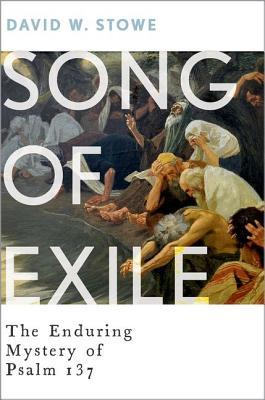
To begin, David W. Stowe discusses the application of trauma and migration theories to biblical studies* and, in particular, to his exploration of Psalm 137.

Migration and Trauma

On trauma theory and bible, Stowe writes:

Certainly the Bible provides voices that resonate with pain caused by the experience of the Exile in Babylon….

Reading the biblical literature through the lens of trauma theory suggests an agonizing experience during the Golah [Babylonian Exile]. Recent work in trauma theory and post-traumatic stress disorder (PTSD) shows that symptoms associated with psychosis and other mental illness are symptoms of the human psyche struggling against an overload of anguish. Distortions in verbal and written communication [which Stowe and many others identify in the Book of Ezekiel, for example], even a failure to communicate at all — to become mute — reflect strategies of self-defense….
— Stowe, Song of Exile, p.8-9

Stowe looks at migration theory in the same context:

Because we learn so much about Moses’ long attempts to win freedom from bondage for his compatriots, we assume that Egyptian slavery must have been harsher [than that of Judean exiles in Babylon]….

To flesh out this monochromatic picture of the Golah experience, scholars have brought to bear analytic tools from the social sciences, in particular the recent field of migration studies….An important contribution in the recent scholarship lies in drawing distinctions between different categories of people who formerly might have been simply labeled “exiles” or “refugees.” These blanket terms obscure a host of subtle variations: between migrants, exiles, refugees, and members of a diaspora; between voluntary and involuntary migrations; between internal migration and migration that crosses political boundaries.
— Stowe, Song of Exile, p.10

Stowe’s specific discussion of Psalm 137 awaits another day and another post. Meanwhile, though, his remarks above link back to Junot Díaz’s Islandborn: how differing immigration experiences lead to different recollections and relationships around the country departed — including, in many cases, a silence hard that can make it difficult for younger generations to learn their family’s past.

Stowe’s remarks also relate to a very different style of biblical study.

The Book of Job

The Book of Job offers linguistic, literary, and theological challenges when it comes to assigning authorship or even declaring the century in which it was committed to writing, in whatever form. See, for example, these authorship pieces by Columbia’s Brennan Breed and Elon Gilad of Haaretz. Moses Sokolow explores Talmudic ideas about authorship and elaborates on those with another suggestion.

Sokolow first argues, in Tanakh: An Owner’s Manual (full citation below), that three or four of the seven Talmudic suggestions for Job’s authorship overlap chronologically so as to suggest a consensus around authorship in the time of the Chaldeans (Babylonians). He then goes on to present a hypothesis:

Since Ezekiel lived during the era of the Chaldeans and was the only biblical author acquainted with Job, it is not a priori unreasonable to ascribe the Book of Job to him, particularly if we now take note of the one Talmudic opinion [of seven] we have thus far omitted: “Iyyov lo’ hayah ve-lo nivra’” – “Job never existed”; his story is only a parable (Bava Batra 15a).

The usual understanding of the Book of Job is that it addresses the question of theodicy….

But what if Job were the personification of the Jewish people? What if the destruction of his home, the loss of his wealth, and the death of his sons were parables for the destruction of the Temple, the forcible exile, and the many concomitant deaths and privations suffered by the Jewish nation? Ezekiel’s prophetic mission was devoted to reassuring the exiles that God’s presence was among them even in Babylonia, and that there would be a return to Zion and a restoration of the Temple. Could the Book of Job, then, not be Ezekiel’s own “Holocaust theology,” offering the conventional explanation for suffering (sin), rejecting it, and replacing it with the reassurance that there was a divine plan for history as there was for nature, and that our inability to perceive the former is in no way different from our like inability to comprehend the latter?
— Sokolow, p.43

Sokolow’s suggestion is presented in a different framework from biblical studies working from predominantly Christian sources. Both methodologies lead, however, to further discussion of trauma and migration in relation to biblical stories.


on this 27th day of the omer, making three weeks and six days

NOTES:

Here are two fairly recent relevant collections on migration, trauma and other theories of exile:

Interpreting Exile: Displacement and Deportation in Biblical and Modern Contexts. Ranier Albertz, ed. Atlanta, GA: Society of Biblical Literature, 2011.

By the Irrigation Canals of Babylon: Approaches to the Study of Exile. John J. Ahn and Jill Middlemas eds. NY: T & T Clark International (Continuum), 2012.

Note, please, that Stowe, like many other scholars in the field called “biblical studies,” cites predominantly Christian sources. Moreover, some remarks in Song of Exile suggest his exposure to Jews is limited (see Song of Exile page) — which is not uncommon in Christian biblical studies. For more on this topic generally, see also “Babylon and Adventures in Bibleland” as well as “Babylon Basics.”
BACK


Tanakh: An Owner’s Manual: Authorship, Canonization, Masoretic Text, Exegesis, Modern Scholarship, and Pedagogy. Moshe Sokolow. NY: Ktav, 2015.
BACK