Interconnection and Stepping Away

An unusual incense, associated with the high holidays, calls us to recognize — and then to welcome and integrate — the more difficult aspects of ourselves and our communities. Many teachings focus on one of the ketoret‘s components, which is foul-smelling on its own but sweet-smelling in compound: Often this fact is used to call Jews to unity and to remind us that not only can we pray with the wayward among us, and within each of us, but we must. What do we do with this teaching as our institutions collapse around us and our communities struggle to find space for all?

This is part of a series on Summer of Collapse.

This post was substantially updated just before noon ET, following its first posting in the wee hours of Sep 9 (16 Elul 5785), including the addition of the “Seat of Compassion” section and a link to “Stepping Away in Hope and Prayer.”

A few basic texts regarding the ritual incense/ketoret, with its foul-smelling component, chelbenah, are below. Here is an exploration of connections with the season of teshuvah/return.

This Year’s Challenge

In her book, Sacred Therapy, Estelle Frankel describes connections between ketoret and Yom Kippur:

In the mystical tradition, the ketoret was understood to be a symbol of unity and interconnectedness within and among people. According to Jewish law, it had to be made from eleven different spices, including chelbenah, or galbanum. Though chelbenah itself is foul smelling, it was an essential ingredient of the sweet-smelling ketoret offering, for according to legend, when the chelbenah was joined with the ten other ingredients, it actually added sweetness to the ketoret’s sweet fragrance.

The inclusion of the chelbenah in the ketoret suggests that when we are joined together as a community, we atone for one another. Even the sinners and schleppers among us add to the perfection and fragrance of the whole. In commemoration of the chelbenah, on the eve of Yom Kippur prior to the chanting of the opening Kol Nidre prayer, Jews recite the following invocation, which formally welcomes the sinners among them to join in and be accepted back into the community: “With permission of God and the permission of the community, we hereby give ourselves permission to pray alongside the sinners.”

…so, too, according to this way of thinking, each of us must welcome and reintegrate our own inner chelbehah on Yom Kippur. In this interpretation the chelbenah is taken to symbolize the quality or part of ourselves that is least developed and least desirable–our shadow, if you will. To the degree that we deny or reject this part, it remains split off and becomes an adversarial force in our lives. The inclusion of the chelbenah among the sweet spices of the ketoret reaches us that we must integrate our weaknesses and vulnerabilities into the totality of our being. When we do, they can actually add potency to the sweetness of our lives.
— Estelle Frankel, Sacred Therapy: Jewish Spiritual Teachings on Emotional Healing and Inner Wholeness (Shambala, 2005). p.161-162

Much of Sacred Therapy‘s focus here is on self-forgiveness and integrating parts of ourselves that we may have been trying to ignore. But Frankel also addresses what the incense means for us in community:

The vital message…is that no part of the self, nor any individual community member, may be cut off from the whole. In order for us to come into our wholeness, all parts of the self must be held together as one. And when we join together as a collective, something greater constellates than the simple sum of individuals. Joined together, we atone for one another, for what one of us may lack another makes up for, and one person’s weakness may evoke another’s strength. In community, then, we find our wholeness and healing. On Yom Kippur, Jews cease to view themselves as isolated individual persons but as members of an interconnected web, a community in which each person takes responsibility for the sins of the collective….

Yom Kippur is a time when we each gather up the broken pieces of our lives–as the ancient Israelites gathered up the broken pieces of the first tablets–and try to reestablish a sense of wholeness and coherence both as individual people and as a community. Despite whatever has been broken or shattered through our own mistakes or fate itself, Yom Kippur, the day of at-one-ment, gives us a chance to heal and be whole once more.
–Frankel, Sacred Therapy, p.162-3

Trying to reestablish wholeness and coherence as a community is enormously challenging this year, for many reasons. Atonement and healing among Jews around Zionism and the state of Israel may not be possible at all at the present moment. Jews have much work to do, particularly at the new year, to clarify which “we” is meant in our prayers. We must grapple with how we are, or are not, responsible for one another.

The challenges are not small. And there is a strong temptation to cut off what or who seems to be impeding our attempts at coherence. (See also “Repentance, Repair, and Cancellation” and “The Predator’s Tools.”) But ejecting people or defining them out of the community is not necessarily the solution we might like it to be: As Frankel points out, cutting off parts of ourselves and our communities leaves an “adversarial force in our lives.” We might think we’re leaving something, or someone, behind, but our “broken pieces” do not simply disappear. Moreover, the collapse around us and the many pressures on us this year make mending more difficult….meaning we must exercise more caution regarding ruptures.

Coherence and Brokenness

Many “broken pieces,” within ourselves and our communities, result from harsh judgment in place of compassion. Through Jewish teaching, therapy examples, and meditations, Sacred Therapy explores the effort to move from judgment to compassion. (See e.g.,”Finding the Seat of Compassion.”) On the more general topic, she writes:

Unfortunately, many of us spend a great deal more time sitting in harsh judgment (din) than practicing compassion (rachamim) or forgiveness. We are more concerned with what’s wrong with ourselves and others than with what’s right. We obsess about our own imperfections and are all too ready to criticize our friends, family, and associates whenever they fall short of our expectations. When we get stuck in our “judging mind,” life begins to seem like an endless series of disappointments! And when we relentlessly judge and find fault with ourselves and others, we unfortunately often end up worsening the problems we think we are trying to remedy.


…when we support and lovingly care for those who are ill or suffering, we sweeten an experience that would otherwise be harsh and unbearable (din).

Similarly, when we find a way to transform situations of anger and discord between people into harmonious, loving connections, we sweeten the judgments.
–Frankel, Sacred Therapy, p. 188-189, p.196

Frankel notes that work to “sweeten” harsh judgment should not be expected of us when “someone is hurting us or taking advantage of us.” In such cases, she says, it may be necessary to “set firm limits,” instead, at least temporarily (p.197). And yet…

There are, however, many situations in our daily lives when we do have the power to “sweeten” things, particularly in relation to our own harsh judgments about ourselves and others. We also have many opportunities to transform angry and aggressive verbal exchanges into respectful, loving exchanges. We have the power to set the tone of conflicts so that our discourse with others is characterized by mutual compassion and empathy. And ultimately, when we succeed at transforming potentially contentious relations into mutually empathic exchanges, we open up the flow of divine rachamim in our own lives. For as the rabbis said, “According to the quality one uses to deal with others, by that very quality is one dealt with.”*
–Frankel, Sacred Therapy, p.197
*footnote references B. Meg 12b

In some cases, we will decide, at least temporarily, to separate ourselves, as individuals or as subsets of larger communities, from one whole in order to gain wholeness in another. In some cases, the quest for coherence might leave us feeling more torn and lonely than whole. The reminder of the incense, however, is that we actually need one another and cannot atone all alone.

Judging and Sweetening

We know from our own experiences, as well as from midrashic tradition, that pure judgment is not tenable in the long run. Breishit Rabbah 12:15 tells us: “At first God thought to create the world through the quality of judgment (din), but realizing that the world could not endure at this level, God added on the quality of compassion (rachamim).” And yet too many of our communal institutions, and too many of our community expectations are too willing to stay with “judging mind.”

Being quick to judge, while refusing to engage with dissent or difference, fosters a brittle, easily shattered collective. (Again, see We Will Not Cancel Us and discussion here.) Rules and procedures which discourage sweetening leave many, avoidable “broken pieces.” Sacred Therapy suggests that we can re-member the lost and broken bits; we can retrain ourselves to be more compassionate; we can return to ourselves. This is not easy for any individual and harder for a group. But the new year is a reminder that change is possible and that we can transform — or if necessary, step away from — a situation in which breakage is the norm and softening is not valued.

In that spirit, I share the personal, “Stepping Away in Hope and Prayer,” along with more general, warm wishes that we all find — through the final weeks of 5785 and the coming year — better ways to integrate the wayward among us, and within each of us, in our communities, our mutual aid, and our prayers.

Incense rising, just wisps of smoke, cropped from image by József Szabó from Pixabay

Incense rising cropped from image by József Szabó from Pixabay

Texts Regarding Ketoret/Incense

Exodus 30:34-35

And YHVH said to Moses: Take the herbs stacte, onycha, and galbanum [חֶלְבְּנָה, chelbenah]—these herbs together with pure frankincense; let there be an equal part of each. Make them into incense [קְטֹרֶת, ketoret], a compound expertly blended, refined, pure, sacred.

Midrash: Joy (not atonement)

The sin-offering is brought because of sin and guilt; the burnt offering is brought because of a thought in one’s heart; the peace-offerings are brought to atone for violations of a positive commandment, while incense [הַקְּטֹרֶת, ha-ketoret] is brought, not because of sin or transgression or guilt, but only out of sheer joy [ אֶלָּא עַל הַשִּׂמְחָה, elah ‘al ha-simchah]. Hence, Ointment and incense rejoice the heart.
–Midrash Tanhuma, Tetzaveh 15

Chelbenah in Hassidic teaching

Rebbe Nathan Sternhartz of Nemirov (1780–1845) on chelbenah (full text at Sefaria):

This concept of beirur of the good points also relates to the incense-offering, which included among its ingredients the foul-smelling chelbenah. The ketoret signifies finding and refining the good even in Jewish sinners, who are likened to chelbenah. This is similar to what Chazal teach, that “any prayer that does not also include the prayers of Jewish sinners is not a suitable prayer.” For the ketoret dimension of prayer is primarily fulfilled by finding and refining good points even in Jewish sinners, who are represented by the chelbenah.

This is also the significance of the ketoret being comprised of eleven spices—that is, ten spices aside from the chelbenah. These ten fragrant substances represent the Ten Types of Melody, the melodies made by finding and refining the good in Jewish sinners, who themselves signify the eleventh ingredient, the chelbenah.

–Likutei Halakhot, Orach Chaim (morning conduct) 1:5-6

Talmud: Wage Dispute

Babylonian Talmud Yoma 38a speaks of artisans who made the special Temple incense and a wage dispute in which less skilled artisans are brought in but cannot make the incense rise properly, so the original workers are hired back at twice the wage.

Finding the Seat of Compassion

For decades now, I’ve returned frequently to Frankel’s teaching, “Finding the Seat of Compassion,” and highly recommend checking it out and employing it. (Borrow a virtual copy from Archive.org, visit your local library, or get a copy from Bookshop.) Here’s part of the “Seat of Compassion” passage:

“…Whenever you notice that you are stuck in a place of judgment, whether of yourself or of someone else, try to imagine what it would be like if you stepped away from the judging position and viewed the same person or situation from the perspective of rachamim. You can try practicing this as a meditation in which you visualize these two qualities–judgment and compassion–literally as two seats. Imagine yourself getting up and moving away from that seat of judgment and sitting on the seat of compassion….

“…You will be surprised by how many opportunities there are in the course of an ordinary day to come from a place of compassion rather than judgment.”

— Estelle Frankel, Sacred Therapy: Jewish Spiritual Teachings on Emotional Healing and Inner Wholeness. Shambala, 2003. p.205

-#-
Repentance, Repair, and Cancellation

UPDATE 8/26/25: Congregation Membership and Removal resource page

UPDATE 8/29/25: Typos in copying from We Will Not Cancel Us corrected

Repentance and repair must be year-round efforts, but the Jewish calendar emphasizes these needs as a new year approaches. For help in this work, many Jews turn to a centuries-old, five-step process outlined by Maimonides, AKA “Rambam” (acronym for RMoses ben Maimon):

  • Naming and Owning Harm
  • Starting to Change
  • Restitution and Accepting Consequences
  • Apology
  • Making Different Choices — as outlined by R’ Danya Ruttenberg

This is another in a series on Calendar Notes for a Summer of Collapse.

Beyond some quotations and a few questions, I haven’t got much to offer.

But the questions strike me as non-negotiable, given all we face in- and outside Jewish communities… living in DC and with many friends and family in Chicago, I am so conscious of the disasters coming our way if we cannot figure out how to resist in ways that don’t cause more damage….

Naming Harm and Starting to Change

This year, I am exploring these steps within the “unthinkable thoughts” of adrienne maree brown’s We Will Not Cancel Us:

I’ll start with the scariest unthinkable thought for me, which is that maybe we as a species are in a state of apocalyptic fatigue — exhausted in the face of all the changes and endings we are living through. Our current collective circumstances require us to think about death, to grieve, and to consider that everything we have known has to change or come to an end. [p.33]


I, we, have to be able to discern what is me/us and what is fear.

Which leads to my next unthinkable thought: do I really know the difference between my discernment and my fear? [p.37]


…We are full of justified rage. And we want to release that rage. And one really fast and easy way to do this is what I experience as knee jerk collective punishment in movements. [p.40]


We are afraid, and we think it will assuage our fears and make us safer if we can clarify an enemy, a someone outside of ourselves who is to blame, who is guilty, who is the origin of the harm. Can we acknowledge that trauma and conflict can distort our perspective of responsibility and blame in ways that make it difficult to see the roots of the harm? [p.42-43, emphasis added]


The tools of swift predatory justice feel good to use, familiar, groove in the hand easily from repeated use and training, briefly satisfying. But these tools are often blunt and senseless.

Unless we have an analysis of abolition and dismantling systems of oppression, we will not realize what’s in our hands, we will never put the predator’s tools down and figure out what our tools are and can be.

My third unthinkable thought — why does it feel like we are committed to punishment, and enjoying it? Why do our movements more and more often feel like we are moving with sharp teeth against ourselves? And what is at stake because of that pattern, that feeling? Why does it feel like someone pointing at someone else and saying: “that person is harmful!,” and with no questions or process or time or breath, we are collectively punishing them, tearing them, and anyone protecting them, to shreds?

Sometimes we even do it with the language of transformative justice: claiming that we are going to give them room to grow. They need to disappear completely to be accountable. We are publishing shaming them so that they will learn do do better.

Underneath this logic I hear: we are good and we are getting rid of the “bad” people in our community or movement. We are affirming our rightness and power. [p.44-45, emphasis added]


Knee-jerk call outs say: those who cause harm or mess up or disagree with us cannot change and cannot belong. They must be eradicated. The bad things in the world cannot change, we must disappear the bad until there is only good left.

But one layer under that, what I hear is:
We cannot change.
We do not believe we can create compelling pathways from being harm doers to being healed, to growing.
We do not believing we can hold the complexity of a gray situation.
We do not believe in our own complexity. [p.57-58]

We Will Not Cancel Us: And Other Dreams of Transformative Justice by adrienne maree brown. AK Press, 2020.

Institutional and Movement Repair

The crucial perspectives of We Will Not Cancel Us return me to Rambam’s process, as R’ Ruttenberg describes it: Maimonides discussion of transformation “precedes his discussion of amends/reparations and apologies. He doesn’t spell out his thinking explicitly, but I think he was trying to tell us that apologies, and even amends and reparations, don’t truly have the needed effect if the work to become different isn’t already underway….The goal here isn’t amends. It’s transformation.” p.34, On Repentance and Repair.

One tricky aspect of work here involves our participation in a variety of institutions: “How can and should we think about the work of repentance when not a single person, but a rather a body, made of many actors with different roles is causing harm?…What are the obligations–and limits to the obligations–of the individuals in charge, and what does repentance look like when undertaken by an institution?” p. 101, On Repentance and Repair.

Again, beyond the questions, I haven’t got much to offer. But I believe we have to be asking them. And the questions lead me back to adrienne maree brown:

“I can’t help but wonder who benefits from movements that engage in public infighting, blame, shame, and knee-jerk call outs? I can’t help but see the state grinning, gathering all the data it needs, watching us weaken ourselves. Meanwhile, the conflicts are unresolved, and/or harm continues.” p. 54 We Will Not Cancel Us

congregation membership and removal resource page (added 8/26/25)

Rambam, Ruttenberg, Repentance

Laws of Repentance, a late 12th Century work, is part of the enormous Mishneh Torah and can be found in several translations at Sefaria. (Useful background on Mishneh Torah as a whole). R’ Danya Ruttenberg provides an overview of Rambam’s five steps and explores them in the context of personal, public, institutional, and national repair: On Repentance and Repair: Making Amends in An Unapologetic World (Beacon Press, 2022).

Community Meanings

Figuring out what kind of community is being constituted, under what rules and expectations, across what kind of timeline, and for what purpose, is a constant challenge — in- and outside of Judaism. As the high holidays approach, and we prepare to declare our collective sins and beg forgiveness, it’s worth considering what and who we mean when we say “forgive us.”

Another part of Calendar Notes for a Summer of Collapse (series).

Community Scholarship

Decades back, Riv-Ellen Prell — anthropologist, Professor Emerita of American Studies at the U. of Minnesota; bio at Jewish Women’s Archives — published a book of scholarship on the Havurah movement. Prayer & Community: The Havurah in American Judaism centers on a community to which Prell had belonged and obtained permission to study. What she found back in 1989 still has great relevance to communities struggling at the intersection of politics and worship.

The entire book is available in digital form through Wayne State University Press website. Excerpts are offered below in PDF form.

For anyone who wants to dig really deep, check out The Papers of Riv-Ellen Prell” (research, fieldwork, and correspondence regarding Westwood Free Minyan in Los Angeles and related studies.)

Related RoundTable on Do-It-Yourself Judaism, 2007

See also: Empowered Judaism : what independent minyanim can teach us about building vibrant Jewish communities. Rabbi Ellie Kaunfer. Jewish Lights Publishing, Woodstock, Vt., 2010

Community Words

Jewish liturgy is filled with references to “the People” [העם, ha-am] or “Your People” [עםך, amkhah, commonly with masculine singular suffix], sometimes “the people Yisrael” or “Jewish people” [עם ישראל, am yisrael]. Biblically — and so in the prayerbook — am can also mean “nation,” as in Yisraelites, or as in “other nation.” Related expressions in bible and prayer including adah [עדה, congregation], kahal or kehillah [קהילה, community], and tzibur [צבור, public/worship gathering]. In addition, Jewish tradition speaks of minyan [מנין, quorum] and havurah [חברה, fellowship].

Hebrew and English words: Tzibur -- public group. community -- kehillah. Folk [Latin and Hebrew characters] Minyan -- quorum. Adah -- congregation. Fellowship -- havurah.
Community Words: alt text below

Jewish prayer often situates “us” in a group that extends beyond any present gathering, physical or virtual — far into the past and into a hoped-for future.

Community Questions

Questions of alignment with larger movements, in- and outside of Judaism, are always present for individual Jewish communities. In these days of collapse, however, as individual congregations and groups become unmoored from anchoring umbrella-institutions, the questions become more complicated.

  • What is the community’s relationship to political movements in, and beyond, the US?
  • What is communal relationship to principles of labor and abolitionist organizing?
  • How do fundamental values — egalitarianism, transparency, mutual aid, collective decision-making, e.g. — manifest in our communities?
  • What can we expect of one another in a time of so much collapse?

These and so many other questions need asking, just at a time when so many of us — individually and in our collectives — have very little capacity. What’s a community to do?

Excerpts from Prayer and Community

Image description: Hebrew and English words: Tzibur — public group. community — kehillah. Folk [Latin and Hebrew characters] Minyan — quorum. Adah — congregation. Fellowship — havurah.

How?! A Roadmap for Transformation

Calendar Notes for a Summer of Collapse — Part 3 (of 10) — songeveryday.org

The “Hows” of this season outline a difficult journey, built into the Jewish calendar. Following this annual journey can remind us that
building community is hard work that can easily get off track.

PDF download — “How?! A Roadmap

— This piece originally appeared in Matir Asurim’s 5783 Tisha B’Av Mailer —

“How” is the sort of word that is used a lot without getting much attention. But this small, often overlooked word is important to a time of transformation in the Jewish calendar. The word creates a kind of roadmap for heading into, and climbing out of, Tisha B’Av, the lowest point of the Jewish calendar.

“How [Eikhah]” is the first word, and the Hebrew title, of the Book of Lamentations, read on Tisha B’av. It is also a key word in the Torah and prophetic readings for “Shabbat Chazon,” the sabbath of vision, right before. Together, the “how” readings cover a lot of emotional territory.

In English, “how” can be used to express different ideas:

Frustration: “How are we supposed to do this?!”

Disbelief: “How could this happen?

Despair: “How awful!”

Questioning: “How does this work?”

The Hebrew word “eikhahhas similar uses in the Bible, generally, and in readings of this season:

Frustration: Moses re-telling complaints about the People’s behavior in the wilderness:

Eikhah/How can I, alone, bear the trouble of you!……the burden, and the bickering!”
— Deuteronomy 1:12, Torah reading for Shabbat Chazon

Disbelief: God criticizing the People in Isaiah’s prophecy, set in 8th Century BCE:

Eikhah/How has the faithful city become perverse?…She was full of justice
righteousness lived in her. But now murderers — “
— Isaiah 1:21, prophetic reading for Shabbat Chazon

Despair: mourning destruction of the First Temple and exile, 6th Century BCE:

Eikhah/How lonely sits the city!…”
Once great with people! She was great among nations, now alone and vulnerable.
Once a powerhouse, now just one of the ruled.” — Lamentations/Eikhah 1:1,* reading for Tisha B’Av

Questioning: Jews trying to find meaning and move forward through disaster:

“How did we get here?” and “How do we go on?”
— centuries of Jewish teaching about destruction and tragedy

(Bible translations adapted from Jewish Publication Society 1985)

These “Hows” outline a difficult journey, built into the Jewish calendar. Following this annual journey can remind us that building community is hard work that can easily get off track.

How did we get here?

The Book of Deuteronomy opens with Moses and the People at the end of a forty-year journey. They stand on the river’s edge, imagining life on the other side. When they first escaped into thewilderness, a “promised land” seemed just around the corner. Decades later, the People have been through a lot. Mosesis listing their mistakes and his disappointments, crying:

“How can I manage this burden!(Deut 1:12)

This is a community in trouble and out of balance. Maybe not all that different from our own?

The Book of Isaiah opens a long time later, on the other side of the river. But the vision of a “promised land” now seems like a nightmare. Isaiah tells the People they are focused on the wrong things and have become a burden, even to God:

“Your rituals are a burden to me…Your hands are full of blood.” (Isaiah 1:14-15).

The prophet’s harsh words point to a whole nation troubled, out of balance, and wondering: How could dreams of justice and righteousness go so deeply wrong?

In Lamentations, the Temple is in ruins, and the People face exile. Vision of a “promised land” seems in the past. Tisha B’Av mourns loss of dreams and hopes, as well as lives and homes. This won’t be the only time in history that Jews ask: “How?! How did our visions turn into this painful mess?!” We have always struggled to share burdens in our communities. We’ve always fallen short of our visions. That is one message of the “How” readings. But it’s not the only message.

How do we go on?

The “How” readings also tell us that we are expected to do better, as individuals and society:

Learn to do good.

Devote yourselves to justice;
Aid the wronged.
Uphold the rights of the orphan;
Defend the cause of the widow
–Isaiah 1:17


Where did our ideas of community fail in the past? What visions must we mourn? Shabbat Chazon prompts us to envision something truly new, and imagine steps toward needed change. Tisha B’Av reminds us to expect failure and to mourn our losses. But the calendar nudges us forward.

There are seven weeks from Tisha B’Av to the new year. The “How” readings give us our homework, well in advance. We have work to do. And that work starts with “Learn.”


Image: Hebrew word Eikhah in Hebrew characters, plus English “How?! How? How!

Summer Breather, Toward Fall

Calendar Notes for a Summer of Collapse

Part 1 (of 10)

Download PDF version — Summer Breather, Toward Fall


The Jewish calendar’s springtime is full:

  • Purim, Passover and the Omer Period, then Shavuot;
  • The months of Adar, Nisan, Iyar, and Sivan mark, on the one hand, winter’s overturning, the early (barley) and the later (wheat) harvests; on the other:
  • unveiling of hidden power, the beginnings of Liberation, the path to Sinai, and Revelation.

After all that, Tammuz holds one minor fast day.

The 17th of Tammuz starts the semi-mourning period of “The Three Weeks” (see below). And that period leads into preparations for the High Holidays and “THE festival” of Sukkot in the fall.

Tammuz itself offers a kind of breather. And For Times Such as These suggests it is a good month to ask:

What’s growing in your garden now?
What is feeding you? What does the sun have to offer?
Where do you see signs of what’s been destroyed in your communities?
What destruction needs attending to?
How are the hurts of your communities/histories manifesting in the collective body?
What grief is unresolved and impacting your community?
— Rabbi Ariana Katz & Rabbi Jessica Rosenberg. For Times Such as These: A Radical’s guide to the Jewish Year (Wayne State University Press, 2024), p.249

As Tammuz comes to a close — the month ends this year on July 25 — we can still ponder, carrying our answers or remaining questions into the next phase of the calendar.

The new month of Av begins on Shabbat, July 25-26 (2025) and For Times Such as These suggests that we ask:

NOTE: Av questions relating to love and sex seem better suited to the post-mourning days of the month; again, see calendar notes below, and check out For Times Such as These for more on the Jewish year.

God’s Questions and Ours

God has a lot of questions for us, according to the prophet Jeremiah*:

1) what? [מַה, mem-hey, mah] — Jeremiah 2:5

2-4) where? where? where? [אַיֵּה, alef-yud-hey, ayyeh] — Jer 2:6, 2:8, and 2:28

5) why? [מַדּוּעַ, mem-dalet-vav-ayin, madua] — Jer 2:14

6-7) whatsoever? or what-in-any-way? [מַה־לָּךְ, mah+lamed-kaf] — twice in Jer 2:18

8) how? [אֵיךְ, alef-yud-kaf, eikh] — Jer 2:23

Interrogatives are not unusual in biblical Hebrew. But eight in the space of 24 verses has an impact. Together, the piled up questions turn this passage into a kind of awareness demand.

Three of these interrogatives — what, where, and how — are part of questions we might already be asking ourselves, and each other, for the months of Tammuz and Av (see page 1).

In addition, the final question, Eikh [How?], hints at a theme in the next week’s readings, which are dominated by “Eikhah / How?!” as lament.

It’s important to ask specific, seasonal questions — and lean into the lament they raise. And it can be oddly comforting to know that the Jewish calendar is designed to stress this need. But it can also be helpful to imagine a less specific dialogue with the divine, one centered around questions as wake-up call: What? Where? Why? What-in-any-way? How?

———–

*Jeremiah 2:4-28 plus 3:4 is read as the second “haftarah of affliction” in preparation for Tisha B’Av. When, as in 5785/2025, the reading comes on Rosh Chodesh Av, two verses about new moons are added to close the haftarah: Isaiah 66:1, 66:23.

** For language geeks and trivia lovers: The form of “where” in Jeremiah 2 is lengthened from the simpler alef-yud, אַי. The Brown-Driver-Briggs biblical dictionary adds about this form:

used of both persons & things (but never with a verb [contrast אֵיפֹה (eifo, alef-yud-pei-hey)]; oft. in poet. or elevated style, where the answer nowhere is expected…

————————-

Broken Cisterns, Holding Water

Amid all the questions, this chapter of Jeremiah includes the following divine complaint:

כִּי־שְׁתַּיִם רָעוֹת עָשָׂה עַמִּי
אֹתִי עָזְבוּ מְקוֹר מַיִם חַיִּים
לַחְצֹב לָהֶם בֹּארוֹת בֹּארֹת נִשְׁבָּרִים
אֲשֶׁר לֹא־יָכִלוּ הַמָּיִם׃

For My people have committed two evils: They have forsaken Me, the fountain of living waters, and hewed them out cisterns, broken cisterns, That can hold no water.

— Jer 2:13, (JPS 1917 translation — a little old-fashioned, but chosen for its rhythms)

Water is often linked with Torah and with healing. So God’s complaint might be understood as accusing the people of failing to value God’s teaching and healing, and of creating faulty containers, unsuitable for gathering and preserving God’s life-giving offerings.

A related passage in Proverbs is used for much commentary on Torah, water, and healing:

שְׁתֵה־מַיִם מִבּוֹרֶךָ
וְנֹזְלִים מִתּוֹךְ בְּאֵרֶךָ׃

יָפוּצוּ מַעְיְנֹתֶיךָ חוּצָה
בָּרְחֹבוֹת פַּלְגֵי־מָיִם׃

Proverbs 5:15) Drink water from your own cistern [borkha],
Running water from your own well.

16) Your springs will gush forth
In streams in the public squares. [Revised JPS 2023]

These teachings, attributed the Talmud’s Rabbi Akiva, focus on the idea of bor [pit/cistern]:

In this season of contemplating all that is broken, in and around us, the Jeremiah and Proverbs images and Rabbi Akiva’s teaching are worth reflection. Here are some questions for this particular season:

  • In what ways have our Torah-containers broken, over time and more recently?
  • Are all such breaks “bad”? How might cracks help us move forward differently?
  • Have we (individuals, communities, society) forsaken divine teaching? How? And, if so, how might we remedy that?
  • What kinds of containers do we need for communal Torah today?
  • What kind of work is required to build what is needed?
  • How does the imagery in Prov 5:15-16 differ from that found in Jeremiah?
    • — Is one vision more universal than the other?
    • — Is either more hopeful?
    • — Many translations, including RJPS, opt for “your own cistern” and “your own well” rather than just “your cistern” and “your well.” What is “ours” or “our own”?
    • — Does sticking to our (own) Torah caution us from “bad” teaching? limit us in some way? Or does it encourage us to bring out our (own) Torah?
    • How does Akiva’s imagery differ from that in the biblical passages?
  • — How does Torah/water get into the cistern in the two sets of images?
  • — A pit may contain no water to start with, but is all Torah poured in by scholars?
  • — Consider, too, this story about Akiva himself, water, and a bor:

Speaking of Broken Things

Akiva (c. 50 – 135 CE) is a huge figure in the Talmud and later lore. For this summer of collapse, it’s particularly worth noting that Akiva was a controversial figure in the politics of responding to Roman occupation and that two of the most quoted stories about him involve major tragedy: his 24,000 students who died in a plague of disrespect (B. Yebamot 62b), and “the four who entered Paradise” (B. Chagigah 14b: Wikipedia’s basic page on the legend of Pardes is pretty useful).

The latter story brings us back to stones and water — in a strange, mystical way:

[Akiva told his fellow travelers:] When you reach the stones of pure marble, don’t say, “Water! Water!” As it states, “One who speaks falsehood shall not endure before My eyes” [Psalms 101:7] — Babylonian Talmud, Chagigah 14b

Four men entered pardes [paradise]: Ben Azzai, Ben Zoma, Acher ([“Other”], Elisha ben Abuyah), and Akiva. We are told: “Ben Azzai looked and died; Ben Zoma looked and went mad; Acher destroyed the plants [became a heretic]; Akiva entered in peace [or wholeness, “shalom”] and departed in peace” (B. Chagigah 14b again). Many teachers assume that this means Akiva was of superior mind or spirit. But the story does raise the question: What does it mean to survive in wholeness amid such disaster, for near friends and so many others? Returning to the For Times Such as These questions for Tammuz:

Where do you see signs of what’s been destroyed in your communities?

What destruction needs attending to?

How are the hurts of your communities/histories manifesting in the collective body?

What grief is unresolved and impacting your community?


Toward Tisha B’Av, “Within the Straits,” and Then Beyond: Calendar Notes for Tammuz and Av and Elul — here as PDF (if anyone needs another format for accessibility, please advise) —

Download Toward Tisha B’Av

Remembering Emanuel 9 and…

Remembering bible study participants at Mother Emanuel EME Church in Charleston, SC, victims of a 2015 mass murder, by a white supremacist.

This past week, three elders were murdered at Saint Stephen’s Episcopal Church in Vestavia Hills, AL. A month earlier, one man was killed and five others injured at Geneva Presbyterian Church in Laguna Woods, CA.

These church killings are in addition to the widely reported mass shootings in East Buffalo, NY, and Uvalde, TX, and to SEVENTY OTHER MASS SHOOTINGS between May 14 and June 16. (Mass shooting data at Gun Violence Archive). Many victims have been Asian, Black, and Latine.

No words beyond a request to recall those lost,
all who mourn for them,
and all who continue to organize in their memories,
in your practice this weekend.

Here are some names of those lost,
recently and at this time in years past.

June 17, 2015 — Mother Emanuel

Pastor (and SC Senator) Rev. Clementa C. Pinckney, 41
Cynthia Graham Hurd, 54
Susie Jackson, 87
Ethel Lee Lance, 70
Depayne Middleton-Doctor, 49
Tywanza Sanders, 26
Rev. Daniel Simmons, 74
Sharonda Coleman-Singleton, 45
Myra Thompson, 59

June 16, Vestavia Hills, AL — Saint Stephen’s Episcopal

Walter Rainey, 84;
Sarah Yeager, 75
third victim, 84, died at the hospital

For the record: This is not considered a “mass shooting,” as defined by the Gun Violence Archive (four or more injured, exclusive of the alleged perpetrator). A news story from WVTM

May 15, Laguna Woods, CA — Geneva Presbyterian

Dr. John Cheng, Geneva Presbyterian Church.

Five others injured in this Taiwanese church. A news story from Heavy.com

May 14, East Buffalo, NY — TOPS Supermarket

Ruth Whitfield, 86
Pearly Young, 77
Katherine Massey, 72
Deacon Heyward Patterson, 67
Celestine Chaney, 65
Aaron Salter, Jr., 55
Roberta A. Drury, 32
Margus D. Morrison, 52
Andre Mackneil, 53
Geraldine Talley, 62

A news story from Public Broadcasting

May 24, Uvalde, TX — Robb Elementary School

A news story from Texas Tribune

Washington DC shooting deaths

This week:

June 11 — 18-year-old Saige Ballard
June 12 — 34-year-old Alphonzo Jones
June 13 — 17-year-old Xavier Spruill
June 15 — 30-year-old Israel Mattocks
June 15 — 16-year-old Deandre Coleman
June 16 — 42-year-old Dimaris Smith
June 16 — 29 year-old Christian Gabriel Monje (May 30 shooting)

DC shooting yahrzeits this week

2021

  • June 17 — 28-year-old Demonte Thompson
  • June 18 — 42-year-old Everette Faison
  • June 18 — 52-year-old Benson Thorne Sr.

2020

  • June 11 — 32-year-old Kevin Redd
  • June 11 — 18-year-old Saige Ballard
  • June 13 — (Mass shooting: 5 injured, two killed)
    19-year-old Zymia Joyner
    19-year-old Rashard Waldo
  • June 14 — 21-year-old Albert Smith,

2019

  • June 13 — 24-year-old Devin Butler
  • June 14 — 43-year-old Damon Bell
  • June 15 — 37-year-old Richfield Chang
  • June 16 — 30-year-old Arkeem Jackson
  • June 19 — 29-year-old Juan Marcell Grant

2018

  • June 11 — 24-year-old Daymond Chicas
  • June 12 — 24-year-old Syles Kealoha
  • June 12 — 22-year-old Marqueese Alston (police shooting)
  • June 13 — 43-year-old Larry Harrell
  • June 14 — 23-year-old Dontae Mitchell

2017

June 12 — 33-year-old
June 14 — 28-year-old Julius Leroy Foreman
June 16 — 25-year-old Malik Hill

2016

June 14 — 20-year-old Devonte Crawford
June 18 — 40-year-old Stephanie Goodloe

2015

  • June 13 — 44 year-old Donald Franklin Bush
  • June 14 — 26-year old James Brown
  • June 17 — 25-year-old Larry Michael Lockhart
  • June 17 — 28-year-old Antonio Lee Bryant

Fuller listing at “Say This Name

Remembering and Reckoning

“Until That Day: What Are We?”

A first draft, April 17, 2021 of a poem in response to Yehuda Amichai’s “And Who Will Remember the Rememberers?” (associated with Israel’s Memorial Day, 4th of Iyar) — V. Spatz


“Until That Day: What Are We?”

Verses for a Day We Don’t Yet Have,

have yet to acknowledge we need.

Generations of memory-veterans stagger

with weights carried by elders and ancestors

and boulders we watch children try to bear.

The current generation of fresh loss has members

of ripe old age who mourn alongside children

some still in a school team’s bright colors.

Who, beyond the circles of near loss, acknowledge the rememberers?

//

How does a monument come into being?

A bullet shatters a life and a lamppost sprouts

flowers and stuffed animals, balloons and banners.

A mirror’s adornment or a headlight’s unblinking stare

lead onto a road some call “hope,” but too many know as “dread.”

Vigil upon vigil and protest unending, the battle never recedes,

and tears rarely dry in some communities

while others pause now and then to note the numbers

maybe read the names.

But who, beyond the circles of near loss, acknowledge the remembers?

And where is that national day of reckoning

as yet unimagined?

//

How would we stand on such a day?

Erect or stooped, in mourning or guilt.

Collective protest of death lost in recognition

of our long participating in a system that kills.

//

Every joyful birth sends another child into a jumble,

a landscape lush with potential deaths:

“They looked suspicious.” “I thought it was my taser.”

“I feared for my life.” “I gave 12 seconds of thought.”

When, beyond the circles of near loss, will we truly acknowledge

Adam Toledo, James Lionel Johnson, Dominique Williams,

Rakia Boyd, Terrence Sterling, Anthony Louis,

LaQuan McDonald, India Kager, Oscar Grant,

Archie Williams, Gary Hopkins Jr., Alonzo Fiero Smith…

Can we ever truly mourn and still continue to live

in a system that kills this way?

Until we all remember the rememberers

until we all stand in a day of reckoning,

what are we?

If one is unprotected: a prayer for DC and beyond

As the District of Columbia begins absorbing crowds seeking to engage in “wild protest,” DC’s mayor is asking locals to “stay home” or “stay out of the downtown area.” Community and religious leaders were encouraged to share the “stay home and stay safe” message.

The DC Council’s statement also urges people to avoid protest areas but includes some nuance: “We recognize that downtown is home to residents and businesses whose rights must be respected and protected as we work to keep all safe, including residents who are currently homeless,” they write, asking the mayor and police to prioritize the protection of these groups.

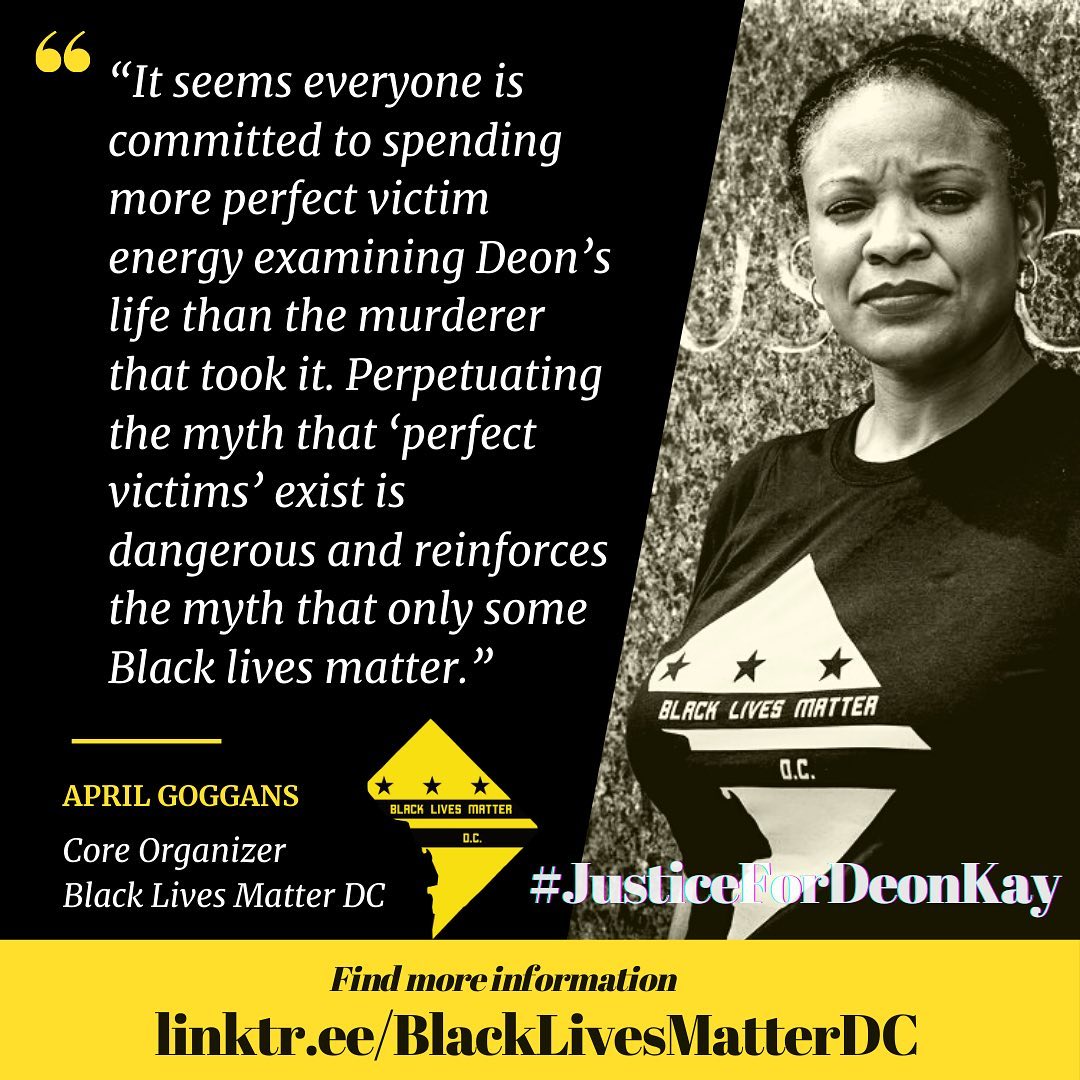
Black Lives Matter-DC, earlier issued a call “asking all DC residents to hold the city officials and businesses accountable” for the failure to oppose white supremacist attacks in November and December. In addition, their statement “also calls upon Black and brown people, if possible, to avoid Trump support rallies and actions. They ask that Black and brown residents stay alert and vigilant during the upcoming white supremacist invasion.” Full statement here —

With these three calls in mind, and in solidarity with religious institutions who are attempting to respond to the threats, I share this prayer. It is based on one from Jewish morning prayers:


Blessed is THE SOURCE OF ALL, who forms humans in wisdom, with possibilities for communication and connection. Before the vastness and weight of THE DIVINE, we recognize and acknowledge essential networks, within us and around. Any disruption or blockage threatens survival and health of the whole.

None of us are free, if one of us is chained.

We are never truly safe, if one is unprotected.

Amid sources of division, keep us mindful of interconnectedness, collective responsibility and strength.

Blessed is THE HEALER and THE SUSTAINER of ALL CONNECTION.

For a more visual presentation, here’s a JPG with the text on a background image of a network, with denser connections at center. Text is identical to that above; image is by Gerd Altmann from Pixabay

Here’s a PDF with background image and full text for easier sharing.

Doubled Sacred Space

Sacredness is a tricky concept, made more complicated when a single place or story, concept or ritual is prominent in more than one belief system. Throughout history, conflict around sacred visions has led to much violence. An example is unfolding today in the U.S. capital.

For months now, the District has been home to an informal memorial to individuals killed by police, as well as related artwork and signage in support of Black Lives Matter. Names and pictures of those lost had been posted with loving care over the last five months, and many thousands made pilgrimages, some regularly, over the months.

The weekend of Nov. 13-16, protesters with the #MillionMAGAMarch and related demonstrations destroyed the memorial, while actively disparaging those it honors. This was accomplished with the acquiescence, and sometimes assistance, of DC’s Metropolitan Police Department (MPD). And this destruction, and MPD’s participation, has been met with silence on the part of DC leaders….and, so far, most of our faith communities as well.

The memorial is under reconstruction….meanwhile, here is (STILL DRAFT) background of the fence, pictures of what happened over Nov. 13-16, and a call to attention and action.

Multiple Folds on BLM Plaza

Conflict over sacred space appears in the story of Abraham, in the Hebrew Bible, seeking a tomb for his deceased wife, Sarah (Gen 23:1ff). The spot he chooses is “Me’arat Ha-machpelah.” Me’arah is a cave (or den). The root — כפל [kaphal] — in Hebrew means “fold” or “double.” Traditional etymology suggests that the cave’s name reflects the burying of couples (Biblically, Sarah and Abraham; Isaac and Rebecca; Jacob and Leah, with Rachel buried elsewhere; Talmud and later text includes Adam and Eve) or that it was composed of two chambers, either side-by-side or an upper and a lower. The doubling, or folding, also appears in other aspects of this story and sheds some light on the BLM memorial conflict.

In the process of negotiating, Abraham declares himself “גר־וְתוֹשב [ger-v’toshav] — “stranger” and “resident” — which is a kind of folding in this one individual’s status. Likewise, DC folks might be residents, on the one hand, and simultaneously strangers in public spaces where we are excluded from full representation; some visitors here for the MAGA events, on the other hand, might be strangers in DC neighborhoods, while simultaneously appearing to feel at home, even proprietary, in public spaces.

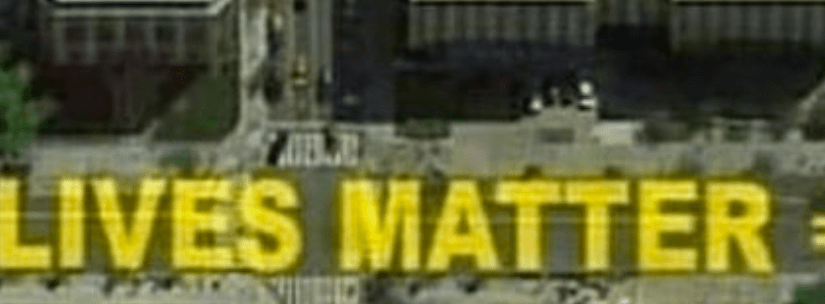
Abraham negotiates to purchase the cave and the surrounding land and trees. Eventually, the field and cave are confirmed as Abraham’s, “from the children of Heth.” This transfer results in a kind of double identity: It’s Abraham’s and it’s former Hittite property. A similar pattern shows up in many layers at BLM Plaza: On one level, it’s part of the L’Enfant plan for the U.S. government seat and it’s Anacostan/Piscataway land. On another, it’s District property and a response to the White House. It’s both a mayoral action and the people’s response to that action. The horizontal stripes are part of a DC flag and remnants of an equal sign, simultaneously a city-sanctioned design and a reminder of the guerilla “DEFUND THE POLICE” briefly equated with “BLACK LIVES MATTER.” (“BLACK LIVES MATTER = DEFUND THE POLICE,” lasted a single day before the city repainted.)

Another “doubling” can be seen in the dual nature of the historical Machpelah site (in the city of Hebron): known simultaneously as “Tomb of the Patriarchs” and as “Ibrahimi Mosque,” the site is recognized as sacred to both Jews and Muslims. In a somewhat similar vein, we see several “doublings” of meaning for BLM Plaza and Memorial Fence.

The yellow paint has one meaning for the movement for Black lives and another for DC’s mayor; trying to honor both at once results in serious conflict and insult to one vision or the other: On the one hand, consider again how the predominantly white Nov. 7 celebration was experienced as erasure by BLM supporters; on the other hand, protesters have faced months of police violence, suggesting that the mayor’s vision for BLM Plaza must be something quite different from BLM-led action.

Mayor Bowser has been sued for allowing a “cult for secular humanism” by plaintiffs who argue that the BLM Plaza “equates to endorsing a religion.” Brought by a small group, the suit represents a larger movement, in- and outside of DC, believing the yellow paint a provocation for those who “Back the Blue.” Other “Back the Blue” supporters declare no value in the lives memorialized on the fence, seek to actively erase anything associated with them, and join the current president in treating Black Lives Matter as “terrorists.” They are actively trying to reclaim the space for their vision of the United States.

Abraham negotiates in front of a gathering at the city’s gate. Do we have a “city gate” for considering the BLM Plaza conflict?

Abraham never has to argue for Sarah’s humanity. What does it say about DC and the nation, if we are silent while memorials are dismantled amid calls of “time to take out the trash”?


PS — this was written (and I thought, posted) a few days back; must have failed to hit “publish.” Sorry for delay.

For those so inclined “Protect the Fence” gofundme.

Dear Jews Who Say Black Lives Matter

in this final week of Elul 5780 —

Dear Jewish Organizations and Synagogues who Say Black Lives Matter,

In June, hundreds of Jewish organizations and congregations signed a statement of support for Black Lives Matter. That statement focused on addressing deliberate attempts to divide us:

There are politicians and political movements in this country who build power by deliberately manufacturing fear to divide us against each other….

…We’ll show up for each other every time one of us is targeted because of our differences, and reject any effort to use fear to divide us against each other.

The statement also declared sacred the work of pursuing justice, affirming Jewish support for Black-led organizing toward accountability and transparency from officials and police:

We support the Black-led movement in this country that is calling for accountability and transparency from the government and law enforcement. We know that freedom and safety for any of us depends on the freedom and safety of all of us.

…Jewish tradition teaches us that justice is not something that will be bestowed upon us, it is something that we need to pursue, and that the pursuit is itself sacred work. (Emphasis in original.)

Despite this public commitment, Jewish groups have been remarkably silent in the face of DC police shooting a youth, just barely 18, to death on a District street, September 2, 2020. Despite promises to do so, Jewish organizations and congregations have not been actively joining Stop Police Terror DC and Black Lives Matter DC in calling for accountability and transparency from government and from police. (See joint statement; more below.)

Signatories to the June letter should be prepared to stand behind our words with commitment to teshuvah [repentance] for this killing. The killing should be of national concern. At minimum, we need a greater response from signatories who live, work, and worship within DC.

The June letter is signed (on quick review) by at least 12 congregations located inside DC, more outside the city with members living and working in DC, and national organizations with offices in DC. With a few exceptions — Jews United for Justice forwarded the joint statement of Stop Police Terror/BLM DC, for example — Jewish groups have been far too silent in response to this trauma within our city and to the abject failure of our government in terms of that stated goal: “freedom and safety for all of us.

At the very least, those who have declared “we say, unequivocally: Black Lives Matter” must object to the normalizing of young Black death, in our nation’s capital and around the country, and demand re-examination of “gun recovery” policy and practice that regularly leads to Black people being harassed and hunted, even to death. (See DC Justice Lab proposals. See also Moms Demand Action for Gun Sense call for transparency.)

Those of us who are white and/or living in relative safety must stop accepting a system that funds infrastructure to our benefit while we regularly avoid consequences of uneven funding and the uneven presence and impact of police.

Jewish silence has long contributed to the conditions that led to the September 2nd killing, and Jews — whether part of groups which signed in June or not — have much teshuvah to do for this. We add to our sins if we do not mention the name, Deon Kay, and commit to seeking better conditions as 5781 begins.

[Signed]
Virginia Avniel Spatz
long-time resident of DC
active, over the years, in many Jewish congregations/organizations, including BLM support signatories

SHARE HERE: If you would like to add your name to THIS letter and/or report on Jewish response to the killing of Deon Kay, use this contact form. This blog will endeavor to update as quickly as possible, so we can all see how Jews are following through on the Black Lives Matter declaration.

from DC Justice Lab

See also statements of DC Police Reform Commission, an official body of the DC Council, and these from ACLU of DC and DC Action for Children.

News: Washington Informer and Washington City Paper (solid local reporting, with no paywall). Also: Washington City Paper “What Deon Kay’s Mentors Want You to Know…”

Demands

  • Fire MPD Chief Peter Newsham
  • Launch a fully independent investigation into the death of Deon Kay
  • Fire MPD Officer Alexander Alvarez
  • Defund the DC Metropolitan Police Department and fully invest in community-led resources
…amend “Comprehensive Justice and Policing Reform Act” to:
  • Require that all released videos include audit trails that show who accessed the video and how and if it was edited, so that transparency can reduce the risk that the videos are doctored.
  • Require that MPD explicitly clarify why officers’ faces in released footage are redacted, define who are considered “officers involved” before releasing footage, and include those officers’ names and faces in the footage.
  • Require that MPD state explicitly when naming “officers involved” which officer committed the act (rather than officers who were on the scene)


BACK