Balancing Kindness and Strength (Beyond 14)

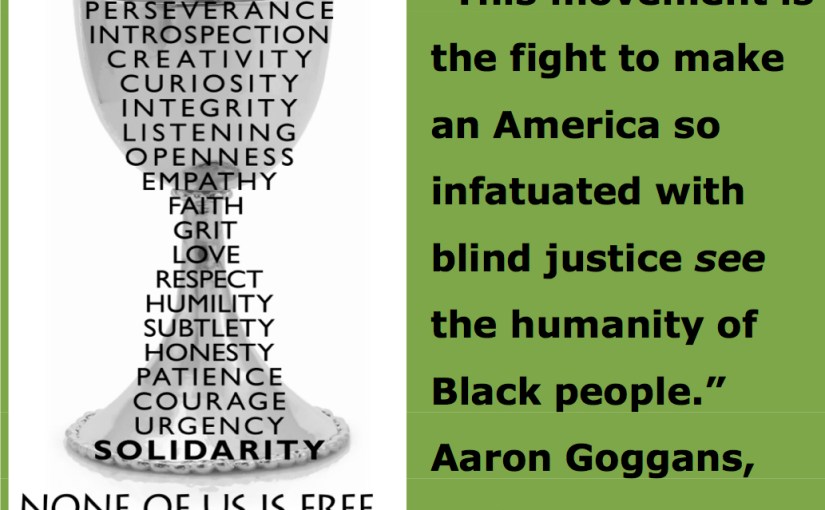
With the new week, we begin a third leg in our journey away from oppression, and so shift focus to a new aspect of divinity. The first week focused on Chesed [“loving-kindness”]. The second, on Gevurah [“strength” or “boundaries,” sometimes “judgement”]. The third, “Tiferet” [“beauty”], is said to combine the first two. On its own chesed and gevurah are each untenable: in individual lives and in the universe as a whole a non-stop flow of loving-kindness leaves no room for boundaries; unmitigated strength leaves no room for compassion. The third attribute of God, and this third week of the Omer count, represent a balancing of forces.

In the early days of this omer journey, we focused on knowing as an act of loving-kindness, moving away from the moral deficiency of not-knowing — as when Pharaoh didn’t know Joseph (his country’s past) — in the early Exodus story. In the second week, we focused on strength required to persevere in the face of oppression and complex boundaries of gender and race.

To launch the third week, here are two potentially “balancing” thoughts —

one from bell hooks on Black women and feminism:

Usually, when people talk about the “strength” of black women they are referring to the way in which they perceive black women coping with oppression. They ignore the reality that to be strong in the face of oppression is not the same as overcoming oppression, that endurance is not to be confused with transformation.
— bell hooks. Ain’t I a Woman: Black Women and Feminism. (Boston, MA: South End Press, 1981.) p.6

and one from Avivah Zornberg on subjectivity and post-slavery views of a “good Land”:

bewildermentsThe world cannot be seen without ‘interference.’ According to a classic Talmudic description, Moses alone of human beings ‘saw b’aspaklariah meirah— through a clear lens.” All others, including prophets and seers, saw through an unclear glass, a distorted lens of subjectivity (Babylonia Talmud: Yevamot 49b, Rashi to Numbers 12:6). The problem arises when one is not aware of one’s own deflections of vision. Imagining oneself clear-eyed, one may become the greatest fantasist of all….the greatest illusion may be the pretension to total lucidity.

[Moses sees the land as “good.”] But the people are driven by fantasies and anxieties that make goodness an issue of love and hate; the Land represents other questions about themselves, the world, and God. No demonstration of lush fruit can ever lay rest the efes [however] coiled within them. Moses’ dream of vindication cannot address their need. For them, a journey will have proved necessary, if they are to find a way of speaking of the good Land with all their heart.
— Avivah Zornberg. Bewilderments. (NY: Schocken, 2015), p.134, 146

We counted 14 on the evening of April 17. Tonight, we count….
Continue reading Balancing Kindness and Strength (Beyond 14)

More Race and Gender and Strength and Boundaries (Beyond 13)

Shabbat approaches, and this week’s Torah portion is Shemini (“Eighth [day],” Lev: 9:1 – 11:47; see also “In Praise of Silence” ). It’s one in which women are simply not present — not even, as in the next double portion of Tazria and Metzora, as a source of potential impurity — unless by extrapolation: The portion is largely about kashrut; women have traditionally borne responsibility for keeping a kitchen kosher; therefore, women’s presence is implied. Earlier in Exodus, we learn the name of Aaron’s wife. When Nadav and Abihu die after offering “strange fire,” however we are told that “Aaron was silent,” but Elisheva is not even mentioned. (Lev. 10:1-3)

It is worth noting, I think, that this woman-less portion closes out the week of Gevurah [“strength” or “boundaries”] in our omer journey away from oppression. Jews, and Jewish feminists in particular, have been grappling for a long time with the ways the Torah defines women, when it isn’t ignoring them entirely. And this seems a good time to focus our attention on the ways in which Black women have been defined by others when the narrative isn’t ignoring them entirely.
Continue reading More Race and Gender and Strength and Boundaries (Beyond 13)

Race and Gender and Strength and Boundaries (Beyond 12)

As we come to the close of the omer journey week focusing on strength and boundaries, we should at least begin our reflections on the complex intersection of race and gender. My own time at the computer does not permit a long note today (a blessing, perhaps?), so I offer just a few suggestions:

One place to begin is with Zoe Spencer’s short independent film, Epiphany, an insightful and watchable exploration of related issues:

The answer will not be found
in the crooked hook of some misogynistic rap song
…there are far too many mothers crying
for far too many brothers dying
Far too many buying
trying to undue the stain of inferiority
by placing that new platinum noose around our necks
…I have allowed the history of racism
to separate me from my history
— from the introduction to “Epiphany”

Also consider watching or rewatching the powerful documentary on Anita Hill and the Clarence Thomas confirmation hearing. There is a lot there to explore, and the anniversary material is quite powerful in its own right.

He had a race.
I had a gender.
Anita Hill Film

Finally, from Nina Simone again:

…You lied to me all these years
You told me to wash and clean my ears.
And talk real fine just like a lady.
And you’d stop calling me Sister Sadie

Oh but this whole country is full of lies….
Mississippi Goddam (1964)

Just scratching the surface on our journey from oppression.

We counted 12 on the evening of April 15. Tonight, we count….
Continue reading Race and Gender and Strength and Boundaries (Beyond 12)

(Beyond 11)

“[This clock] chimes the time twice,” he explains, “just in case you missed it the first time around. Sometimes you’re busy when a clock strikes and you miss the count. This one waits a few seconds and gives you a second chance.” Unstuck in time.

— from an interview of Kurt Vonnegut by William T. Noble (published in the Detroit Sunday News Magazine June 18, 1972 and republished in the 1999 Conversations with Kurt Vonnegut.

In this spirit, I offer a second opportunity to listen to Voices of Grief and Struggle, and important and powerful resource posted on December 9, 2014.

In addition, for those who maybe missed the fact that this is National Poetry Month, here is a second chance of sorts, an opportunity to consider Audre Lorde’s “Coal” — with it’s reminder to consider “who pays what to speak” — as well as some words from Marge Piercy, (re-)reminding us all to “honor Jews who changed”:

…those who chose the desert over bondage,
who walked into the strange and became strangers
and gave birth to children who could look down
on them standing on their shoulders for having
been slaves. We honor those who let go of everything
but freedom, who ran, who revolted, who fought,
who became other by saving themselves.

We counted 11 on the evening of April 14. Tonight, we count….
Continue reading (Beyond 11)

One Seven Times Seven Reality (Beyond 9)

“What the deaths of Garner, Brown and Scott do have in common are individuals who didn’t want to go to jail and cops who wanted to take them there,” wrote Peter Moskos, in yesterday’s Washington Post.

“[They] didn’t want to go to jail.”

This may seem too obvious to mention.

And Moskos’ suggestion that our country “stop criminalizing so many people” as “one logical way to reduce potentially deadly arrest situations” may also seem obvious.

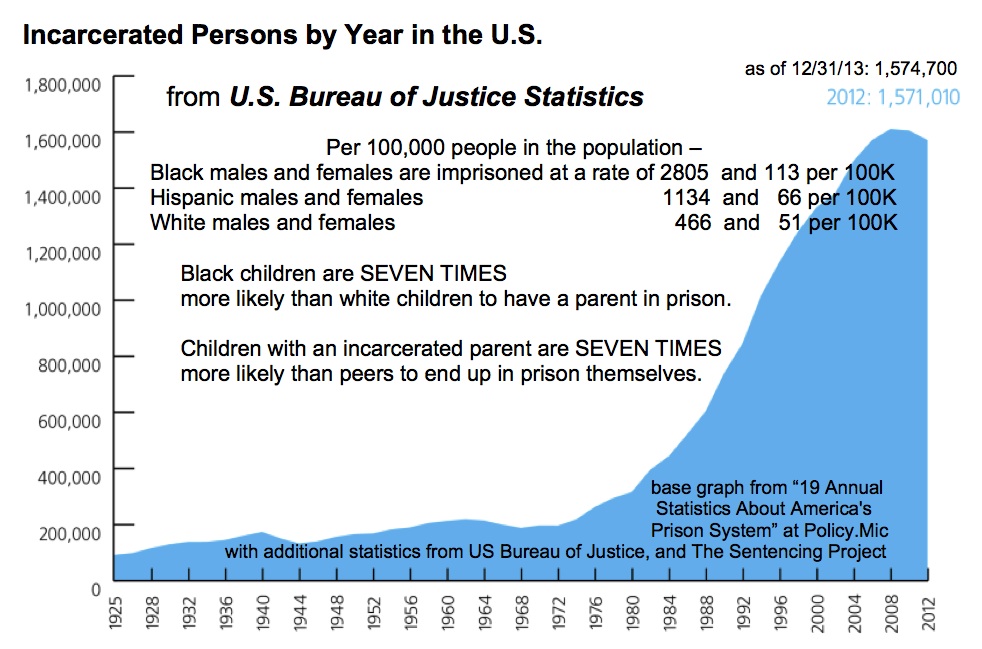
Before moving on to solutions, however, it’s important to stick with our exploration of oppression. Let’s pause to consider just a few of the basic realities of imprisonment in this country.
prisongraph
As we continue our 7 X 7 (seven week) journey in the omer, let’s just make sure that we absorb these realities:

  • Black children are seven times more likely than their peers to have an incarcerated parent.
  • Children with incarcerated parents are seven times more likely to end up in prison themselves.
  • Here is a a link to four pertinent reports with much more on this topic.

Blu Greenberg’s comment quoted yesterday, about this week’s Torah portion suggests that we might try — for one evening at least — not to analyze or prescribe but instead simply mourn for the suffering across generations that this represents.

We counted 9 on the evening of April 12. Tonight, we count….
Continue reading One Seven Times Seven Reality (Beyond 9)

In Praise of Silence (Beyond 8)

We’re coming to the end of the eighth day out, the first full day of this omer journey in which we are not celebrating Passover and/or Shabbat [written on April 12, 2015]. The Torah portion for this week is also called “Eighth [Shemini]” and speaks of the eighth day of ritual in the wilderness, one which turns tragic, as two priests offer “strange fire” and are lost:

Now Aaron’s sons Nadab and Abihu each took his fire pan, put fire in it, and laid incense on it; and they offered before [YHVH] alien fire, which had not been enjoined upon them. And fire came forth from [YHVH] and consumed them; thus they died at the instance of [YHVH]. Then Moses said to Aaron, “This is what [YHVH] mean by saying:

Through those near to Me I show Myself holy,
And gain glory before all the people.”

And Aaron was silent.
— Leviticus 10:1-3 (translation in The Torah: A Women’s Commentary)

The Deepest Response…

In her commentary on this portion, Blu Greenberg links Aaron’s loss in the Torah portion with her own loss in 2002, when her 36-year-old son JJ was killed in a bicycle accident:

What could have happened? We struggle to understand? Was this a punishment from God, or a random accident? What crime could they have committed that was so heinous as to warrant death by flash fire?

…Aaron responded with a profound, shattering silence, a stunning silence, a shocked silence. He does not justify the cruel decree by blaming his sons and accepting their fate as punishment for their sins. Yet neither does he revolt or protest God’s action. Total silence.

…[Some visitors after JJ died] tried to justify God or soften the loss by giving it some meaning. “He was so good that God needed Him by His side” was one such attempt…I responded, “But we on Earth need him more!” Most people understood at the deepest level that there is nothing that could justify, nothing that could offset the pain or soften the blow, and they wisely remained silent. We ourselves were silent, as there were no words we could speak that would make any sense of it.

Jewish laws of bereavement…stipulate that the shiva [mourning] visitor should not speak until the mourner speaks. I had always thought that the point of that precept was to ensure that the conversation would flow to the place the mourner needs it to reach. But I now understand that the halachah [law] enjoining the comforting visitor to hold back in silence serves a different function: to caution against offering a rationale for the decree of death. The deeper human religious response is to be silent, to live with the contradiction, and to affirm that we need not force meaning into tragedy. Sometimes, the deepest response of love is to be silent.
— Blu Greenberg, The Torah: A Women’s Commentary
(NY: 2008, Women of Reform Judaism), p. 632-633

…Is Silence

Throughout the centuries, commentators reading about Nadav and Abihu have rushed — as Greenberg notes above — to either assign guilt, thus justifying their deaths, or exonerate them and so vilify God. Similarly, our nation reacts to the seemingly unending litany of black deaths at the hands of police and others:

  • she was armed;
  • he shouldn’t have run;
  • he was a “good” kid;
  • she was going to college;
  • the officer felt threatened;
  • the whole damn system is guilty as hell.

This week’s Torah portion reminds us that each individual whose death becomes part of this on-going discussion about racism, policing and state violence was first a person.

And, somewhere in the midst of all that is to be said, we must make space and time, too, for silence.

We counted 8 on the evening of April 11. Tonight, we count….
Continue reading In Praise of Silence (Beyond 8)

Strength and Boundaries, Imperfection and Hope (Beyond 7)

With the close of Shabbat and the end of Passover, we move into the “gevurah [strength, boundaries]” week of the omer, on our journey away from oppression.

In the spirit of gevurah as strength, I suggest we begin this week by honoring the strength of individuals of color, persevering in a society that too often sees them in ways that do not celebrate their humanity. In the spirit of gevurah as boundaries, I suggest we begin this week by honoring the many different routes such perseverance can take.

At the close of Shabbat, we mark the division of holy and mundane, and Rabbi Jonathan Saks says:

By inviting human beings to engage in Havdala [dividing] at the end of Shabbat, God invites us to create worlds. Creation involves the ability to make distinctions, to rescue order from chaos, to respect the integrity of creation….The message of Havdala is: if we respect the integrity of boundaries, we can turn chaos into order, darkness into light.
— commentary to Havdala prayer, p. 726 Koren Saks Siddur

In addition, R. Saks teaches that the moment of lighting a candle to mark the transition from Shabbat to the weekdays also recalls the exile of Eve and Adam from Eden and how God showed them how to make light, so that they could become partners in the on-going work of creation.

Letting go of Shabbat is a moment of deep realization that the world is still imperfect and that we have work to do. But it is also a moment of special yearning and hope, as we breathe in the spices to fortifying us for the week’s work ahead. Havdala, and the going out of Shabbat, is thus a great time for considering strength and boundaries.
Continue reading Strength and Boundaries, Imperfection and Hope (Beyond 7)

An Old Pattern Caught (Beyond 6)

With the final days of Passover, we come to the end of the omer’s first week, focusing on God’s attribute of Chesed [loving-kindness]. We began this week considering the “not-knowing” at the start of the Exodus story, what David Silber called “callousness and a lack of sensitivity,” a “moral deficiency.” We explored Moses’ “capacity to twist his neck,” to see what others missed, as an impetus for redemption. Meanwhile, the news conspired to graphically illustrate — for all to see in ways that seem impossible to refute — how easy it has been for police to create, and much of the population to acquiesce in believing, an oppression-affirming view that is the opposite of the “trouble to see” with which redemption begins.

An Old Pattern Caught

For some, the story of Walter Scott — a Black man apparently gunned down in cold blood by police and then vilified in police and subsequent media reports — is a shock. For some, however, it’s an old pattern that just happened to be caught by video this time:

[A piece of fiction:]
Earlier today DC police fatally shot a mentally ill man in Petworth after a brief stand-off in front of the man’s home….

…Witnesses say that police stopped the recent transplant from the South-Side of Chicago for unknown reasons. “The dude was clearly nervous. From across the street it looked like he was scared of police and was wearing a dark hoodie,” says neighbor and eye witness Mark St. Claire….

*update: post originally said that victim was armed….
*update: post originally identified the victim as only 3/5ths of a person.
*update: post was originally titled “Another Dead Nigger.”
— from “Mentally ill man fatally shot in Petworth,” by Aaron Goggans
on the Well-Examined Life, December 2014

Continue reading An Old Pattern Caught (Beyond 6)

“The Trouble to See” (Beyond 5)

‘I will turn aside now, and see this great sight, why the bush is not burnt.’ (Exodus 3:3)

…this “turning” is a torsion of the neck, a deliberate motion out of the straight, the stiff:

Moses said, Let me turn aside to see…Rabbi Jonathan said, “He took three steps;” Rabbi Simeon ben Levi said, “He took no steps, but he twisted his neck. God said to him, ‘You went to trouble to see —as you live, you are worthy that I should reveal Myself to you.’” Immediately, “God called to him from the midst of the burning bush…” Tanchuma Shemoth 9

God chooses to reveal Himself to Moses, because he has “gone to trouble to see.”…it is his capacity to “twist his neck,” to turn his face in wonder and questioning, that brings him the voice of God.

The neck in torsion—an image for desire, a counter image to the stiff-necked intransigence of those who set themselves against the new. Within Moses himself, within his people, within the Egyptians, even within the representations of God in the narratives of redemption, the tensions of Exodus will seek resolution, the momentary equilibrium that again and again is to be lost and reclaimed.
— Avivah Zornberg, Particulars of Rapture (NY: Doubleday, 2001), p.79-80

Have we “gone to the trouble to see” what needs seeing in order to make real liberation manifest in our world?

What still needs seeing? and What form must our trouble take?

Can we help one another see? How?

What Are We Not Seeing?

The American Civil Liberties Union, an an email today, writes:

What would the current conversation around Walter Scott** be if there hadn’t been this video? What would you be reading in the news? And how often does this happen in America, unseen by a camera?

Camera_Unseen**The ACLU shares a NYT story about the Walter Scott case, complete with video. They add “Please read more and watch, if you haven’t seen it yet. But be warned, it’s graphic.”

Seeing on the most basic level.

Going beyond the one incident — Ezekiel Edwards, Director of the ACLU Criminal Law Reform Project, notes that the Walter Scott case helps illustrate the picture we don’t have as a nation…

  • …because the data has not been collected or shared.
  • …because the public narrative was designed to distract.
  • …because too many of us for too long couldn’t quite see.

In a way, he asks us to “twist our necks” to see what we might otherwise miss.

Edwards writes:

It’s déjà vu. And it’s also a nightmare.

Police gunning down unarmed black men and boys is an American horror film that keeps getting replayed. Except that it isn’t a movie you can turn off: It’s a painful, outrageous, and unacceptable reality….

Sadly, we only know part of the story because we have no uniform, comprehensive reporting requirements of police shootings. The data just doesn’t exist. Indeed, even after the many discussions of police force generated by these incidents in recent months, and notwithstanding the DOJ’s documentation of widespread problems around use of force in Cleveland and the use of unreasonable force and racial profiling in Ferguson, we have not been able to reconcile the mandate of fair, constitutional, and humane law enforcement with the current status of American policing.
— read the full article, Walter Scott’s Killing Is a Direct Result of the Current State of Policing in America Today

“The data just doesn’t exist” (Read more on this — “Scant Data Frustrates…“) There is plenty more “to see” on the ACLU website, if you have not already.

Have we “gone to the trouble to see” what needs seeing in order to make real liberation manifest in our world?

What still needs seeing? and What form must our trouble take?

Can we help one another see? How?

We counted 5 on the evening of April 8. Tonight, we count….

Making the Omer Count

from On the Road to Knowing: A Journey Away from Oppression
A key element in the journey from liberation to revelation is understanding the workings of oppression, and our part in them. We cannot work effectively to end what we do not comprehend.

So this year, moving from Passover to Shavuot, I commit to learning more about how oppression works and how liberation is accomplished. I invite others to join me:

Let’s work together, as we count the Omer, to make this Omer count.

Thoughts and sources welcome.

JourneyOmer

Share this graphic to encourage others to participate.

A Meditation

Aware that we are on a journey toward knowing God — from liberation to revelation — I undertake to know more today than I did yesterday about the workings of oppression.

I bless and count [full Hebrew blessings in feminine and masculine address]:

Blessed are You, God, Ruler/Spirit of the Universe, who has sanctified us with Your commandments and commanded us to count the Omer.

Today is six days in the Omer.
Hayom shishah yamim la-omer.

In the spirit of the Exodus, I pray for the release of all whose bodies and spirits remain captive, and pledge my own hands to help effect that liberation.

Oppression as “Normal” (Beyond 4)

“We are descendants of slaves who do not yell back that Moses had a Black wife and Black children and that #BlackLivesMatter to our people whether or not we acknowledge it.” So concluded yesterday’s post. And we know, from the Exodus story, that yelling is a key element in redemption:

And it came to pass in the course of those many days that the king of Egypt died; and the children of Israel sighed by reason of the bondage, and they cried, and their cry came up unto God by reason of the bondage.

And God heard their groaning, and God remembered His covenant with Abraham, with Isaac, and with Jacob.

And God saw the children of Israel, and God took cognizance of them.
וַיְהִי בַיָּמִים הָרַבִּים הָהֵם, וַיָּמָת מֶלֶךְ מִצְרַיִם, וַיֵּאָנְחוּ בְנֵי-יִשְׂרָאֵל מִן-הָעֲבֹדָה, וַיִּזְעָקוּ; וַתַּעַל שַׁוְעָתָם אֶל-הָאֱלֹהִים, מִן-הָעֲבֹדָה.
וַיִּשְׁמַע אֱלֹהִים, אֶת-נַאֲקָתָם; וַיִּזְכֹּר אֱלֹהִים אֶת-בְּרִיתוֹ, אֶת-אַבְרָהָם אֶת-יִצְחָק וְאֶת-יַעֲקֹב.
וַיַּרְא אֱלֹהִים, אֶת-בְּנֵי יִשְׂרָאֵל; וַיֵּדַע, אֱלֹהִים.
— Exodus 2:23-35, Old JPS translation via Mechon-Mamre

It’s only after the yelling starts that God responds. Moreover, it’s only after the crying out that God “knows,” another layer of “not knowing” at the start of the tale.

And why weren’t the people crying?

A common explanation is that the people were crushed by years of oppression, perhaps even treated their circumstances as normal.

Circumstances: Normal?

Not long after the police murder of Walter Scott, on April 4, in North Charleston, SC, the Mic shared the following:


13. Right now, justice seems to be escaping us, while tragedy continues to befall us.

14. Be vigilant, people say. Death by police should not be common.

15. But black people dying after being shot or choked by police should not be moments we must be on the ready to capture on smart phones.

16. Now is time for change, people say. This is a 21st-century American tragedy of epic proportions. None of this should be normal.

17. And yet, it already is.
— “17 Honest Thoughts from a Black Man After Watching that Walter Scott Video,” by Darnell L. Moore, senior editor at Mic

In addition, poverty, lack of education, and mass incarceration of Black people are all so long-standing as to seem “normal.”

Last November, when the non-indictment of Darren Wilson was followed by unrest in Ferguson, MO, Jay Smooth expressed wonder at the people’s “human limit”:

…For the people of Ferguson a lifetime of neglect and de facto segregation and incompetence and mistreatment by every level of government was not their limit

When that malign neglect set the stage for one of their children to be shot down and
left in the street like a piece of trash that was not their limit…

When he came out and confirmed once and for all that Mike Brown’s life didn’t matter,
only then did the people of Ferguson reach their limit….

How did these human beings last that long before they reached their human limit?

How do Black people in America retain such a deep well of humanity that they can be pushed so far again and again without reaching their human limit?


Their Cry Rose Up

At least one midrash suggests that the Hebrews actually needed God’s help to cry out:

Immediately, as their cry rose up, salvation begins. Till then, they had not had any arousal to cry and to pray. But since God wanted to save them, He roused in them a cry — and that is the beginning of redemption. For before God wants to save, one does not see one’s own lack, one is unaware of what one has not. But when God wants to save, He shows one the root of one’s lack, so that one sees that all the complexity of one’s needs is rooted in this basic lack. And He gives one the power of prayer, of crying out to God. One begins to rage to God about it…
Mei Hashiloah (Shemot 2), quoted in Avivah Zornberg’s Particulars of Rapture

If U.S. Jews are, indeed, “descendants of slaves who do not yell back,” what will it take to arouse in us the rage that begins the process of redemption rolling?

(More in coming days.)

We counted 4 on the evening of April 7. Tonight, we count….

Making the Omer Count

from On the Road to Knowing: A Journey Away from Oppression
A key element in the journey from liberation to revelation is understanding the workings of oppression, and our part in them. We cannot work effectively to end what we do not comprehend.

So this year, moving from Passover to Shavuot, I commit to learning more about how oppression works and how liberation is accomplished. I invite others to join me:

Let’s work together, as we count the Omer, to make this Omer count.

Thoughts and sources welcome.

JourneyOmer

Share this graphic to encourage others to participate.

A Meditation

Aware that we are on a journey toward knowing God — from liberation to revelation — I undertake to know more today than I did yesterday about the workings of oppression.

I bless and count [full Hebrew blessings in feminine and masculine address]:

Blessed are You, God, Ruler/Spirit of the Universe, who has sanctified us with Your commandments and commanded us to count the Omer.

Today is five days in the Omer.
Hayom chamishah yamim la-omer.

In the spirit of the Exodus, I pray for the release of all whose bodies and spirits remain captive, and pledge my own hands to help effect that liberation.