Trees, Streams, Vision

An offering for the week of Va-yera’ (Gen 18:1 – 22:24) — some images I hope are suggest rest and hope and the possibility of hospitality and re-building.

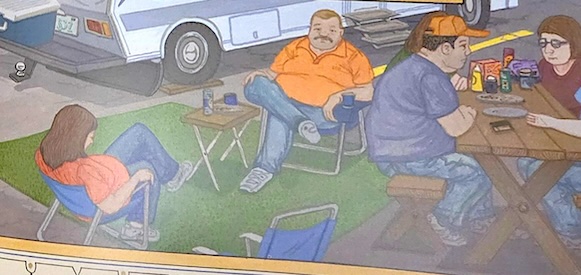
Featured image is detail from illustration shared below from Sandow Birk’s American Qur’an (Norton, 2016). Learn about the amazing American Qur’an and check out more of his work.

A Tree/Orchard
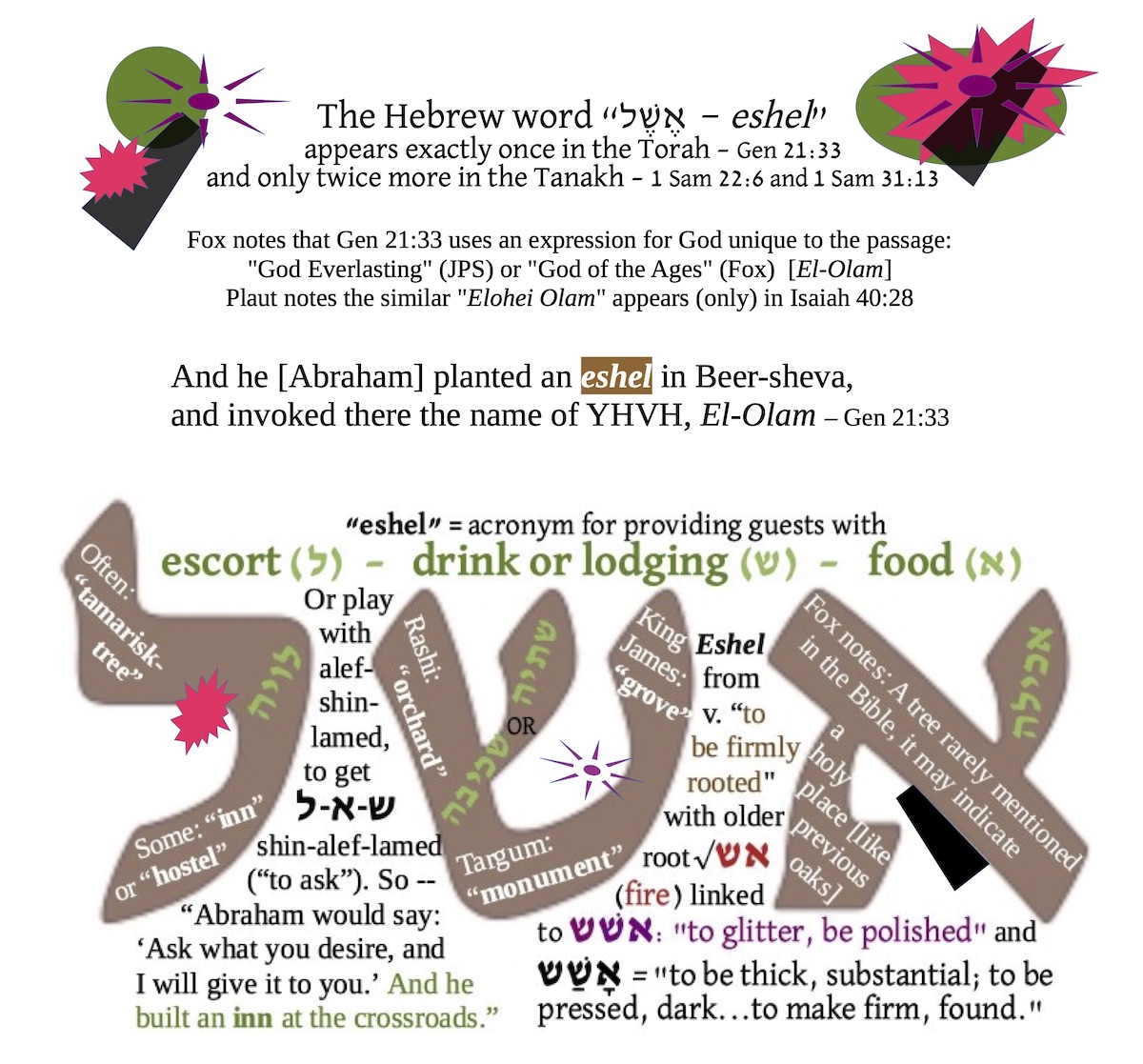
Image description for ESHEL

and more on Planting Trees and this portion

Illuminating Scriptural Connections: A Qur’anic Commentary on the Torah, by Rick Sopher and Abdulla Galadari (JPS, 2026), points out connections between parashat va-yera’ and text of the Qur’an. Sopher and Galadari reference 51:24, where “Abraham’s honored guests,” the “unfamiliar folk” appear. A footnote in my copy of the Qur’an* gives cross citations to 11:69ff and 15:51ff. The latter section, in which the righteous sit amid gardens and streams, is illustrated here —

* Learn about JPS’s new resource

** The Message of the Qur’an, translation by Muhammad Asad (The Book Foundation, 1980).

Gardens and Streams
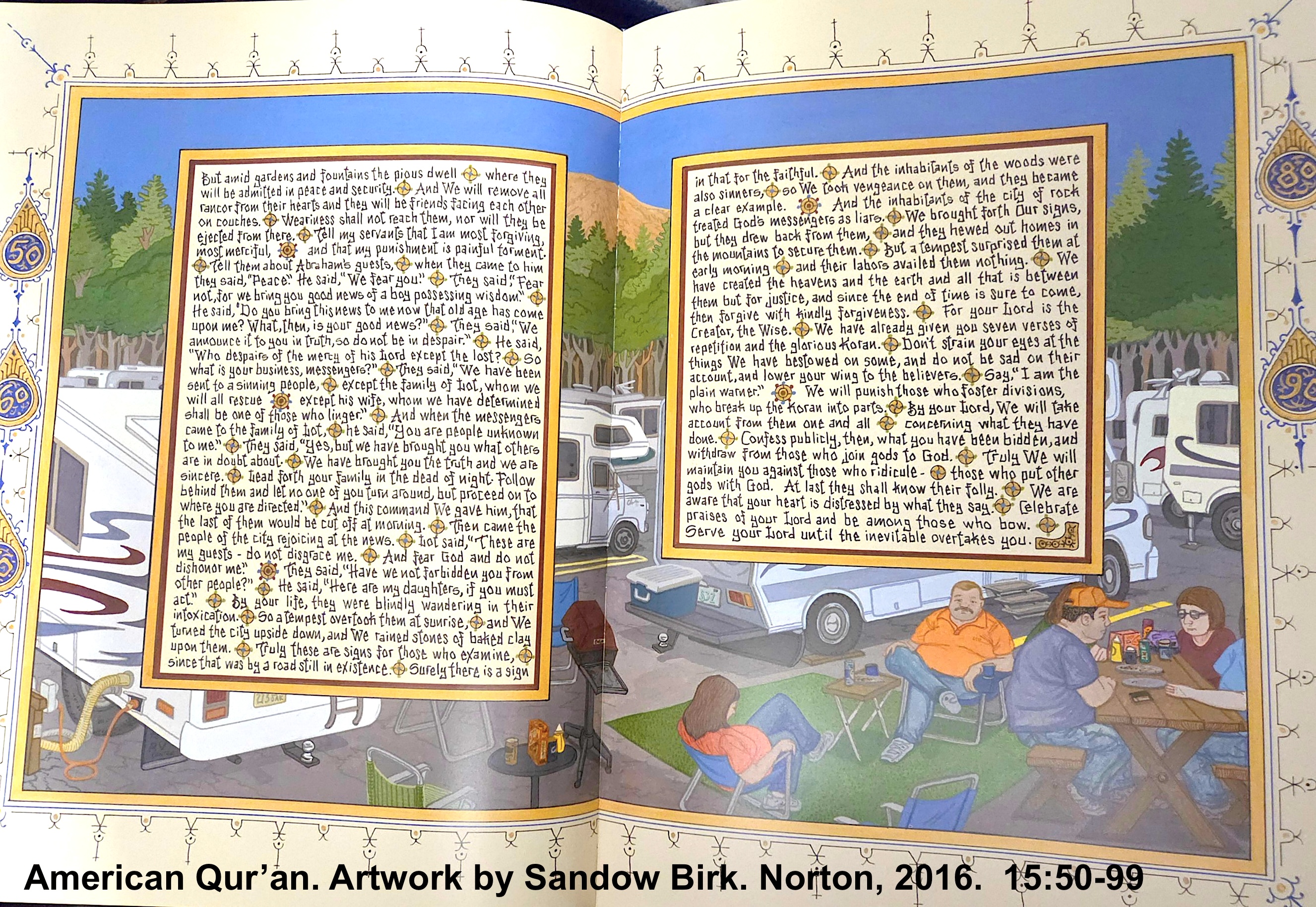
Two pages from the illustrated American Qur'an by Sandow Birk (Norton, 2016). A large picnic area, where contemporary caravans and trucks are parked and people are sharing meals and conversation among the trees.

Image description for Qur’an 15:50-99: Two pages from the illustrated American Qur’an by Sandow Birk (Norton, 2016). A large picnic area, where contemporary caravans and trucks are parked and people are sharing meals and conversation among the trees.

A Vision

Some Hagar-related resources, including the poem, “All Good,” by Mohja Kahf with notes she added when giving permission to share her poem.

Hajar pours water that becomes
a subtle, sweet, and heretofore unheard of wine.
Sarah laughs again, more deeply.
Abraham is radiant. Everyone, this time
around, can recognize
in the eyes of every other,
the flickering light of the Divine. — Kahf, 2016

“All Good,” in Hagar Poems, University of Arkansas Press, 2016

Sibling Prophets Together Before God

This post originally appeared on Clergy Beyond Borders’ News/Views blog, June 9, 2011.


Sibling prophets argue but find a way to remain together in the third Bible portion in our “wilderness” series. The reading — Numbers 8:1-12:16 — includes a dramatic, rather cryptic, passage* involving the prophet Miriam, sister of Moses, covered in “scales, white like snow” [tzaraat ka-sheleg, in Hebrew] (Numbers 12:10).

The same snowy scales appear on Moses’ arm at the Burning Bush (Exodus 4:5). In the Qur’an (7:108, 20:22), Moses’ arm becomes “[shiny] white without blemish” or “luminous.” In both Islamic and Jewish tradition, the white/shining skin is a sign of prophecy.

In Jewish and Christian tradition, tzaraat — which is often translated as “leprosy” in English bibles — is also associated with gossip and other sins of the tongue. In the passage here, Miriam and Aaron “speak against” their brother. Related commentaries include background tales of conversations involving Moses’ wife and Miriam.

Still, the “speaking against” Moses in the text and the family issues in the commentary center around prophecy. Three prophets in one family — and Moses’ wife Zipporah has her own encounter with the divine (Exodus 4:23-26) — seems to have its challenges.

God chastises the speakers, saying: “How then did you not shrink from speaking against My servant Moses!” However, the prophetic siblings stand up for one another before God and remain together throughout the episode. In fact, Numbers 12 is the only passage in the Torah which mentions Aaron, Miriam and Moses together.

In the Qur’an (2:136), we read:

Say: “We believe in God, and in that which has been bestowed from on high upon us, and that which has been bestowed upon Abraham and Ishmael and Isaac and Jacob and their descendants [literally: “grandchildren”], and that which has been vouchsafed to Moses and Jesus; and that which has been vouchsafed to all the [other] prophets by their Sustainer: we make no distinction between any of them. And it is unto Him that we surrender ourselves.”

Miriam’s episode of tzaraat may be a sign of prophecy or of divisive speech, or both. But the episode is limited by God so that a joint future — with all three siblings traveling together — is possible.

This week’s “wilderness” reading is called in Hebrew “Beha’alotekha” ([“in your lighting (of the lamps)”]. One message we can glean from it is the danger of believing that ours is the only light.
Continue reading Sibling Prophets Together Before God