One common, powerful theme of the high holidays is the idea of the broken heart. This is encapsulated prominently in the blowing of the shofar, with its shevarim [shattered] call. (See, e.g., The Shofar as Prayer at My Jewish Learning.)
All who hear the ram’s horn — during the preparatory month of Elul and the Days of Awe — are meant to experience a broken heart. And, so according to this story, is the one who sounds the shofar:
Rabbi Wolf, shofar blower in the synagogue of the Baal Shem Tov, has been studying special intentions for his annual role, but loses his crib sheet on the bima; forgetting everything, he blows the shofar with a broken heart. The Baal Shem Tov tells him,
“In the Palace of the King there are many rooms and halls, and each door to a room or a hall has a different key. But there is a better way to enter than to use the key, and this is to use an ax, which can open the locks of all the doors. The same is true of proper intentions. They are the keys to each and every gate, and every opening has the proper intention for it. However, the broken heart is an ax. It allows every person to enter all the gates and the halls of the King of Kings, the Holy One, Blessed be He.”
— Moshe Chaim Kalman, Or Yesharim.
see also The Light and Fire of the Baal Shem Tov.
Yitzhak Buxbaum. NY: Continuum, 2006.
Broken-heartedness is often described as requisite for prayer, particularly at the Days of Awe, as in this teaching from Abraham of Slonim (19th Century CE):
You should act in prayer as if you were a farmer: first you plow, then you seed, afterward you water, and finally things begin to grow. In prayer, first you have to dig deeply to open your heart, then you place the words of prayer in your heart, then you allow your heart to cry.
— found in Machzor Lev Shalem
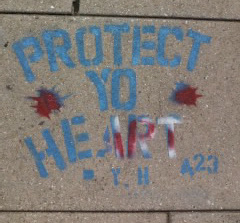
At McPherson Square Metro Station, 9/15/15
In a season dedicated to atonement and forgiveness, reminders to open one’s heart are important. But how are we meant to respond to this call when our hearts are already broken? when we’re just barely hanging on?
Around the corner from the temporary synagogue where Fabrangen Havurah holds high holiday services, this message was painted on the sidewalk.
…An alternative thought for Shabbat Shuvah [the sabbath of “return”].
Chapter 21 of Deuteronomy (Shoftim: Deut 16:18-21:9) tells the Israelites what to do, upon entering the land, “if a corpse be found..the identity of the slayer not being known.” This is the elaborate ritual involving the Red Heifer in which the elders of the nearest town must be prepared to declare, “Our hands did not shed this blood…”
It turns out that this is not so simple, according to commentary across the centuries. First of all, many point out, neglect and indifference are sins and not easy ones to disavow.
Abraham Joshua Heschel taught, in the middle of the 20th Century:
“Few are guilty, but all are responsible.” (See The Prophets, and Essays on Moral Grandeur and Spiritual Audacity, Essays edited by Susannah Heschel)
Ibn Ezra, the 12th Century Spanish commentator, writes that elders in Red Heifer cases have some responsibility for the fact of sinfulness was present in their town, without which the crimes could not have occurred.
Samson Raphael Hirsch, a 19th Century commentator, hypothesized that the only case where a body would be left out in the open, in apparent mocking defiance of public officials, would be if town officials had sent a hungry traveling stranger on his way without food and so he resorted to highway robbery. In this case, Hirsch says, the slayer is guiltless and the blameworthy ones are the officials who failed to exercise Jewish communal duty.
Child Trauma
With this background in mind, here is information from the DC Children’s Law Center on factors contributing to child trauma:
One in four District of Columbia school-age children lives in poverty – which is defined as living on less than $24,000 for a family of four.
Over 4000 public school students were homeless in the 2013-2014 school year.
Adult incarceration is higher among DC residents than anywhere else in the country, leaving many children without one or more of their parents.
In DC, forty percent of high school students reported hearing or seeing violence in the previous year. This is far higher in some neighborhoods where gunshots and violent crime are constants.
A friend who ran two day camps in Southeast housing projects this summer had to help children cope with shootings in both locations. Heartbreaking, but not unusual occurrences there. She also returned to her office, after letting camp out early one day, to find a bullet hole in her window and a bullet lodged in the wall behind her desk.
Other friends are coping as we speak this morning (Temple Micah, August 22) with the aftermath of two juveniles shooting at one another on Tuesday, resulting in serious injuries to both boys and the death of the younger one’s mother. I witnessed the shooting death of a 21-year-old in another neighborhood on the same day, as did many people who were on that street, just going about their business, or inside the church while Amari Jenkins was shot outside.
A number of children witnessed the aftermath of both incidents. I know little about the third shooting of that same day. (All readers are encouraged to #SayThisName for each individual lost to homicide in DC; news stories about the high murder rate in DC and other US cities abound.)
A guest on the Education Town Hall, a weekly radio program I help organize, spoke on August 20 of how an annual back-to-school picnic he arranges now provides children with first-aid kits. Why would that be a back-to-school supply? Because, he says, these kids live in a war zone, and we need to acknowledge it.
Blameworthy Elders?
The history and sociology of how this reality developed is too complex for this dvar Torah. But I think the Torah portion is asking us to consider our communal responsibility for helping children cope with situations that endanger them, lest we become as blameworthy as the elders in Hirsch’s hypothetical town.
Early childhood trauma affects the way the brain develops, and trauma in older children makes it difficult, if not impossible, for students to learn, often appearing in attention and behavioral problems in the classroom. The eventual result, according experts, is that trauma is transmitted, through further violence in many cases, if young people are not helped to transform it.
Taking positive action is important in recovering from the helplessness of a traumatic event, according to psychologists. I continue to seek ways to turn the energy of the tragedy I witnessed into something healing. Several possible courses of action, to help us take positive steps amidst this chaos, are shared here “Prayer, Advocacy, and #RippleEffect.”
Murder Pollutes
Returning to the Red Heifer…
The Plaut commentary focuses on the practicality of the ritual, suggesting that it would attract so much attention as to enhance a sense of communal responsibility and help ensure that the murderer is apprehended.
The 15th Century Portuguese commentator, Abarbanel, said the shock value of the ritual would prevent people from forgetting the murder and keep alive the search for the offender.
However, the Mishnah (redacted around 200 CE) reports that the Red Heifer ritual had already ceased when crimes of murder multiplied to such a degree that the ritual was no longer feasible. I didn’t have the heart to read what Sanhedrin says about this (Babylonian Talmud, Sanhedrin 27b and forward), and I cannot imagine what the ancient Rabbis would make of DC and other major US cities today.
But it’s clear that we need some new approaches. And I’ve been thinking about that double “tzedek” in this week’s “Tzedek, tzedek tirdof” [“Justice, Justice you shall pursue] (Deut 16:20).
Toward a New Approach
“Justice, justice you shall pursue”
Efforts like the #RippleEffect Campaign and Playing for Change Day are no expiation for murder, of course, and they’re no substitute for direct, head-on, immediate action in pursuit of justice. But we’re not all in a position to effectively take up that work —
The direct approach accounts for only the first “justice” in “justice, justice you shall pursue.” I suggest that the second “justice” calls for something completely different.
“Justice, justice you shall pursue”
Maybe a large public ritual PFC Day — one based on music, not blood — can capture a 21st Century world’s attention, to inspire some introspection and improvements, launch some creative energy and community building.
One of the reasons given for setting up judges at all the gates — at the start of this week’s Torah portion — is to ensure that justice enters into daily life in every location, a little like those ripples of kindness beginning from a variety of centers.
I also know that those of us facing the constant stress and grief of life today in some parts of the District — and what I experience is minor compared to what many others face — need the joy and release and uplifting power of music now more than ever.
Sometimes I image that music is the conduit the prophet Amos had in mind when he said that justice should roll down — or “well up” — like waters (Amos 5:24; see also below). Like water, music can exert its power with flexibility, perhaps in torrents or flood, perhaps through softer means, carrying us great distances, operating in ways we easily sense, and in ways below the surface and beyond our control that help bring transformation.
Stains and Ripples
The ritual of the Red Heifer warned the People that shrugging or hoping someone else would step up was not an option, reminded the elders that the conditions of their town could leave innocent blood on their hands.
This portion tells us that murdered blood pollutes the land and requires atonement.
I have watched a young man’s blood power-washed off concrete, and I can tell you the stain is still there.
We’re going to need some serious creative collective strength to address all the stains from all the murders in this town — and all the youth left to deal with what their elders should be managing.
Power washing doesn’t work.
Force doesn’t work.
More blood won’t work.
We need a new approach. For, now —
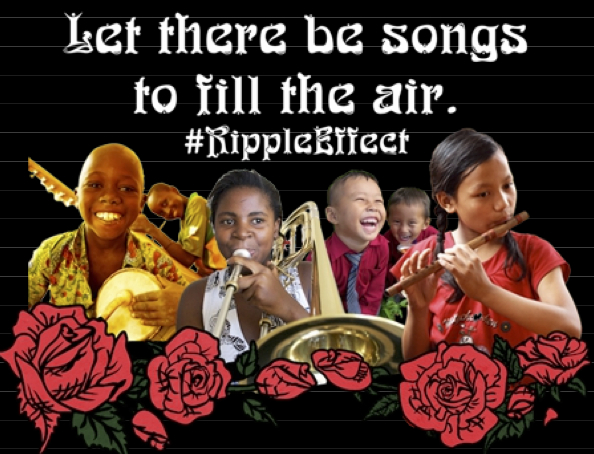
…Let there be songs to fill the air
Ripple in still water
When there is no pebble tossed
Nor wind to blow
Reach out your hand if your cup be empty
If your cup is full may it be again
Let it be known there is a fountain
That was not made by the hands of men
— Robert Hunter (Grateful Dead, 1970)
NOTE: Amos, Water, and Justice
I confess that I largely know the quote “until justice rolls down like waters, and righteousness like a might stream,” from its use by Martin Luther King and, consequently, in Maya Lin’s Civil Rights Memorial.
How fascinating and disconcerting, in this context, then, to be reminded just now of what Amos says about music —
Amos 5:כא שָׂנֵאתִי מָאַסְתִּי, חַגֵּיכֶם; וְלֹא אָרִיחַ, בְּעַצְּרֹתֵיכֶם. 21 I hate, I despise your feasts, and I will take no delight in your solemn assemblies.
כב כִּי אִם-תַּעֲלוּ-לִי עֹלוֹת וּמִנְחֹתֵיכֶם, לֹא אֶרְצֶה; וְשֶׁלֶם מְרִיאֵיכֶם, לֹא אַבִּיט. 22 Yea, though ye offer me burnt-offerings and your meal-offerings, I will not accept them; neither will I regard the peace-offerings of your fat beasts.
כג הָסֵר מֵעָלַי, הֲמוֹן שִׁרֶיךָ; וְזִמְרַת נְבָלֶיךָ, לֹא אֶשְׁמָע. 23 Take thou away from Me the noise of thy songs; and let Me not hear the melody of thy psalteries.
כד וְיִגַּל כַּמַּיִם, מִשְׁפָּט; וּצְדָקָה, כְּנַחַל אֵיתָן. 24 But let justice well up as waters, and righteousness as a mighty stream.
How lovely are these tents!
not far from housing that has seen better days
and housing that has seen too many awful ones.
I love the place of Your house, reached through streets
collecting cigarette butts, the odd chicken wing, echoes of homicide.
Through Your abundant love, I enter Your house,
where these peaceful walls remind us: “If I am for myself alone, what am I?”
while a few miles away homes reel from gunshots and mourning,
makeshift memorials of teddy bears and candles pooled with tears and rain.
Meetings and vigils and “let this be the last.”
My prayer seeks a favorable time –
Does joy come in the morning, where weeping has not tarried for the night?
Can we dance together, if we have not yet joined in lament?
You answer with your saving truth:
Your glory’s dwelling-place spans mountain top and pit.
We are shaken and we stand firm.
Remove our sackcloth and dress us to praise You, Source of Healing and Help.
— Virginia Spatz, August 21, 2015
See Mah Tovu [How lovely are your tents] and Psalm 30 in the early morning prayers
…weeping may tarry for the night, but joy cometh in the morning.
…When I was carefree, I thought, “I shall never be shaken.”…
LORD, when I enjoyed your favor, You made me stand firm as a mighty mountain; when You hid Your face, I was terrified….
You turned my lament into dancing;
You removed my sackcloth and girded me with joy
Part of the early morning warm-up for prayers — along with awareness of our blessings and awakening body, soul, and mind — is moving from what Mishkan T’filah [Reform prayerbook] calls “self-fulfillment” to “social imperatives of community.” And that means beginning to move through the individual joys and concerns that we brought with us to a communal awareness — of each other and the world beyond these walls.
…To me it’s a little ironic that Mishkan T’filah editors discuss this in the introduction but don’t include my favorite way to accomplish this — the psalms — in the prayerbook proper….
Psalm 30 in particular, on the handout (Psalms Handout; see below), is a great vehicle for moving through our personal laments and dancing, shaken-ness and solidity, as we become aware of participating in thousands of years and millions upon millions of voices crying out and healing, praising without ceasing.
In this season of Elul, Psalm 27 is also recited, asking God to help us feel the divine presence as we seek to return to ourselves, as individuals and as a People in the new year.
And, finally, I repeat a teaching I learned earlier this summer about the nearness of all we need — like the water right in front of the deer in Psalm 42 — and how it is, even still, for us to experience what sustains us. We do, after all, have to become vulnerable, if only for moment.
Note: Please note that Rabbi Dr. Tzvi Hersh Weinreb’s first name contains a typo on this handout, PsalmsAugust22. My apologies.
Similarly, every bullet leaves pain in circles rippling outward.
We also know that kindness has a ripple effect,
and many people think prayer works this way, too.
The 20th Century rabbi Max Kadushin asks us to notice that the Amidah (“Standing prayer,” the central prayer of a Jewish service) begins with one opening blessing formula and then proceeds with a series of prayers that use only a closing formula.
…Jewish blessings are frequently structured with an opening and closing formula book-ending the content. The unusual structure of the Amidah, he says, creates a “cascade of blessing,” growing from the first blessing outward….
If everyone on the outer edges of pain ripples
sends blessings inward,
a lot of healing energy
will wend its way toward those most in need…
with most of us in a position
to both send and receive.
Max Kadushin. Worship and Ethics: A Study in Rabbinic Judaism. (NY: Bloch, 1963)
Treona Kelty is founder of Beautiful U Yes U, see also Facebook.
This photo is from their office this summer.
The U.S. was in a “lingering period of childhood,” said Frederick Douglass on the occasion of Independence Day in 1852. “Were the nation older, the patriot’s heart might be sadder, and the reformer’s brow heavier. Its future might be shrouded in gloom, and the hope of its prophets go out in sorrow. There is consolation in the thought that America is young.”
At this point, we’ve got another 163 years on us, and many a patriot’s heart is indeed sadder, reformers’ brows heavier: Too many of Douglass’ words still ring true today, however much has changed since 1852; for too many U.S. citizens, a day celebrating U.S. ideals is one “that reveals to him, more than all other days in the year, the gross injustice and cruelty to which he is the constant victim.”
Meanwhile, we are about the enter Shabbat Balak, with a fantastical Torah reading that centers around strange visions, an outside prophet’s view of an inchoate nation, and a people’s struggle with diversity.
In addition, tonight begins the final series of Fare Thee Well concerts, prompting many a meditation on youth, age, and the length of the strange trips we’re on as individuals and communities.
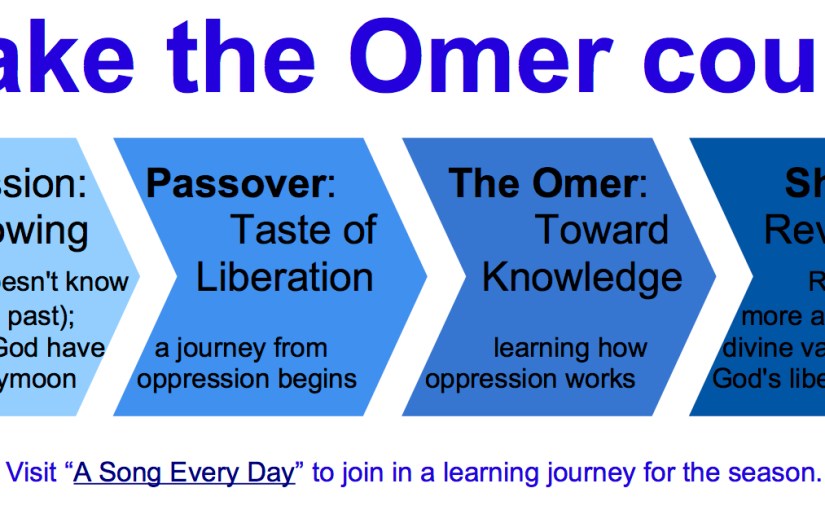
This particular Omer journey was designed to move from Oppression — a place where Pharaoh does not know his own past and Israel and God have yet to honeymoon — through learning more about oppression and liberation to Sinai. The goal was to “reach Sinai more able to hear divine values, serve God’s liberation work.”
I was reminded by my study partner, Amy Brookman, this afternoon that Martin Buber describes Sinai as a “lowly” kind of place — not unlike the thorn bush where Moses met God earlier in the Exodus story. We learn from this that humility is absolutely key in gaining anything from Sinai.
We learn, too, from the Sinai narrative that communicating (with God) is not a simple or straightforward matter. Moreover, I believe we learned on this journey that communicating about racism and related issues is difficult: To really learn anything new about oppression and how it works in general, and how it is affecting people today, means letting go of old (probably more comfortable) perspectives. And that means experiencing some sense of loss and pain.
Amy also shared a piece of Torah from Gilah Langner, “Revisiting the Ten Commandments” (From Kerem 13):
The midrash tells us: God sent along two angels to each and every Israelite, one to lay a hand upon the heart to keep body and soul together, and the other to lift up the head of each Israelite to behold God.
It’s a beautiful image, especially if you like angels. But set aside the
angels for a moment, and notice that the midrash is keying in on the life-and-death quality of Sinai.
Who Counts 50?
I suggest we take these these thoughts with us as we enter the holiday of Shavuot:
1) humility to hear,
2) the challenge of real communication, with associated loss and pain,
3) the life-and-death quality of this communication.
I’ll add, too, a commentary relayed to Fabrangen West by David Blumenstein this month: We are told both to count 50 days and to count seven full weeks. We carefully count the 49 days and seven weeks, but what about that last day? That, midrash [sorry citation missing], suggests is counted by God.
So I close this 49-day journey with a prayer:
May what we have learned so far on this 49-day/seven-week journey bring us to where we need to be, individually and collectively, so that God can count in that last day. And may the angels holding us up give us strength to risk serious communication, with one another and with God.
Shabbat Shalom and Chag Sameach
We counted 48 on the evening of May 21. Tonight, we count….
Making the Omer Count
from On the Road to Knowing: A Journey Away from Oppression A key element in the journey from liberation to revelation is understanding the workings of oppression, and our part in them. We cannot work effectively to end what we do not comprehend.
So this year, moving from Passover to Shavuot, I commit to learning more about how oppression works and how liberation is accomplished. I invite others to join me:
Let’s work together, as we count the Omer, to make this Omer count.
Thoughts and sources welcome.
Share this graphic to encourage others to participate.
A Meditation
Aware that we are on a journey toward knowing God — from liberation to revelation — I undertake to know more today than I did yesterday about the workings of oppression.
Blessed are You, God, Ruler/Spirit of the Universe, who has sanctified us with Your commandments and commanded us to count the Omer.
Today is forty-nine days which are seven weeks in the Omer. Hayom tish’ah v-arba’im yom shehaym shiv’ah shavuot la-omer.
In the spirit of the Exodus, I pray for the release of all whose bodies and spirits remain captive, and pledge my own hands to help effect that liberation.
God expresses concern that divine communication with “break forth upon them [פֶּן-יִפְרֹץ בָּהֶם יְהוָה]” (Exodus 19:22).
Even the priests have to exercise caution lest “[THE NAME] break forth upon them [אֶל-יְהוָה–פֶּן-יִפְרָץ-בָּם] (Exodus 19:24).
When God has already “said” the Ten Commandments, THEN we learn 1) that the People perceived a jumble and want Moses to speak with God in their stead, and 2) that God “already spoke to you [plural] דִּבַּרְתִּי עִמָּכֶם.”
And all the people perceived the thunderings, and the lightnings, and the voice of the horn, and the mountain smoking; and when the people saw it, they trembled, and stood afar off. And they said unto Moses: ‘Speak thou with us, and we will hear; but let not God speak with us, lest we die.’ And Moses said unto the people: ‘Fear not; for God is come to prove you, and that His fear may be before you, that ye sin not.’ And the people stood afar off; but Moses drew near unto the thick darkness where God was. And the LORD said unto Moses: Thus thou shalt say unto the children of Israel: Ye yourselves have seen that I have talked with you from heaven.
— Exodus 20:14-18
Singing Dayenu [“enough for us”] is a 1000-year old Passover tradition. The 15-stanza poem thanks G-d for 15 blessings bestowed upon the Jews in the Exodus. Had G-d only parted the seas for us, “It would have been enough” we say for each miracle or divine act, thus humbly appreciating the immensity of the gifts. KB Frazier’s reworking of the poem addresses us, rather than G-d. It calls us to greater action for justice, saying “lo dayenu” (it would not have been enough) in recognition of the work still unfinished.
1. If we had sparked a human rights revolution that would unite people all over the world and not followed our present day Nachshons as they help us part the sea of white supremacy and institutional racism
— Lo Dayenu
….
10. If we had truly listened to the stories, pain and triumphs of our brothers and sisters of color without feeling the need to correct, erase or discredit them and did not recognize the Pharaohs of this generation
— Lo Dayenu
11. If we had worked to dismantle the reigns of today’s Pharoahs and had not joined the new civil rights movement
— Lo Dayenu
12. If we had marched, chanted, listened, learned and engaged in this new civil rights movement and not realized that this story is our story, including our people and requiring our full participation
— Lo Dayenu 13. If we had concluded that our work is not done, that the story is still being written, that now is still the moment to be involved and that we haven’t yet brought our gifts and talents to the Black Lives Matter movement
— Lo Dayenu
We counted 47 on the evening of May 20. Tonight, we count….
Making the Omer Count
from On the Road to Knowing: A Journey Away from Oppression A key element in the journey from liberation to revelation is understanding the workings of oppression, and our part in them. We cannot work effectively to end what we do not comprehend.
So this year, moving from Passover to Shavuot, I commit to learning more about how oppression works and how liberation is accomplished. I invite others to join me:
Let’s work together, as we count the Omer, to make this Omer count.
Thoughts and sources welcome.
Share this graphic to encourage others to participate.
A Meditation
Aware that we are on a journey toward knowing God — from liberation to revelation — I undertake to know more today than I did yesterday about the workings of oppression.
Blessed are You, God, Ruler/Spirit of the Universe, who has sanctified us with Your commandments and commanded us to count the Omer.
Today is forty-eight days which are six weeks and six days in the Omer. Hayom shmonah v-arba’im yom shehaym shishah shavuot veshishah yamim la-omer.
In the spirit of the Exodus, I pray for the release of all whose bodies and spirits remain captive, and pledge my own hands to help effect that liberation.
In her book, The Other Talmud, Rabbi Judith Abrams notes that “Nowadays, we count the days of the Omer, but in the days of the Temple, they reaped the omer.”
Let’s give Shavuot the makeover it deserves….
We can transform the Omer counting from the dolorous business it’s become to what it probably was before: a countdown that gets more and more raucous the closer we get to the holiday….It could be a celebration of our history, from biblical times right up to the present.
— Abrams, The Other Talmud: the Yerushalmi, Unlocking the Secrets of the Talmud of Israel for Judaism Today. (Woodstock, VT: Jewish Lights, 2012), pp. 159-160
These weeks of “Making the Omer Count” have offered thoughts and resources designed to widen our reaping during the omer and our perspectives as we approach Sinai for the giving of the Torah.
Oftentimes, on this journey that makes so clear how much work is still to be done to make the harvest equitable to all, I think rather irritably: Aren’t we there yet?
As we get closer and closer to Shavuot this year, however, I appreciate the vision Judith Abrams presents: A countdown that becomes more raucous with every voice added to it, streets wider and wider as more and more perspectives are added.
If you’re ready….
We counted 46 on the evening of May 19. Tonight, we count….
Making the Omer Count
from On the Road to Knowing: A Journey Away from Oppression A key element in the journey from liberation to revelation is understanding the workings of oppression, and our part in them. We cannot work effectively to end what we do not comprehend.
So this year, moving from Passover to Shavuot, I commit to learning more about how oppression works and how liberation is accomplished. I invite others to join me:
Let’s work together, as we count the Omer, to make this Omer count.
Thoughts and sources welcome.
Share this graphic to encourage others to participate.
A Meditation
Aware that we are on a journey toward knowing God — from liberation to revelation — I undertake to know more today than I did yesterday about the workings of oppression.
Blessed are You, God, Ruler/Spirit of the Universe, who has sanctified us with Your commandments and commanded us to count the Omer.
Today is forty-seven days which are six weeks and five days in the Omer. Hayom shiv’ah v-arba’im yom shehaym shishah shavuot vechamishah yamim la-omer.
In the spirit of the Exodus, I pray for the release of all whose bodies and spirits remain captive, and pledge my own hands to help effect that liberation.
“The fame we get from fighting for the freedom of others creates a prison for us,” Malcolm X wrote in 1964 to Azizah al-Hibri, then a college student at the American University in Beirut. Their brief in-person connection and subsequent correspondence are still treasured by Dr. al-Hibri, now retired as chair of KARAMAH: Muslim Women Lawyers for Human Rights, the international organization she founded. Moreover, the papers and their story illustrate some important things about leadership, race, gender, and media.
from correspondence between Dr. Azizah al-Hibri and Malcolm X
As president of the college debating society, al-Hibri arranged for Malcolm to speak on campus while he was touring and also had the opportunity to get to know him during his brief visit. A shared ice cream at the airport launched a correspondence between the two that continued until his death in February 1965. At his request, al-Hibri kept her correspondence private for over 40 years.
In 2012, al-Hibri released a few pieces of correspondence and donated other papers (still private for now) to America’s Islamic Heritage Museum. She said then, in a speech at DC’s Masjid Muhammad, that she wanted to ensure that Muslims are “proud” and “happy” about connections with the slain leader and to forge bonds between the African American Muslim community, with historical connections to the Nation of Islam, and what many call the “immigrant” Muslim community, with different historical roots.
Here’s more from the July 2012 East of the River Magazine story:
From his correspondence it is clear that he already suspected that his life and work were coming to an end. But he knew, even though al-Hibri didn’t yet, that her future as a leader was ahead of her.
It was unusual in 1964, for a woman to be president of an organization like the college debating society, al-Hibri notes. And she, like many women of that decade, had not yet envisioned for herself anything like her role today as professor of U.S. law and international human rights advocate. It was similarly odd to consider that women might be leaders of Islam. But Malcolm X saw beyond the confines of his time, says al-Hibri, pointing to words of encouragement – to her as a woman and a Muslim leader – inscribed in a book he gave her: “You have and are everything it takes to create a new world – leadership is needed among women as well as among men…”
— full article here
The Power of Small Things
Of all the stories I covered for East of the River Magazine, this is one that sticks with me as most fascinating and important —
the young al-Hibri’s not knowing about U.S. racial dynamics, what her college dean meant about “airing the country’s dirty laundry”
al-Hibri’s struggle to reconcile the man she met with the picture she later saw portrayed in the U.S. media
the race-sensitive context of her later decision to share her experience, while keeping most of the correspondence private
Malcolm X’s interest in corresponding with someone outside the “prison” of his work
his recognition of the need for women leaders in politics and in Islam, before many saw it in 1964
I share this today, in honor of Malcolm X, El-Hajj Malik El-Shabazz (born Malcolm Little, 5/19/25-2/21/65). I share it in recognition of the work of Dr. al-Hibri and KARAMAH — a small, powerful organization. I share it as a shout out to the too-little-known Americas Islamic Heritage Museum. And I share it to acknowledge the hard and complex work of overcoming racism between religious brothers and sisters.
Perhaps most importantly, I return to this story again and again as an example of the power of small interactions to shape our world.
We counted 45 on the evening of May 18. Tonight, we count….
Making the Omer Count
from On the Road to Knowing: A Journey Away from Oppression A key element in the journey from liberation to revelation is understanding the workings of oppression, and our part in them. We cannot work effectively to end what we do not comprehend.
So this year, moving from Passover to Shavuot, I commit to learning more about how oppression works and how liberation is accomplished. I invite others to join me:
Let’s work together, as we count the Omer, to make this Omer count.
Thoughts and sources welcome.
Share this graphic to encourage others to participate.
A Meditation
Aware that we are on a journey toward knowing God — from liberation to revelation — I undertake to know more today than I did yesterday about the workings of oppression.
Blessed are You, God, Ruler/Spirit of the Universe, who has sanctified us with Your commandments and commanded us to count the Omer.
Today is forty-six days which are six weeks and four days in the Omer. Hayom shishah v-arba’im yom shehaym shishah shavuot ve-arba’ah yamim la-omer.
In the spirit of the Exodus, I pray for the release of all whose bodies and spirits remain captive, and pledge my own hands to help effect that liberation.
Race and Religion
I am sure many readers are aware, as I am, of anti-racism, police-brutality protests in Israel as well as in the U.S. and of the shameful legacy there; not being Israeli or particularly closely connected with Israeli culture, I have chosen to leave that topic for the better informed. I do believe, however, that Muslims and Jews face similar issues and can learn from one another on these issues, even as problems BETWEEN communities persist. BACK






 "A Song Every Day"