Blog

The Picture, Part 2

In Bialik’s poem, the Matmid, there is both a collective of students and a “lonely voice,” chanting solo at night:

His comrades three await him in his place,
They, who have been his friends since first he came:
The burning light, the desk, his Talmud text.
— HaMatmid [The Talmud Student], Helena Frank, trans.

1947 illustration for the poem, "The Talmud Student," by Lionel S. Reiss (1894-1988)
1947 illustration for the poem, “The Talmud Student,” by Lionel S. Reiss (1894-1988)

See also, Reiss’ illustration of this passage at right.

According to one biography, and several articles on Lithuanian yeshivot [academies] of the late 19th Century, this is a direct reflection of author’s experience. Chaim Nachman Bialik (1873–1934; also: Haim or Hayim) studied in Volozhin in the late 1880s, where several, somewhat competing, educational forces were at work:

  • comraderie among students and a sense of collective learning;
  • the anti-ascetic leaning of one master, Rabbi Naftali Tsevi Yehudah Berlin (“the Natsiv”); and
  • the 24/7 learning philosophy of Rabbi Chayyim Soloveitchik.

One Biographer’s View

1) “Bialik was no longer alone with his sacred books in the vacant synagogue of his hometown,” writes biographer Sara Feinstein of Bialik’s arrival in Volozhin. “Now he felt part of a mighty force of hundreds of talmudic scholars whose voices rang with fervor and exhilaration.” (Sunshine, Blossoms, and Blood, p.43; more below)

2) Of the Natsiv, she writes:

It was said that he once admonished a Matmid who went to extremes by denying himself food and sleep:

In your obsessive studying you do not have time to become a scholar. When you cease to exaggerate your being a Matmid, going without food or sleep, you will begin to know Torah.

— Feinstein, p.42;
inner citation: Meir Bar-Ilan. Mi-Vilozhin ‘ad Yerushalayim (Ramat Gan: Bar-Ilan University, 1971) vol 1, p.114

content3) The yeshiva’s founder, Rabbi Chayyim (the elder) Soloveitchik, ancestor of the master of Bialik’s day, “had decreed at the time of the Yeshivah’s founding that learning must go on twenty-four hours a day: ‘The sound of leaning must not cease to be heard within its walls.’ All students were required to take shifts in learning during the night, over and beyond the regular schedule of lectures and recitations…” (Feinstein, p.38)

Feinstein goes on to quote a description of a yeshiva day around the time Bialik was there:

Every student, no matter what age, is expected to attend the Shaharit (morning service) at 8:00 a.m. At the conclusion of the service some may return to their lodgings fo breaksfast, others remain in the study hall…Following Ma’ariv (evening service) students return to their lodgings for their evening meal. Some return to the Yeshivah to study past midnight, others sleep until 3:00 a.m. when they return to study until morning.
— Feinstein, again, p.38
citing Berdyczewski, “Toldot Yeshivat ‘Ets-Hayyim,” ha-Asif (1887): 237

Why is Bialik’s Matmid Alone? (Reprise)

Knowing the strong tradition of Jewish learning in groups, particularly pairs, I wondered in this blog, a few days back, why Bialik’s student is alone: is this a literary device? a reflection of personal isolation? a homelitical warning?

Apparently there is something of a controversy today about educational practice in the 19th Century, with some debate about when and where paired study called “hevruta” was used. See “Three Partners in Study” and “Learning in Pairs.”

— and, in support of paired study, I note that it was my study partner who read through the latter citation finding material pertinent to the question I was asking…points I had missed, even while citing the article! —

Even if hevruta study was regularly employed at Volozhin, however (which appears debatable), it seems that Bialik’s poem reflects the odd, late-night vigils required of students there.

So that answers the basic “why is he alone?” question, and it provides additional background for understanding the poem, HaMatmid. Deeper layers of the question remain. And “What’s wrong with this picture?” has a different resonance.


With gratitude to my many partners in study, past and present, long-time and newer.
And with special thanks to my chevruta, Amy Brookman.

HaMatmid and Bialik Resources

Feinstein, Sara. Sunshine, Blossoms, and Blood: H.N. Bialik in his Time, A Literary Biography. Lanham, MD: University Press of America, 2005.

Hebrew. The full Hebrew text is available at Project Ben-Yehuda, which “aims to make accessible the classics of Hebrew literature (poetry and prose, but also essays, letters, memoirs, and reference works) to the reader of Hebrew.”

English. An English translation, posted for educational purposes and covering much of the poem, is available at Poetry Nook.


What’s Wrong with this Picture?

The Hebrew Poetry group at Temple Micah (DC) is exploring some works of Chaim Nachman Bialik (1873–1934; also: Haim or Hayim). So I have recently discovered “The Talmud Student,” one of his most famous poems. I find it fascinating and powerful. But it leaves me with one large question I’m hoping someone(s) can help me answer.

Some read this poem as pure ode to Talmud study:

The ideal Torah student is constantly studying. His is the image portrayed by the great poet Chaim Nachman Bialik in his masterpiece, HaMatmid [The Talmud Student]. There he describes the night and day devotion of the young man to his studying task in moving and inspiring terms. For Bialik, himself once a yeshiva student, the “Matmid” is the true hero of Jewish history.
Rabbi Tzvi Hersh Weinreb, VP emeritus of the Orthodox Union

It is also, perhaps more commonly, read as a statement of “great ambivalence” toward the way life in the Lithuanian yeshiva of the late 19th Century CE. (See, e.g., this Jewish Virtual Library note.)

The poem is frequently understood as referencing concerns about insularity in the yeshiva world, as in this contemporary opinion piece by Shmuel Winiarz.
Continue reading What’s Wrong with this Picture?

Balak, Dead50, and Frederick Douglass

The U.S. was in a “lingering period of childhood,” said Frederick Douglass on the occasion of Independence Day in 1852. “Were the nation older, the patriot’s heart might be sadder, and the reformer’s brow heavier. Its future might be shrouded in gloom, and the hope of its prophets go out in sorrow. There is consolation in the thought that America is young.”

At this point, we’ve got another 163 years on us, and many a patriot’s heart is indeed sadder, reformers’ brows heavier: Too many of Douglass’ words still ring true today, however much has changed since 1852; for too many U.S. citizens, a day celebrating U.S. ideals is one “that reveals to him, more than all other days in the year, the gross injustice and cruelty to which he is the constant victim.”

Meanwhile, we are about the enter Shabbat Balak, with a fantastical Torah reading that centers around strange visions, an outside prophet’s view of an inchoate nation, and a people’s struggle with diversity.

In addition, tonight begins the final series of Fare Thee Well concerts, prompting many a meditation on youth, age, and the length of the strange trips we’re on as individuals and communities.

Continue reading Balak, Dead50, and Frederick Douglass

Seek the Peace of the City

Houses of worship across the United States are separated by many things: culture, religious denomination, style of prayer, theology and language. We’re also separated by demographics and location, even in the same town.

I believe it was DC’s former police chief Isaac Fulwood who noted that 10 a.m. on Sunday is the most segregated hour of life in the city. Of course, many things have changed since Fulwood’s tenure in the late 80s — and Jews, as well as some other religious communities, don’t hold their biggest weekly worship on Sunday. But his basic point remains.

The relative segregation of our lives and our worship communities means that, in cities like the District of Columbia, some communities mourn violent deaths with terrible regularity while others, in the same city, remain largely unaffected.

It has been one of my deepest prayers that we can find ways, in our various worship communities, to ensure that our worship reflects the welfare of our own city, specifically, while never losing cite of our wider place as citizens of the world. One place we must start, I continue to believe, is for every house of worship in the city to acknowledge the violent losses of its citizens, even if those lost and their primary mourners are not members of the congregation.

#SayThisName

In this past week, the District of Columbia has been bereaved of the following individuals through homicide:

  • June 26 1200 block of Raum Street, Northeast
    23-year-old Kevin Cortez Johnson, of Southeast, Washington.
  • June 28 1600 block of E Street, Northeast
    33 year-old Darrell Michael Grays of Northeast, Washington, DC.
  • June 29 Unit block of Galveston Place, Southwest
    25 year-old Rodney Delonte Davis, of Manassas, Virginia.

We are still in the 30-day period of mourning for these individuals, lost to homicide:

  • June 8 5100 block of Southern Avenue
    21-year-old Qur’an Reginald Vines of Southeast, Washington, DC.
  • June 10 (after June 3 injuries) Gallaudet and Kendall Streets, Northeast
    57 year-old Anthony Ray Melvin of Clinton, Maryland.
  • June 13 3200 block of 23rd Street Southeast
    54 year-old Kenneth Fogle of Southeast, Washington, DC.
  • June 13 2300 block of 15th Street, Northeast
    44 year-old Donald Franklin Bush of Upper Marlboro, Maryland.
  • June 14, 5200 block of Central Avenue, Southeast
    26-year old James Brown of Northeast, Washington, DC.
  • June 17 1300 block of Orren Street, Northeast
    25 year-old Larry Michael Lockhart of Northeast, DC.
  • June 17 3300 block of D Street, Southeast
    28 year-old Antonio Lee Bryant of Southeast, DC.
  • June 18 800 block of 51st Street, Southeast
    42 year-old Brian Sickles of Southeast, Washington, DC.
  • June 18 1300 block of 5th Street, Northwest
    26 year-old Patrick Shaw of no fixed address.
  • June 19 3600 block of Calvert, Northwest
    53 year-old Joel Johnson of no fixed address.
  • June 20 (after June 16 injury)
    16 year-old Malik Mercer of Clinton, MD (former 10th grader at Ballou SHS in SE).
  • June 23 (after June 21 injury) 2200 block of H Street, Northeast
    26-year-old Arvel Lee Stewart of Northeast, Washington, DC.
  • June 23 1200 block of Holbrook Terrace, Northeast
    19 year-old Heineken McNeil of Southeast, Washington, DC.
  • June 24 at the Tidal Basin
    20 year-old Deante Tinnen of Southeast, DC.
  • June 25 16th & Galen Streets, Southeast
    21 year-old Stephon Marquis Perkins of Maryland.

Continue reading Seek the Peace of the City

(Beyond 48)

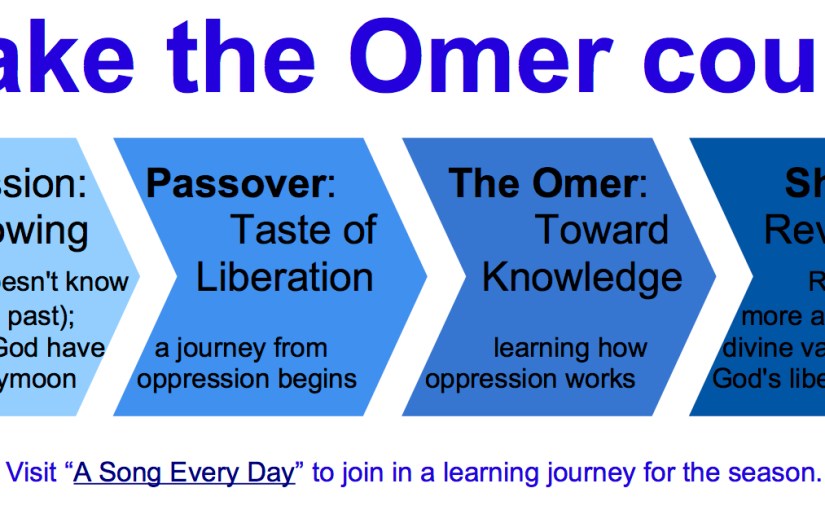
This particular Omer journey was designed to move from Oppression — a place where Pharaoh does not know his own past and Israel and God have yet to honeymoon — through learning more about oppression and liberation to Sinai. The goal was to “reach Sinai more able to hear divine values, serve God’s liberation work.”

I was reminded by my study partner, Amy Brookman, this afternoon that Martin Buber describes Sinai as a “lowly” kind of place — not unlike the thorn bush where Moses met God earlier in the Exodus story. We learn from this that humility is absolutely key in gaining anything from Sinai.

We learn, too, from the Sinai narrative that communicating (with God) is not a simple or straightforward matter. Moreover, I believe we learned on this journey that communicating about racism and related issues is difficult: To really learn anything new about oppression and how it works in general, and how it is affecting people today, means letting go of old (probably more comfortable) perspectives. And that means experiencing some sense of loss and pain.

Amy also shared a piece of Torah from Gilah Langner, “Revisiting the Ten Commandments” (From Kerem 13):

The midrash tells us: God sent along two angels to each and every Israelite, one to lay a hand upon the heart to keep body and soul together, and the other to lift up the head of each Israelite to behold God.

It’s a beautiful image, especially if you like angels. But set aside the
angels for a moment, and notice that the midrash is keying in on the life-and-death quality of Sinai.

Who Counts 50?

I suggest we take these these thoughts with us as we enter the holiday of Shavuot:

1) humility to hear,
2) the challenge of real communication, with associated loss and pain,
3) the life-and-death quality of this communication.

I’ll add, too, a commentary relayed to Fabrangen West by David Blumenstein this month: We are told both to count 50 days and to count seven full weeks. We carefully count the 49 days and seven weeks, but what about that last day? That, midrash [sorry citation missing], suggests is counted by God.

So I close this 49-day journey with a prayer:

May what we have learned so far on this 49-day/seven-week journey bring us to where we need to be, individually and collectively, so that God can count in that last day. And may the angels holding us up give us strength to risk serious communication, with one another and with God.

Shabbat Shalom and Chag Sameach

We counted 48 on the evening of May 21. Tonight, we count….

Making the Omer Count

from On the Road to Knowing: A Journey Away from Oppression
A key element in the journey from liberation to revelation is understanding the workings of oppression, and our part in them. We cannot work effectively to end what we do not comprehend.

So this year, moving from Passover to Shavuot, I commit to learning more about how oppression works and how liberation is accomplished. I invite others to join me:

Let’s work together, as we count the Omer, to make this Omer count.

Thoughts and sources welcome.

JourneyOmer

Share this graphic to encourage others to participate.

A Meditation

Aware that we are on a journey toward knowing God — from liberation to revelation — I undertake to know more today than I did yesterday about the workings of oppression.

I bless and count [full Hebrew blessings in feminine and masculine address]:

Blessed are You, God, Ruler/Spirit of the Universe, who has sanctified us with Your commandments and commanded us to count the Omer.

Today is forty-nine days which are seven weeks in the Omer.
Hayom tish’ah v-arba’im yom shehaym shiv’ah shavuot la-omer.

In the spirit of the Exodus, I pray for the release of all whose bodies and spirits remain captive, and pledge my own hands to help effect that liberation.

God expresses concern that divine communication with “break forth upon them [פֶּן-יִפְרֹץ בָּהֶם יְהוָה]” (Exodus 19:22).

Even the priests have to exercise caution lest “[THE NAME] break forth upon them [אֶל-יְהוָה–פֶּן-יִפְרָץ-בָּם] (Exodus 19:24).

When God has already “said” the Ten Commandments, THEN we learn 1) that the People perceived a jumble and want Moses to speak with God in their stead, and 2) that God “already spoke to you [plural] דִּבַּרְתִּי עִמָּכֶם.”

And all the people perceived the thunderings, and the lightnings, and the voice of the horn, and the mountain smoking; and when the people saw it, they trembled, and stood afar off. And they said unto Moses: ‘Speak thou with us, and we will hear; but let not God speak with us, lest we die.’ And Moses said unto the people: ‘Fear not; for God is come to prove you, and that His fear may be before you, that ye sin not.’ And the people stood afar off; but Moses drew near unto the thick darkness where God was. And the LORD said unto Moses: Thus thou shalt say unto the children of Israel: Ye yourselves have seen that I have talked with you from heaven.
— Exodus 20:14-18

BACK

Enough, yet? (Beyond 47)

Singing Dayenu [“enough for us”] is a 1000-year old Passover tradition. The 15-stanza poem thanks G-d for 15 blessings bestowed upon the Jews in the Exodus. Had G-d only parted the seas for us, “It would have been enough” we say for each miracle or divine act, thus humbly appreciating the immensity of the gifts. KB Frazier’s reworking of the poem addresses us, rather than G-d. It calls us to greater action for justice, saying “lo dayenu” (it would not have been enough) in recognition of the work still unfinished.

1. If we had sparked a human rights revolution that would unite people all over the world and not followed our present day Nachshons as they help us part the sea of white supremacy and institutional racism
Lo Dayenu
….

10. If we had truly listened to the stories, pain and triumphs of our brothers and sisters of color without feeling the need to correct, erase or discredit them and did not recognize the Pharaohs of this generation
Lo Dayenu
11. If we had worked to dismantle the reigns of today’s Pharoahs and had not joined the new civil rights movement
Lo Dayenu
12. If we had marched, chanted, listened, learned and engaged in this new civil rights movement and not realized that this story is our story, including our people and requiring our full participation
Lo Dayenu
jfrej_blm_cropped13. If we had concluded that our work is not done, that the story is still being written, that now is still the moment to be involved and that we haven’t yet brought our gifts and talents to the Black Lives Matter movement
Lo Dayenu

— from the #BlackLivesMatter Haggadah Supplement, Jews For Racial and Economic Justice


We counted 47 on the evening of May 20. Tonight, we count….

Making the Omer Count

from On the Road to Knowing: A Journey Away from Oppression
A key element in the journey from liberation to revelation is understanding the workings of oppression, and our part in them. We cannot work effectively to end what we do not comprehend.

So this year, moving from Passover to Shavuot, I commit to learning more about how oppression works and how liberation is accomplished. I invite others to join me:

Let’s work together, as we count the Omer, to make this Omer count.

Thoughts and sources welcome.

JourneyOmer

Share this graphic to encourage others to participate.

A Meditation

Aware that we are on a journey toward knowing God — from liberation to revelation — I undertake to know more today than I did yesterday about the workings of oppression.

I bless and count [full Hebrew blessings in feminine and masculine address]:

Blessed are You, God, Ruler/Spirit of the Universe, who has sanctified us with Your commandments and commanded us to count the Omer.

Today is forty-eight days which are six weeks and six days in the Omer.
Hayom shmonah v-arba’im yom shehaym shishah shavuot veshishah yamim la-omer.

In the spirit of the Exodus, I pray for the release of all whose bodies and spirits remain captive, and pledge my own hands to help effect that liberation.

BACK

Reaping the Omer (Beyond 46)

In her book, The Other Talmud, Rabbi Judith Abrams notes that “Nowadays, we count the days of the Omer, but in the days of the Temple, they reaped the omer.”

Let’s give Shavuot the makeover it deserves….

We can transform the Omer counting from the dolorous business it’s become to what it probably was before: a countdown that gets more and more raucous the closer we get to the holiday….It could be a celebration of our history, from biblical times right up to the present.
— Abrams, The Other Talmud: the Yerushalmi, Unlocking the Secrets of the Talmud of Israel for Judaism Today. (Woodstock, VT: Jewish Lights, 2012), pp. 159-160

These weeks of “Making the Omer Count” have offered thoughts and resources designed to widen our reaping during the omer and our perspectives as we approach Sinai for the giving of the Torah.

Oftentimes, on this journey that makes so clear how much work is still to be done to make the harvest equitable to all, I think rather irritably: Aren’t we there yet?

As we get closer and closer to Shavuot this year, however, I appreciate the vision Judith Abrams presents: A countdown that becomes more raucous with every voice added to it, streets wider and wider as more and more perspectives are added.

If you’re ready….

We counted 46 on the evening of May 19. Tonight, we count….

Making the Omer Count

from On the Road to Knowing: A Journey Away from Oppression
A key element in the journey from liberation to revelation is understanding the workings of oppression, and our part in them. We cannot work effectively to end what we do not comprehend.

So this year, moving from Passover to Shavuot, I commit to learning more about how oppression works and how liberation is accomplished. I invite others to join me:

Let’s work together, as we count the Omer, to make this Omer count.

Thoughts and sources welcome.

JourneyOmer

Share this graphic to encourage others to participate.

A Meditation

Aware that we are on a journey toward knowing God — from liberation to revelation — I undertake to know more today than I did yesterday about the workings of oppression.

I bless and count [full Hebrew blessings in feminine and masculine address]:

Blessed are You, God, Ruler/Spirit of the Universe, who has sanctified us with Your commandments and commanded us to count the Omer.

Today is forty-seven days which are six weeks and five days in the Omer.
Hayom shiv’ah v-arba’im yom shehaym shishah shavuot vechamishah yamim la-omer.

In the spirit of the Exodus, I pray for the release of all whose bodies and spirits remain captive, and pledge my own hands to help effect that liberation.

BACK

Malcolm X and the Power of Small Things (Beyond 45)

“The fame we get from fighting for the freedom of others creates a prison for us,” Malcolm X wrote in 1964 to Azizah al-Hibri, then a college student at the American University in Beirut. Their brief in-person connection and subsequent correspondence are still treasured by Dr. al-Hibri, now retired as chair of KARAMAH: Muslim Women Lawyers for Human Rights, the international organization she founded. Moreover, the papers and their story illustrate some important things about leadership, race, gender, and media.

from correspondence between Dr. Azizah al-Hibri and Malcolm X

As president of the college debating society, al-Hibri arranged for Malcolm to speak on campus while he was touring and also had the opportunity to get to know him during his brief visit. A shared ice cream at the airport launched a correspondence between the two that continued until his death in February 1965. At his request, al-Hibri kept her correspondence private for over 40 years.

In 2012, al-Hibri released a few pieces of correspondence and donated other papers (still private for now) to America’s Islamic Heritage Museum. She said then, in a speech at DC’s Masjid Muhammad, that she wanted to ensure that Muslims are “proud” and “happy” about connections with the slain leader and to forge bonds between the African American Muslim community, with historical connections to the Nation of Islam, and what many call the “immigrant” Muslim community, with different historical roots.

Here’s more from the July 2012 East of the River Magazine story:

From his correspondence it is clear that he already suspected that his life and work were coming to an end. But he knew, even though al-Hibri didn’t yet, that her future as a leader was ahead of her.

It was unusual in 1964, for a woman to be president of an organization like the college debating society, al-Hibri notes. And she, like many women of that decade, had not yet envisioned for herself anything like her role today as professor of U.S. law and international human rights advocate. It was similarly odd to consider that women might be leaders of Islam. But Malcolm X saw beyond the confines of his time, says al-Hibri, pointing to words of encouragement – to her as a woman and a Muslim leader – inscribed in a book he gave her: “You have and are everything it takes to create a new world – leadership is needed among women as well as among men…”
full article here


The Power of Small Things

Of all the stories I covered for East of the River Magazine, this is one that sticks with me as most fascinating and important —

  • the young al-Hibri’s not knowing about U.S. racial dynamics, what her college dean meant about “airing the country’s dirty laundry”
  • al-Hibri’s struggle to reconcile the man she met with the picture she later saw portrayed in the U.S. media
  • the race-sensitive context of her later decision to share her experience, while keeping most of the correspondence private
  • Malcolm X’s interest in corresponding with someone outside the “prison” of his work
  • his recognition of the need for women leaders in politics and in Islam, before many saw it in 1964

I share this today, in honor of Malcolm X, El-Hajj Malik El-Shabazz (born Malcolm Little, 5/19/25-2/21/65). I share it in recognition of the work of Dr. al-Hibri and KARAMAH — a small, powerful organization. I share it as a shout out to the too-little-known Americas Islamic Heritage Museum. And I share it to acknowledge the hard and complex work of overcoming racism between religious brothers and sisters.

Perhaps most importantly, I return to this story again and again as an example of the power of small interactions to shape our world.

We counted 45 on the evening of May 18. Tonight, we count….

Making the Omer Count

from On the Road to Knowing: A Journey Away from Oppression
A key element in the journey from liberation to revelation is understanding the workings of oppression, and our part in them. We cannot work effectively to end what we do not comprehend.

So this year, moving from Passover to Shavuot, I commit to learning more about how oppression works and how liberation is accomplished. I invite others to join me:

Let’s work together, as we count the Omer, to make this Omer count.

Thoughts and sources welcome.

JourneyOmer

Share this graphic to encourage others to participate.

A Meditation

Aware that we are on a journey toward knowing God — from liberation to revelation — I undertake to know more today than I did yesterday about the workings of oppression.

I bless and count [full Hebrew blessings in feminine and masculine address]:

Blessed are You, God, Ruler/Spirit of the Universe, who has sanctified us with Your commandments and commanded us to count the Omer.

Today is forty-six days which are six weeks and four days in the Omer.
Hayom shishah v-arba’im yom shehaym shishah shavuot ve-arba’ah yamim la-omer.

In the spirit of the Exodus, I pray for the release of all whose bodies and spirits remain captive, and pledge my own hands to help effect that liberation.


Race and Religion

I am sure many readers are aware, as I am, of anti-racism, police-brutality protests in Israel as well as in the U.S. and of the shameful legacy there; not being Israeli or particularly closely connected with Israeli culture, I have chosen to leave that topic for the better informed. I do believe, however, that Muslims and Jews face similar issues and can learn from one another on these issues, even as problems BETWEEN communities persist.
BACK

Range of Possibilities (Beyond 44)

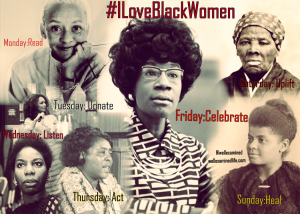
“The media we consume has a profound impact on the range of possibilities we can imagine. Therefore, centering Black female narratives in our reading habits should be a central practice for anyone trying to envision a world in which Black Women are respected, honored, supported and loved.” — So writes Aaron Goggans in his post, #ILoveBlackWomen Day One: Read, and I gratefully accept the suggestion.

from Aaron Goggans' "Well Examined Life"
from Aaron Goggans’ “Well Examined Life”

Important in its own right, focusing on women seems also a good antidote to this week’s all-male Torah portion (Bamidbar [“in the wilderness”], Numbers 1:1-4:20), and to the masculine-centered Sinai narrative of the upcoming holiday of Shavuot. (In which “the people” are told “don’t go near a woman” [Ex 19:15].)

Deep as erasure, sexism, and misogyny has been for Jewish women and women in Western culture generally, Black women face, in addition, misogynoir. It is, therefore, as Aaron Goggans points out, particularly important to “intentionally consume art, music and literature created by and about Black Trans* Women, Black Women and Black Girls” to counteract this reality.

half-bloodMoreover, any life missing out on Black female voices is simply deprived. And so, in the spirit of #ILoveBlackWomen: READ, I share a few favorites:

Esi Edugyan, Half-Blood Blues. NY: Picador, 2011.
An engaging novel which also offers a glimpse into some often-overlooked bits of history, including the experience of Afro-Germans and France’s “Rhineland Bastards,” following WWI and through WWII. (See U.S. Holocaust Memorial Museum for historical background.)

Issa Rae, The Misadventures of Awkward Black Girl. NY: Simon & Schuster, 2015.
Personal reflections — too young, at 30, IMO for a “memoir” — from the creator of the web comedy series by the same name as well as a number of other comedy projects. Rae reports taking out some first-draft material in deference to family feeling, but the result is still honest and insightful, and — like her video work — humorous without cruelty.

Sonia Sanchez, Morning Haiku. Boston: Beacon Press, 2010.
A collection of “haiku” in the sense of spare, powerful verses (not necessarily of the 5-7-5 pattern). Verses are written for varied individuals, from Emmett Till to Ras Baraka, Sarah Vaughn to Oprah Winfrey. See below for an excerpt from 21 Haiku for (Odetta).

A number of other authors, filmmakers, and other powerful Black female voices have been mentioned over the course of this Omer journey from oppression to Revelation. Here is a sampling:

Rain to the Desert

You asked: is there
no song that will
bring rain to this desert?
— Sonia Sanchez (see below)

Thanks, again, to “The Well Examined Life” for the reminder of how many songs, with how much potential to bring rain, we might miss without making a conscious effort to hear from Black trans women, women, and girls. Check out the blog for additional #ILoveBlackWomen activities.


We counted 44 on the evening of May 17. Tonight, we count….

Making the Omer Count

from On the Road to Knowing: A Journey Away from Oppression
A key element in the journey from liberation to revelation is understanding the workings of oppression, and our part in them. We cannot work effectively to end what we do not comprehend.

So this year, moving from Passover to Shavuot, I commit to learning more about how oppression works and how liberation is accomplished. I invite others to join me:

Let’s work together, as we count the Omer, to make this Omer count.

Thoughts and sources welcome.

JourneyOmer

Share this graphic to encourage others to participate.

A Meditation

Aware that we are on a journey toward knowing God — from liberation to revelation — I undertake to know more today than I did yesterday about the workings of oppression.

I bless and count [full Hebrew blessings in feminine and masculine address]:

Blessed are You, God, Ruler/Spirit of the Universe, who has sanctified us with Your commandments and commanded us to count the Omer.

Today is forty-five days which are six weeks and three days in the Omer.
Hayom chamishah v-arba’im yom shehaym shishah shavuot ushloshah yamim la-omer.

In the spirit of the Exodus, I pray for the release of all whose bodies and spirits remain captive, and pledge my own hands to help effect that liberation.

Misogynoir
Although the concept is not new to me, the word is. For more on this term — meaning “how racism and anti-Blackness alter the experience of misogyny for Black women, specifically” — see Gradient Lair and Wikipedia.

BACK

21 Haiku (for Odetta)
from Sonia Sanchez’s Morning Haiku

1.
the sound of
your voice thundering out
of the earth

2.
a drum
beat summoning us
to prayer

3.
behold
the smell of
your breathing

4.
dilated
by politics
you dare to love

5.
You opened
up your throat
to travelers

6.
exhaled
Lead Belly on Saturday
nites and Sunday mornings

7.
your music asked
has your song a father
or a mother?

…10. You asked: is there
no song that will
bring rain to this desert?

[fuller version at Google Books]
RETURN