More Sacrifice

In the list of general obligations that closed the previous post, the concept of “sacrifice” per se does not appear. This raised the question for me: Is “sacrificing” for the community or for a greater goal a Jewish notion?

A few notes from a brief further exploration:

The substantial entry on “sacrifice” in the Jewish Encyclopedia, as a central example, focuses on the ancient system of ritual and interpretations, through the ages, of that system. Only three paragraphs in the 15,000-word article speak of non-ritual understandings of “sacrifice.” These are based on ancient ideas that study, prayer, and good deeds replace the Temple sacrifices.

Sacrifices are alive and well” in My Jewish Learning begins with the origin of the term :

The term “sacrifice” comes from a Latin word meaning “to make something holy.” The most common Hebrew equivalent is korban, “something brought near,” i.e., to the altar. (The Torah: A Modern Commentary, edited by W. Gunther Plaut, UAHC Press, 1981, p. 750)in terms of “making something holy,” saying that the “most common Hebrew equivalent is korban, “something brought near,” i.e., to the altar. (The Torah: A Modern Commentary, edited by W. Gunther Plaut, UAHC Press, 1981, p. 750)

In this piece, originally published by the Union for Reform Judaism, Deborah Gettes concludes:

Whether we have sinned or not, whether we have done so intentionally or unintentionally, we still have the desire to move closer to God, to offer our own korbanot. To do so, we must put forth the effort to show kindness, compassion, generosity, and goodwill even if that is not easy. At the same time, we must put forth the effort to study Torah and attend worship services. As Pirkei Avot states, Mitzvah goreret mitzvah: The more good we do, the more good we do. This is really a model for life. Sacrifices are alive and well: They just have to be slightly redefined.

heart
“Prayer is the heart…of significant living,” Gettes notes, quoting Rabbi Morris Adler.

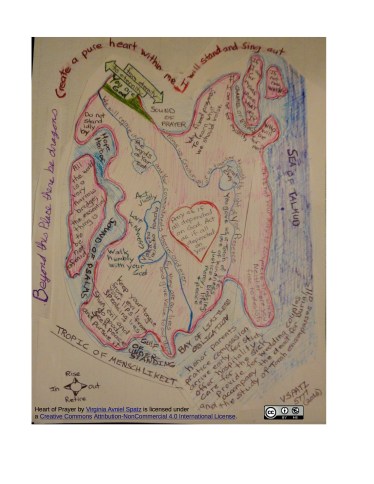
This brings me back to the “heart map” and prayer as an avenue to making Judaism’s “counter-cultural” message and covenant a part of our being. In particular, it puts me in mind of one comment incorporated into the map:

“Why fixed prayer? To learn what we should value…” (a teaching from Rabbi Chaim Stern included in the 1975 Gates of Prayer and in newer Reform prayerbooks.)

Sacrificial Notes

“Sacrifice” has been an important concept in baseball since the 1880s and a Christian concept for far longer. The term came into English from Latin, via Old French, and is generally defined as giving up one thing to obtain another.

“Sacrifice” in Hebrew

The word “sacrifice” is sometimes used by English translators of the Hebrew bible, as when Noah performs a ritual action right after leaving the ark:

וַיִּבֶן נֹחַ מִזְבֵּחַ, לַיהוָה; וַיִּקַּח מִכֹּל הַבְּהֵמָה הַטְּהֹרָה, וּמִכֹּל הָעוֹף הַטָּהוֹר, וַיַּעַל עֹלֹת, בַּמִּזְבֵּחַ.
And Noah built an altar [מִזְבֵּחַ] to the LORD and took of every clean animal and of every clean bird and offered [sometimes: “sacrificed”] burnt offerings [וַיַּעַל עֹלֹת] on the altar.
–Genesis 8:20

The Hebrew word for “altar” “mizbeach מִזְבֵּחַ” is linked with “zevach זְבֵּחַ,” one word for biblical sacrifice. But the Torah also uses other words, depending on the purpose and disposition of the offering:

minchah מִנְחָה” — “gift”
olah עֱלָה” — burnt offering, from “going up,”
sh’lamim שלמים” — “complete (or peace)” offering,
chatat חטאת” — “sin” offering, and
asham אשם” — “guilt” offering.

There are also offerings known by their content: “first fruits (bikkurim)” or “wave/sheaf (omer),” for example. Probably the most general term is “korban קָרְבָּן,” from the root for “becoming near.”

“Sacrifice” in Judaism?

A Jew’s obligations to oneself, to other individuals, and to the community are myriad. Here are a few of the most general:

  • We are warned to be for ourselves as well as for others (Avot 1:14)
  • We are told that “All Israel is responsible, one for the other [Kol yisrael arevim zeh bazeh]” (Shavuot 39a), and
  • We are reminded that caring for the poor and practicing lovingkindness are among the obligations without limit (Peah 1:1).

Is “sacrificing” for the community or for a greater goal a Jewish notion?

Stay tuned and/or share your thoughts.

Are We Ready Yet?

Are we ready yet, as multi-racial Jewish communities, to ask God to “renew our days as of old”? Have we, as U.S. Jews, thoroughly “searched our ways” for the racist systems in which we participate? Have we wept for the results in our own country and around the world?

Milwuakee 2016 “The joy of our heart is ceased;…”

“…our dance is turned into mourning.”  (Lam. 5:15) Baltimore 2015

Ferguson 2014 “How lonely sits the city, once full of people;…

“…she has become a widow!” (Lam. 1:1) Cincinnati 2001

LA 1992  “The crown is fallen from our head;…

“…woe unto us! for we have sinned.” (Lam 5:16) NYC etal 1968

Newark etal 1967 “For this our heart is faint,…

“…for these things our eyes are dim;” (Lam 5:17) Chicago etal 1966

Watts 1965 “She weeps sorely in the night,…”

“…and her tears are on her cheeks;” (Lam 1:2) Philadelphia etal 1964

Birmingham 1963. “For these things I weep;…”(Lam 1:16)

For these things I weep; my eye, my eye runs down with water….

“Let us search and try our ways, and return to the LORD.

“Turn us unto You, O LORD, and we shall be turned…”
— (Lam 1:16, 3:40, 5:20)

How can we complete the recitation of Lamentations for Tisha B’av, asking God to

“…renew our days as of old”

if we have not yet wept and searched our ways?

Matot: Heavy Tongue, or the House of Cards theory of bible study

I want to begin by acknowledging my teacher, Max Ticktin z”l, for whom the period of shloshim is coming to a close and whose connections to Temple Micah are more varied and interesting than I knew before he died. Max taught me — and others in several generations — a lot about who is and is not an enemy, of ourselves personally and of the People Israel.

Dvar torah on parashat Matot, Temple Micah 7/30/16

These remarks focus on the story of vengeance, Numbers 30:1ff. This is an odd and troubling story in many ways. I chose to study it, in part because I worry about the consequences of failing to examine the uglier parts of our tradition, and in part because its very oddness makes it interesting.

A few odd things

One odd thing is that we are told Pinchas was the priest of the campaign, but we are not told who the military leader was.

Another odd thing is how the otherwise terse story stops to tell us that Pinchas brought the “holy utensils” — which many commentators believe means the Ark — and the shofar. This makes the whole thing sound terrifyingly like something out of “Raiders of the Lost Ark” (Paramount 1981) or any of our contemporary wars that make use of religious iconography to wreak havoc on perceived enemies.

It seems to me — although I didn’t find commentary saying this, exactly — that the religious details, the priest, the holy utensils, and the shofar, hint at the spiritual aspect of the story. However distasteful and scary most of us find this today, the idea that a war should be fought to kill some people in order to preserve other people’s spiritual health, that was a part of biblical storytelling.

Midianites and Moabites, Balak and Pinchas

The Torah and many commentaries are clear that this whole issue with the Midianites is a war on people who tempted the Israelites into idolatrous behavior. We might think (and many commentaries remark) that the problem would be with the Moabites because it was the Moabites with whom Israel engaged in harlotry and idolatry in what is called here “the matter of Baal Peor.”

Back at the close of parashat Balak, we are told that Israel became “attached to Baal Peor and the wrath of God flared up against them” (citation). Moses and the judges had just ordered the Israelites to turn on one another and kill men attached to Baal Peor when the Israelite male, Zimri, and the Midianite female, Cozbi, perform what is generally understood to be public sex acts at the Tent of Meeting. Then Pinchas runs them through with a spear, stopping a plague we had not been told was happening. Just the one Midianite, Cozbi, is mentioned there. But both nations collaborated in hiring Balaam to curse Israel. So perhaps they were collaborating in the incidents involving Baal Peor, too. However it came to be, God told Moses back in chapter 25, at the start of parashat Pinchas, to harass [tsaror] the Midianites and kill them because they had attached [tsorerim] Israel “through the conspiracy against you [the Israelites] in the matter of Peor.”

Hasidic commentary says this harassing is a sort of eternal command, because the temptation to the Israelites will persist. The idea is that once they have tasted debauchery, it will be impossible to keep desire from arising again. So Israel must now be eternally harassing those who harassed them with temptation.

If the Israelites could have been warned some other way to be eternally vigilant to stop evil urges in themselves, we might have an easier time with the lesson. But that is not what Or HaChaim teaches, and that is not how the Torah text unfolds. Instead….

God tells Moses to harass the Midianites in chapter 25. And then we have a census and some legal material, a list of offerings, and a long treatise on vows. After all that, here in chapter 31, God tells Moses to take vengeance — now the verb is different, nekom –against the Midianites.

This is another odd bit and one of my favorites.

Another odd thing

Back when the whole mess started, we have a break between portions introduced right at the height of the Baal Peor matter. Israel’s idolatry and the incident of Zimri & Cozbi ends parashat Balak. Pinchas is rewarded for his action that stops Cozbi & Zimri in the next portion. And that’s where we see the command to harass Midian, at the start of parshat Pinchas.

The portion break suggests that the story was just too far out of control and the Rabbis wanted to cool things off….This is a very famous break, often discussed in the commentary. For more, see “Pinchas and the scary friend….But that’s a later, conscious choice of how we are to read and learn this text. The Torah itself inserts the five-chapter break between the precipitating events and God’s call for harassment, on the one hand, and, on the other hand, this episode of vengeance.

Moreover, we have so many odd things in both places. Pinchas acts to stop a plague that is not mentioned before it stops. Moses and God speak of a conspiracy against the Israelites involving sexual misconduct. But the only conspiracy we’re told about in the text is the one to hire Balaam to curse the people. Balaam is blamed (in commentary and in the text here) for whatever sexual acts and idolatry are happening, even though the last we heard of him, he went home after blessing Israel with words we still celebrate every morning in the prayers. (See, e.g., “Balak prayer links”.)

Missing Bits

I think the missing bits and the halting way the story is told suggest a struggle — with facts, perhaps, or with feelings and ideologies that lead to death and disaster. If we take nothing else away from this, I believe the Torah wants to ensure that conspiracy and war and people turning on one another is not read smoothly or accepted easily.

Avivah Zornberg, the brilliant and very Freudian teacher of Torah, believes the Torah itself has an unconscious that is suppressing trauma. (See The Murmuring Deep, citation coming). I’m not sure I buy her whole theory, but I do think we should listen to the pauses and the stuttering and the weird missing bits as closely as we listen to the story tht reads more easily… maybe more closely.

Midianites: enemies?

And meanwhile Moses, who argued with God so many times before has nothing to say in the text in support of the Midianites who protected and nurtured him in his youth. Nothing to say about his extended family and the legacy of Jethro, his father-in-law, who contributed so much to his own learning and helped Israel set up a judicial system.

It’s not much of a surprise that we don’t hear from Zipporah, as we rarely hear from women, even ones who face down God to save their husbands from death (see the “night incident” at the inn in early Exodus; citation coming). But Moses has nothing to say on her behalf?

We’re not the first generation to notice the oddness of this incident and Moses’s close connection to Midianites. Early commentary says that is why, although God tells Moses to exact vengeance, Moses sends others and stays back himself. Of course, this says nothing about the fact that he lets it happen, anyway, even appears to orchestrate it; it also discounts the fact that Moses is quite aged here and perhaps unable to command in battle.

But the interesting point to note, I think, is that Numbers Rabbah acknowledged the relationship between Moses and Midian, and tries to address how hard it all was and how thoroughly entangled were all the players here.

The contemporary biblical literary teacher Robert Alter says this about Baal Peor in chapter 25:

The Israelite attitude toward its neighbors appears to have oscillated over time and within different ideological groups between xenophobia, a fear of being drawn off its own spiritual path by its neighbors, and an openness to alliance and interchange with surrounding peoples.

–Alter’s Torah commentary

In reference to this passage in chapter 31, he says:

Either two conflicting traditions are present in these texts, or, if we try to conceive this as a continuous story, Moses, after the Baal Peor episode reacts with particular fury against the Midianiate women (not to speak of all the males) because he himself is married to one of them and feels impelled to demonstrate his unswerving dedication to protecting Israel from alien seduction. But it must be conceded that the earlier picture of the Midianite priest Jethro, Moses’s father-in-law, as a virtual monotheist and a benign councilor to Israel does not accord with the image in these chapters of the Midianite women enticing the Israelits to pagan excesses.

One more possibility comes to mind….

House of Cards theory of bible analysis

Maybe there was a conspiracy involving Balaam and the Midianite kings but orchestrated by some other entity for reasons of their own, some kind of House-of-Cards-type plot to discredit the Midianites and turn Israel against them — or to make us believe Midian and Israel were enemies and would always be. Maybe the plot was so successful that Moses turned against his own earlier supporters because of it, so successful that the narrator can make us believe the story really moves from “go kill more people to undo you own spiritual troubles” to instructions for how to become ritually clean after carrying out more vengeance. But whichever Frank Underwood was behind the plot is no longer available — to look  us straight in the eye, breaking the Torah’s fourth wall, so to speak  — and confess what’s really going on and why, or to at least offer another version of the truth.

This is not too different from Zornberg’s unconscious theory. Because they both boil down to the fact that the Torah itself cannot say, maybe no longer knows, what caused the People to lose their spiritual way and then turn on neighbors and allies in an attempt to cope, make some sense of it.  But the Torah is still able to tell us in its stuttering way, full of missing bits and confusion, that the tale is maybe not as straightforward as it might sometimes be portrayed, that vengeance is not a simple matter with a clear beginning and end, that it’s not something that ends well…or even ends:

In the middle of his rant to the leaders for not killing enough, Moses is somehow back to a lecture on ritual purity after touching the dead. And we are not told at this point if his ranting instructions were carried out (and we know from later stories in Tanakh that there are plenty of Midianites still in the land).

A heavy tongue returns

It occurred to me late in preparing these remarks that perhaps the rambling and stuttering of this story is related to what Shelley Grossman described here about Moses a few weeks ago: his aging and use of an old playbook and how he no longer has his siblings at his side. Remember, too, that Moses tried to refuse the Exodus mission, back at the Burning Bush, by telling God he was “heavy-mouthed” and “heavy-tongued” (Alter’s words). At the time, God told Moses not to worry because Aaron could speak. But now, Aaron and Miriam are gone and we have, instead, Pinchas — Aaron’s grandson whom we first meet when he is in the middle of a violent act, committing a killing that we are later told is part of a covenant of peace.

So maybe what we witness here is a story that is moving forward under emerging leadership but related by a man who has reverted to heavy-tongue, reporting to us that his own demise will follow on the heels of vengeance on people he once knew as family and fellow monotheists. Maybe it’s a kind of last gift to Moses — and to us — that the old, heavy-mouthed stuttering voice comes through to warn us that no such tale can be told without stumbling and missing bits.

NOTES

Max David Ticktin (1922 – 2016)

There are many on-line obituaries and memorials to Max. My favorite is this one by Rabbi Arthur Waskow. And in the way of such things, I was carrying the Torah through the Micah congregation just a few days after Max’s funeral and, even though Max did not attend services at Micah would not have been there to touch me with his tzitzit, I found myself equal parts profoundly sad at the knowledge that we would all be missing his touch and deeply grateful for the myriad ways he had already touched so many of us.

BACK

The Torah Portion

The Torah portion Matot is comprised of Numbers 30:2 – 32:42. Temple Micah is following the schedule of readings used in Israel and, therefore, one week ahead of many congregations in the diaspora at this point in the calendar.
BACK
Faith Communities & Gun Violence

How are faith communities responding to the ever-growing plague of gun violence in our midst? As some communities are just beginning to find their voices on this issue.

Spatz_StopViolence2
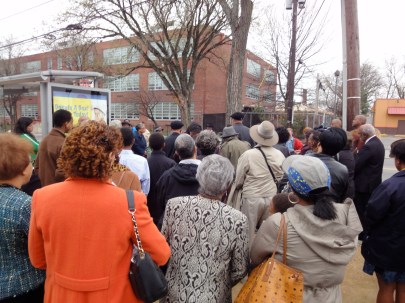
Prayer rally at Naylor Road, near Alabama Avenue, SE, March 13 (photo copyright: V. Spatz)

East Washington Heights Baptist Church held its first public response to gun violence just recently, for example. The church, in DC’s Hillcrest neighborhood (Ward 7), organized a prayer march and rally against gun violence on March 13. The prayer event came in the wake of a multiple shooting in a nearby bus stop on Sunday afternoon, March 6, which resulted in the death of 39-year-old Ivy Tonett Smith. Charnice Milton, my 27-year-old colleague at Capital Community News, was shot to death at the bus stop across the street on May 27, 2015. Look for more on this in the April edition of East of the River.

Others, like Presbyterian churches in and around Washington DC, have been active in responding to gun violence for many years. Area churches, along with others concerned, continue to protest outside one “bad dealer” store — linked to more than 2500 guns used in crimes over the course of 18 years — every fourth Monday at 4:00 p.m.

Presbyterian churches have also hosted this T-Shirt Memorial to 2015 victims of gun violence in DC.  Here’s a slideshow from the memorial installed at Fifteenth Street Presbyterian.

Finally, for now: The sermon at the heart of the movie Chi-Raq, despite controversies and faults of the film, gives us a glimpse of how St. Sabina, on Chicago’s Southside has been approaching this plague.

How is your community responding? What (else) would you hope to see?

From Frozen to Bloom

Frozen to Bloom seder.jpgWhat roots do you want to tap for your community’s future? What seeds do you want to nurture?

This community-tree “seder” was crafted during Snowzilla and seems appropriate to share on another snowy day in DC. This  may seem odd timing – celebrating trees when branches are bare and everything is covered with a thick layer of snow. But the holiday; marks the point when last year’s leaves are long gone and new buds are still weeks away. The challenge is to celebrate future blooms when things look bleakest.

Even though the holiday has come and gone (Jan. 24-25, 2016) this year, the cold, tree-less conditions have not abated in many places. And envisioning new growth and planning for new blossoming is never out of season.

This seder can be used to consider any community’s seeds, roots, and hopes for fruit. It was written specifically for the area east of DC’s Anacostia river, however, and the full story is available on-line and in PDF: Frozen to Bloom).

More in the Jew in the Pew” series, currently appearing in East of the River magazine.

New Year for Trees — Tu B’Shvat

The New Year for Trees is one of four new years in the Jewish calendar. It generally falls at a time when much of the northern hemisphere is at its most frozen and inhospitable.

BACK

Blasphemy of Pharaoh’s Overreach: Theology, Context and the Trouble I’ve Seen

“Claiming the center stage, just like Pharaoh and Caesar did in their time, has always been a blasphemous overreach that actually places oneself on the margins of God’s reign,” thus writes Drew G.I. Hart in Trouble I’ve Seen. 

This new title focuses on “Changing the Way the Church Sees Racism,” but much of what Hart says needs equal attention in the Jewish thought. (Trouble I’ve Seen: Changing the Way the Church Sees Racism. Harrisonberg, VA: Herald Press, 2016.)

Religious Thought and Practice

Hart notes the optional or alternative status of “women’s,” “peace,” or “black” theology:

According to [teacher John Franke] white male theologians have often seen themselves as objective and neutral overseers of Christian tradition. They function as “theological referees” for everyone else, while imagining their position as neutral and unbiased in the center of all the action….Missing is that white men have a social context too.

— p. 163, Trouble I’ve Seen

TroubleA parallel situation still applies all too well in much of the Jewish world. As does his analysis of how well-intentioned attempts at diversity and inclusion often fail to create real change. Many of his recommendations for the Church are ones other faith communities should explore as well:

  1. “Share life together.”
  2.  Practice solidarity. (See, e.g., Be’chol Lashon, Jewish Multi-Racial Network, and Jews of All Hues, as well as links at “Exodus from Racism”)
  3. “See the world from below,” by changing reading habits, for example. (See “Range of Possibilities” for some suggestions.)
  4. “Subvert racial hierarchy in the [religious infrastructure].”
  5. “Soak in scripture and the Spirit for renewed social imagination.” (Explore  “Pharaoh’s Hardened Heart,” e.g. and these resources from Reform Judaism’s Religious Action Center.)
  6. “Seek first the kingdom of God.”
  7. Engage in self-examination.

— from p. 176, Trouble I’ve Seen

Current and Historical Re-Examination

Hart’s exploration of “White Jesus” and related Church history may seem irrelevant to those outside the Christian faith. This is important background for every U.S. citizen, however, and worth review for those as yet unfamiliar.

Moreover, Jewish communities would do well to consider whether our members are aware of essential demographics — such as a recent study showing white men with criminal convictions more likely to get positive job-application responses than black men without a record (see p. 145) — and the individual and cumulative effect of everyday racism experienced by the author of Trouble I’ve Seen.

Most importantly, Jews must join our Christian neighbors in examining how we “resemble this remark”:

Too many in the American Church have perpetuated the myth that this land was build on Christian principle rather than on stolen land and stolen labor.

p.145, Trouble I’ve Seen

Hart’s new volume provides important food for thought as we continue to read Exodus this winter and experience it in the upcoming Passover season.

Hart
Drew G. I. Hart

More about “Anablacktivist” Drew G.I. Hart

Trouble I’ve Seen: Changing the Way the Church Sees Racism. Harrisonberg, VA: Herald Press, 2016.

What are you reading this Exodus season?

Please share your resources and your thinking.

Heart strings and the holiday cycle

“When the last rose of summer pricks my finger…”

Outside McPherson Square Metro Station, 9/15/15

Early in the holidays, I shared a message I’d found stenciled on the sidewalk, suggesting that maybe, when one’s heart is already broken, “protect yo heart” might be Days of Awe advice worth considering. Comments included thoughts about the Shekhinah’s wings sheltering “the bereaved, the brokenhearted” and a warning: “…the fact that your heart is broken as an existence proof that you have a heart that can be broken.”

Both comments have stayed with me through the ensuing days. But I admit to finding this breakable heart more debit than asset at the moment, and, while I’ve experienced shelter in my own personal griefs, I am not convinced that it extends to those most in need, in my town or beyond, in the vast, and sadly expanding, diameter of so many bullets and attendant trauma.

…Although I witnessed only one, the District has seen 116 homicides, as of 9/25/15; of course, this figure does not take into account the many other violent crimes in DC — or elsewhere — nor does it calculate the trauma for families, friends, and neighbors of each crime or the disastrous conditions that contributed to the crimes….

“…and I can’t hear the song for the singer”

This morning, the L’Chayim V’Yayin Torah study group completed a year of weekly studies by reading V’zot HaBrachah [“this is the blessing”] (Deut 33:1 – 34:12). We noted how different it was to focus on the death of Moses in this format, where we had time to really consider the scene and his final words. We usually meet this portion as part of a Simchat Torah celebration — in which the final words of the Torah are quickly linked to the initial words, as we begin a new reading cycle.

I personally do not usually mourn, or even much consider, Moses’ death: He remains centered forever, after all, in the narrative of the People’s trek out of bondage and toward freedom. Like Moses, we never quite make it out of the Wilderness, but go around again each year, glimpsing, perhaps, but never getting beyond the River Jordan.

Our study group paused, however, to consider the position of a revolutionary who can only lead the folks so far, who sees but does not cross over. We discussed an essay on this portion — “This is the Blessing: The ‘First Openly Gay Rabbi’ Reminisces” (more below) — which relates the life of Moses to that of a “social pioneer,” being “first” when young and “last” when old.

“When the strings of my heart start to sever”

Meanwhile, a few days ago, I stumbled upon a recording (20 years old, but new to me; see below) from a different sort of revolutionary He is also at the banks of a river — although, unlike Moses, he has not seen the other side. Somehow, “when the strings of my heart start to sever” put me in mind of an oddity of the first and last words of the Torah:

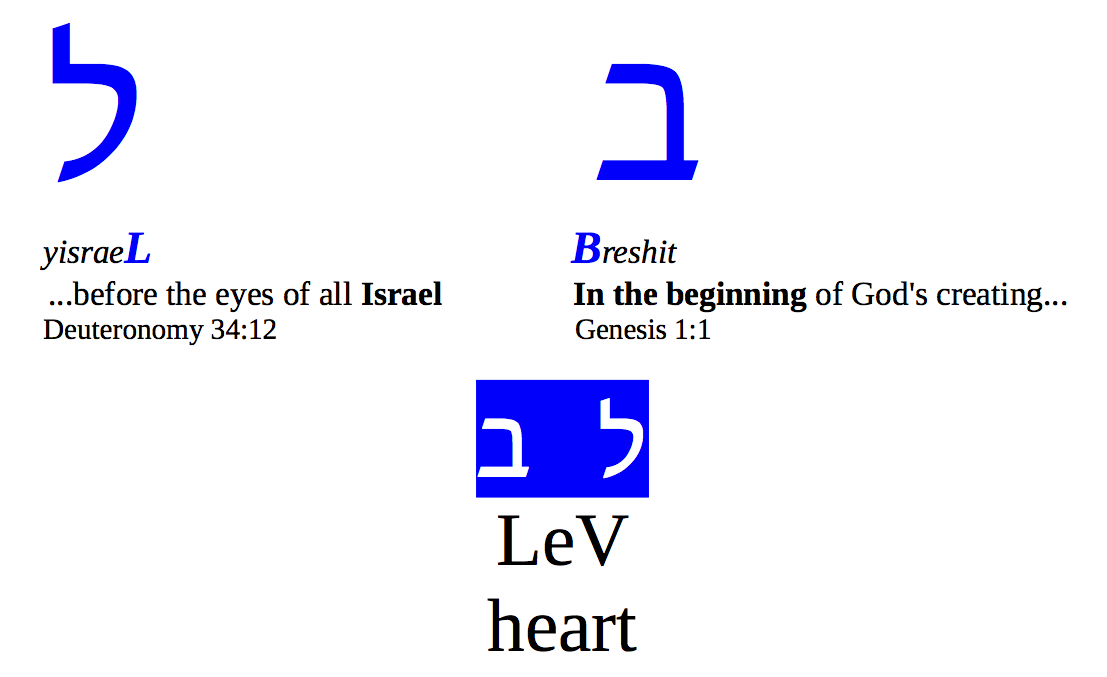
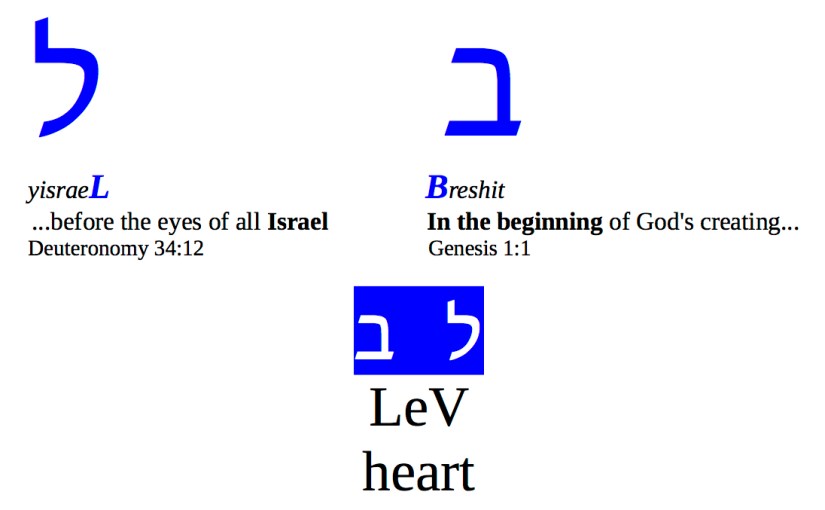
heartLEV

The last word of the Torah is ישראל (Yisrael), making the final letter of the Torah ל, lamed. The first word is בראשית [“in the beginning”], with the initial letter ב, bet. Linking the two letters forms the word “heart [לב, lev]” — either read “backward,” so the Torah is seen as the “heart” of the Jewish people, or stretching the lamed around to meet the bet, as we do when one reading cycle completes and the next begins on Simchat Torah. (more on this here)

“If I were at the border of the promised land, knowing I couldn’t get in,” writes the “social pioneer”(see above):

…I’d say, “Be true to yourself.” I don’t say it glibly: it’s one of the most difficult challenges any of us face….Whatever it costs you to live a life of integrity, you have to do it.
— “This is the Blessing: The ‘First Openly Gay Rabbi’ Reminisces,”
by Allen Bennett as told to Jane Rachel Litman
Torah Queeries. NY: NYU Press, 2009. p.280

The author of “Black Muddy River,” though younger than I am now when he wrote these lyrics, reported later that the song

…is about the perspective of age and making a decision about the necessity of living in spite of a rough time, and the ravages of anything else that’s going to come at you.
— Robert Hunter, quoted in David Dodd’s “Greatest Stories Ever Told”

May all find healing in the rolling to come

Black Muddy River

This particular rendition is an encore at July 9, 1995 Grateful Dead concert (the last before Jerry Garcia died). Vocals are some of Jerry’s last public words.

“Black Muddy River”
When the last rose of summer pricks my fingers
And the hot sun chills me to the bone
When I can’t hear the song for the singer
And I can’t tell my pillow from a stone

I will walk alone by the black muddy river
And sing me a song of my own…

…I don’t care how deep or wide
If you got another side
Roll muddy river…

…When the strings of my heart start to sever
And stones fall from my eyes instead of tears

I will walk alone by the black muddy river
and dream me a dream of my own
I will walk alone by the black muddy river
And sing me a song of my own
— Robert Hunter, 1986
Full lyrics at Dead-net
David Dodd’s annotated lyrics

BACK

Psalms and Their Superpowers

In recent months, the need for deeper prayer – just to cope with events – has become more urgent for me and, I suspect, for others as well. It seems to me that the world around us is also in urgent need of all the help it can get, in the form of prayer and otherwise.

Mishkan T’filah reminds us that “We join together in prayer because together, we are stronger and more apt to commit to the values of our heritage….”

The older Gates of Prayer tells us that “Some will pray together who cannot pray alone, as many will sing in chorus who would not sing solos.” It also cautions that public worship is different from private worship in a public place.

Here are some thoughts to help us explore what it means to engage in public worship, maybe to better understand what we’re trying to accomplish, individually and collectively, with our prayers.

Toward Communal Prayer

We never pray as individuals, set apart from the rest of the world….Every act of worship is an act of participating in an eternal service, in the service of all souls of all ages.

At times all we do is to utter a word with all our heart, yet it is as if we lifted up a whole world. It is as if someone unsuspectingly pressed a button and a gigantic wheel-work were stormily and surprisingly set in motion.

It’s like being a faucet or a crack in the rocks from which the water emerges. The spring doesn’t make the water. At best, it knows how to get out of the way and open itself wide to the flow. If it’s really blessed and happens to be connected to some sweet, clear water, then it will taste like a revelation to those who encounter it.

The words above are from the 20th Century Rabbi Abraham Joshua Heschel (Man’s Quest for God. Santa Fe, NM: Aurora, 1998) and from the poet and essayist John Barlow (Afterward, Complete Annotated Grateful Dead Lyrics . NY: Simon & Schuster, 2005). I thought both authors captured essential aspects of prayer, particularly public worship –

  • connecting with something larger than ourselves
  • realizing that offering a heartfelt word might be in our power, but anything beyond that is outside our control
  • and recognizing that something that is not us is moving whenever we actually encounter moments of insight or solace or inspiration

As we settle into a house of worship, our city, nation, and globe face intense challenges that we don’t always acknowledge inside these walls. There are undoubtedly many other personal concerns weighing on the hearts of those here this morning.

And yet Shabbat asks us to rejoice and delight in its goodness.

Trying to figure out how to get from the work-a-day world to Shabbat is hard enough. But moving from grief and anger and worry, maybe even despair, to Shabbat is yet another level of challenge. This is where I call on the psalms, with their range of emotions, to exercise their superpower. I find that psalms let us move through difficult states of being to get to praise and joy.

Psalms Work

In particular, psalms attributed to the offspring of Korach offer us an amazing offer us an amazing variety of images to explore as we find our way in prayer.

[Remarks originally prepared for Shabbat Korach]. So, I thought it would be interesting to consider a few of these psalms. They touch on the usual Shabbat morning themes –

  • waking up our bodies, minds, and souls;
  • acknowledging our blessings; and
  • becoming aware of community, before we reach the formal call to worship.


Psalm 84

(text here)
Place
First, like Mah Tovu, which often opens our prayers, this psalm is filled with place language:

  • mishkenotekha, translated as “your places” or “tabernacles” or “sanctuaries,”
  • beitecha, “Your house,” in verse 5
  • beit elohei, “house of my God” in verse 11
  • ken, “nest” in verse 4
  • mizb’chotekha – “your altars”
  • Zion, which is understood in many ways, as both a physical and a metaphorical place, and
  • chatzrot – “courtyards” in verses 3 & 11, which we also find in Psalm 92 the psalm for Shabbat

Travel
But Psalm 84 also includes nearly as many expressions for travel:

  • a soul that is longing to be elsewhere – in those courtyards – in verse 3
  • crossing the Valley and transforming it in verse 7
  • walking from strength to strength in verse 8
  • walking the holy road in verse 12 – and, my favorite
  • “highways in the heart” or the “heart as an easy road”

On the Way/Here
We also find several phrases that suggest states of mind than physical locations
ohalei-rasha: tents of wickedness, or “tents of those estranged from your will”
and histoteif, which my commentary calls an infinitive form of the noun, saf – threshold – used as a gerund, so “standing on the threshold”

This expression sort of encapsulates the psalm’s twin themes of being in a place and simultaneous on the way.

This dual status – being here and on the way – is, I think, part of how prayer works. So let’s make sure that we’re here – body, mind, and soul – as we consider

How beloved are the places we perceive the Holy One
How strongly our souls long for the Courtyards
How even the bird finds a home and the swallow a nest
How happy are they who dwell in God’s house
and how happy are we still on the threshold dreaming of a sweet day in God’s Courtyard

…on this pilgrimage Jews have been taking in one way or another for millenia.

See also “heart highways” for more on Psalm 84.

Psalm 42

(text here)

Psalm 42 is one that takes us through a range of emotions – celebrating kindness by day and song at night, on the one hand, and yet feeling “bent low” and “in tumult.” The throngs were crying in joy and thanksgiving, but that memory brings sadness because the moment of gathering, and perhaps of insight, is passed.

It’s also worth considering, as we explore the idea of prayer, that depths are calling to depths and breakers and waves crashing, but the soul’s desire is compared to longing for a simple drink from a stream. And that seems sufficient. In fact, the psalmist wisely doesn’t desire ocean depths, even while thirsting for the presence of the Living God.

See also “Why Doesn’t She Drink?

Using and Leaving the Psalms

If we don’t manage to transform anything, if only our own perspectives on our own cares, maybe our prayer is not all it could be. And, knowing that everyone here brought at least some burdens that need lifting up, and that our city and country and world need lifting up as well, shouldn’t we use the tools at hand to see if we can do as Heschel described, uttering a heartfelt word in hope of setting off that gigantic wheel-work that lifts the world?
melody

Some related ideas as we prepare to leave the psalms — please see “Melody of Understanding“…

First: Pope Gregory (on PDF) says that God already had us in mind when the psalms were inspired and that they speak to us today “as if they were at this instant pronounced for the first time.” John Barlow notes that the material he helped create continues to grow and reveal itself over time, “resonating with frequencies unheard at the time of their writing.” And Eknath Easwaran suggests that we can respond to sacred text through “attentiveness, persistence, and the desire to move from inspiration to insight to action.”

I add: perhaps together we can help each other dare to be vulnerable enough to drink from that stream, and, if we all walk together through the Valley of Weeping, maybe we can transform it together into that wellspring of life.

Why doesn’t she drink?

כְּאַיָּל, תַּעֲרֹג עַל-אֲפִיקֵי-מָיִם
כֵּן נַפְשִׁי תַעֲרֹג אֵלֶיךָ אֱלֹהִים.
2 The way a deer longs for streams of water,
my soul has longed for you, God of Strength.
— Psalm 42:2 (whole psalm here)

R. Shefa Gold (C-DEEP, Kol Zimra) offers a teaching on this verse:

The deer…is standing at the riverbank. Her longing is for that water that is right there, right in front of her.
— chant and full teaching, “Longing: Kayn Nafshi Ta’arog”

David Blumenstein (Kol Zimra, Fabrangen West) adds another layer:

Why doesn’t she drink?
Deer, vulnerable when they drop their heads, are cautious about drinking.

A few notes about Psalms 42 and 84 (discussed in previous post):
Ps. 42:2 is used in the Kabbalat Shabbat piyut “Yedid Nefesh
Ps. 42:5 opens the Yom Kippur piyut “Eleh Ezkerah
Ps. 42:3 & 84:3 form the refrain of “Tzam’ah Nafshi” by Ibn Ezra (1089-1167) Ps. 84:6 is used in a Yehuda Halevi (1075?-1141) Selichot poem
Ps. 84:5 opens Ashrei, which means that afternoon services begin with celebration of “the house” and/or praise for showing up
Psalm 84:6-8 appear in Christian and Rastafarian songs, celebrating “going to Zion”