DC Tefillin Barbie Does Sukkot

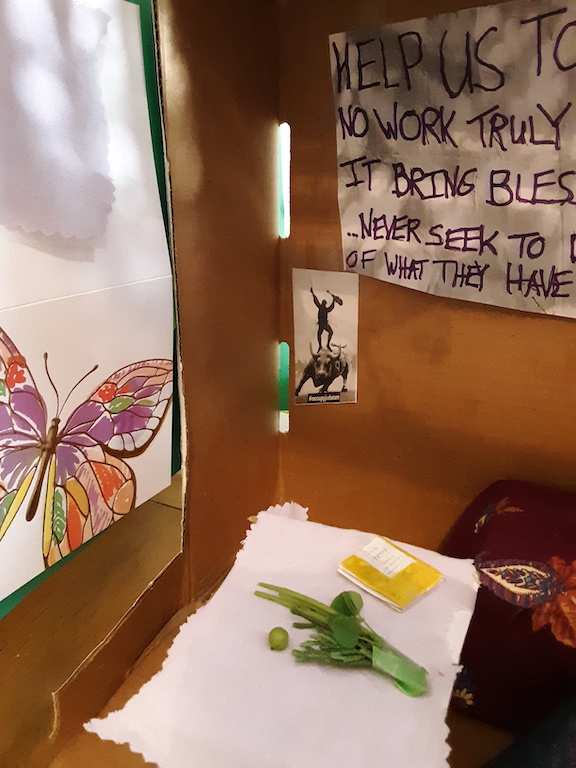
In response to social media showing “Barbie’s Dream Sukkah” (see below), I built this sukkah for DC Tefillin Barbie.

I built it the way doll dwellings were created in my youth, repurposing whatever was at hand and roughly the right scale: cardboard, empty spools of thread, scraps of fabric, an old greeting card with a pretty design…. No one I knew had any kind of “Dream” house or car, although Barbies drove or lived in store-bought items that seemed close to her size. And those “Dream” items are just as foreign today as they were back then. So DC Tefillin Barbie‘s sukkah reflects a different dream: a sheltering peace that covers us all.

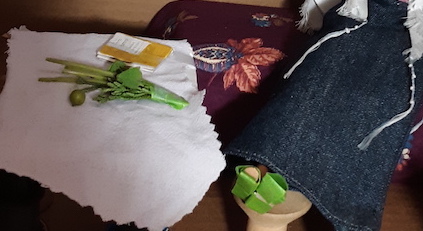
Cardboard box sukkah for Tefillin Barbie. sign on back wall reads "Help us see that no work truly prospers unless it bring blessing to others...Never seek to dispossess others of what they have planted." Reform Prayerbook. Another sign reads #OccupyJudaism and shows fiddler (as in "on the roof") on Wall Street Bull. Additional decorations are all homemade or repurposed. greenery visble on roof. one wall is fabric. Tiny lulav and etrog on makeshift table.
DC Tefillin Barbie, Sukkah 5784

This Sukkah’s History

For quite a few years, the sukkah we set up outside our house also looked more like cardboard sukkah 5784 than “Barbie Dream Sukkah.”

Wooden frame sukkah with different sized sheets as walls, sign reads "Spread over all Your Canoppy of Peace"
2010 sukkah in front yard

A few years ago, we gave in and bought a Sukkah Project kit; it’s a marvel of ease in so many ways, but ours retains homemade touches. Two signs in our 5780 sukkah (photos here) were created for the local (DC) “Occupy Judaism” sukkah in 2011. (The wooden sukkah once in our yard was erected at McPherson Square; the materials were absorbed into Occupy K Street after the holiday.)
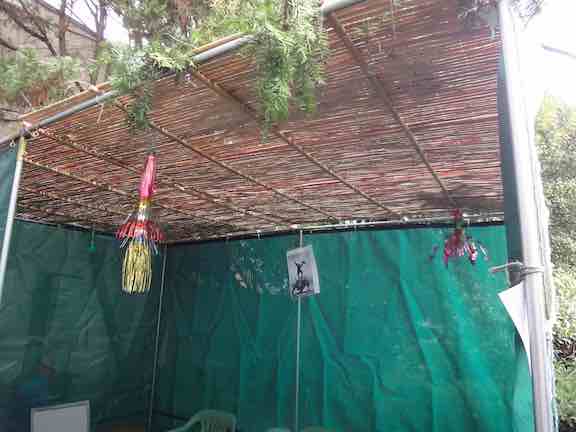
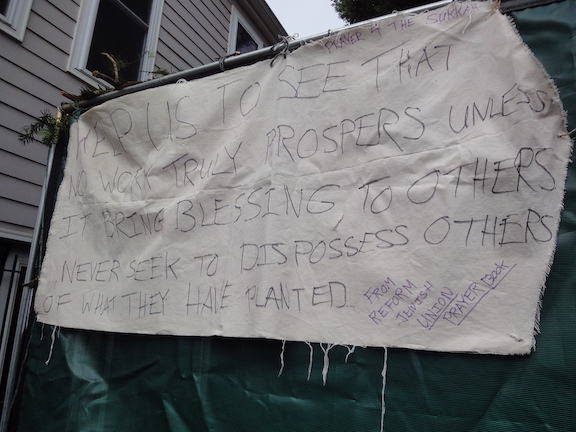
I copied those signs for DC Tefillin Barbie’s sukkah.
Among the items at hand, as the cardboard sukkah was built, were a button from “Coalition of Concerned Mothers,” remembering individuals killed by police, and a sticker from Prison Radio, reading “In American Prisons Life Means Death.”

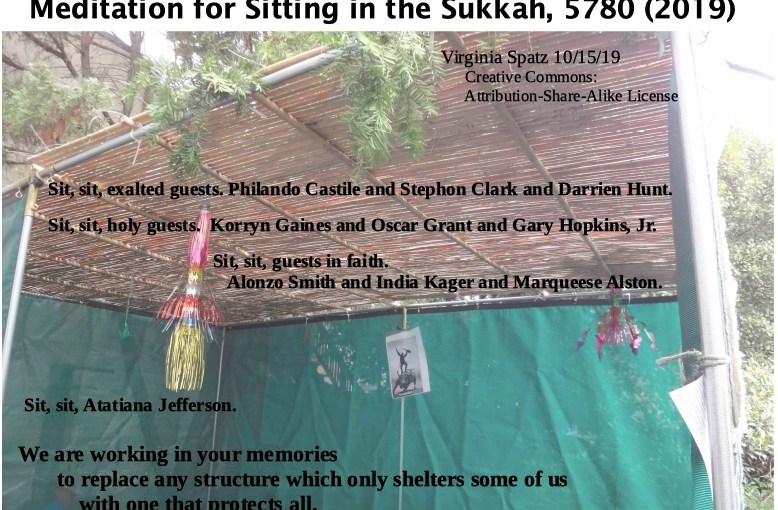
See related Meditation for Sitting in the Sukkah, 2019, treating those lost to police as ushpizin, mystical invited guests; Michael Zoosman, of Jews Against the Death Penalty, wrote an ushpizin-related meditation this year, focusing on those executed by the state. These items were added as decorations meant to remind DC Tefillin Barbie and visitors to reject “any sense that we are somehow entitled to dwell in safety…when others cannot.”

Barbie, Her Dreams, and Sukkot

This past Shabbat (9/30/23), Tzedek Chicago explored the concept of p’ri eitz hadar — the goodly fruit. So many interesting ideas and related study were raised. In addition, I found this note from some years back about Rabbi Joseph Soloveitchik’s linking Sukkot to the Oral Law and my own prayer for living in the fallible structure of the sukkah and of our individual and collective understanding of Torah.

I wrote at the time (and had completely forgotten): “As we prepare to leave the sukkah, we may hope that next year’s construction will be of even stronger, more beautiful materials erected by even surer hands. But that hope for the future need not throw doubt on the value of this year’s construction or diminish our enjoyment in this year’s dwelling place.” This year, I have really struggled with “the enjoyment of this year’s dwelling place.”

I still haven’t seen the Barbie movie and don’t understand a lot about Barbie culture. But I am find myself hoping there are other Barbies out there enjoying their own “dream” sukkot. May we all dwell — if only for a few moments — in structures that honor life’s fragility and our responsibility to create stronger, more inclusive shelters. And may we find ways to work together to bring the dream closer in the coming year.


Barbie Dream Sukkah

In late September 2023, Hey Alma posted these images on Instagram, saying “this is the vibe we’re going for this year.” Comments varied hugely, from enthusiasm for the “vibe” and the opulence of the sukkah itself to wrath at the AI-generated images. A FB post (not Hey Alma) drew criticism because Barbie’s clothes are not tzniut (modest) and the sukkah is pasul (not kosher). I cannot find any credits for the images, which also appear on this site. I first saw these images, shared by Rabbi Brant Rosen, during Torah study with Tzedek Chicago.

RETURN to top


DC Tefillin Barbie

Soferet Jan Taylor Friedman offers much information in relation to her amazing Tefillin Barbie project. Here’s info about my own changes to the Barbie who arrived in 2014. In addition, note: DC Tefillin Barbie holds by Rabbi Isserles who ruled that tefillin are worn on intermediate days of Sukkot — and she lives in her own personal time zone where it’s always eit ratzon, a good time, for prayershawl and tefillin.
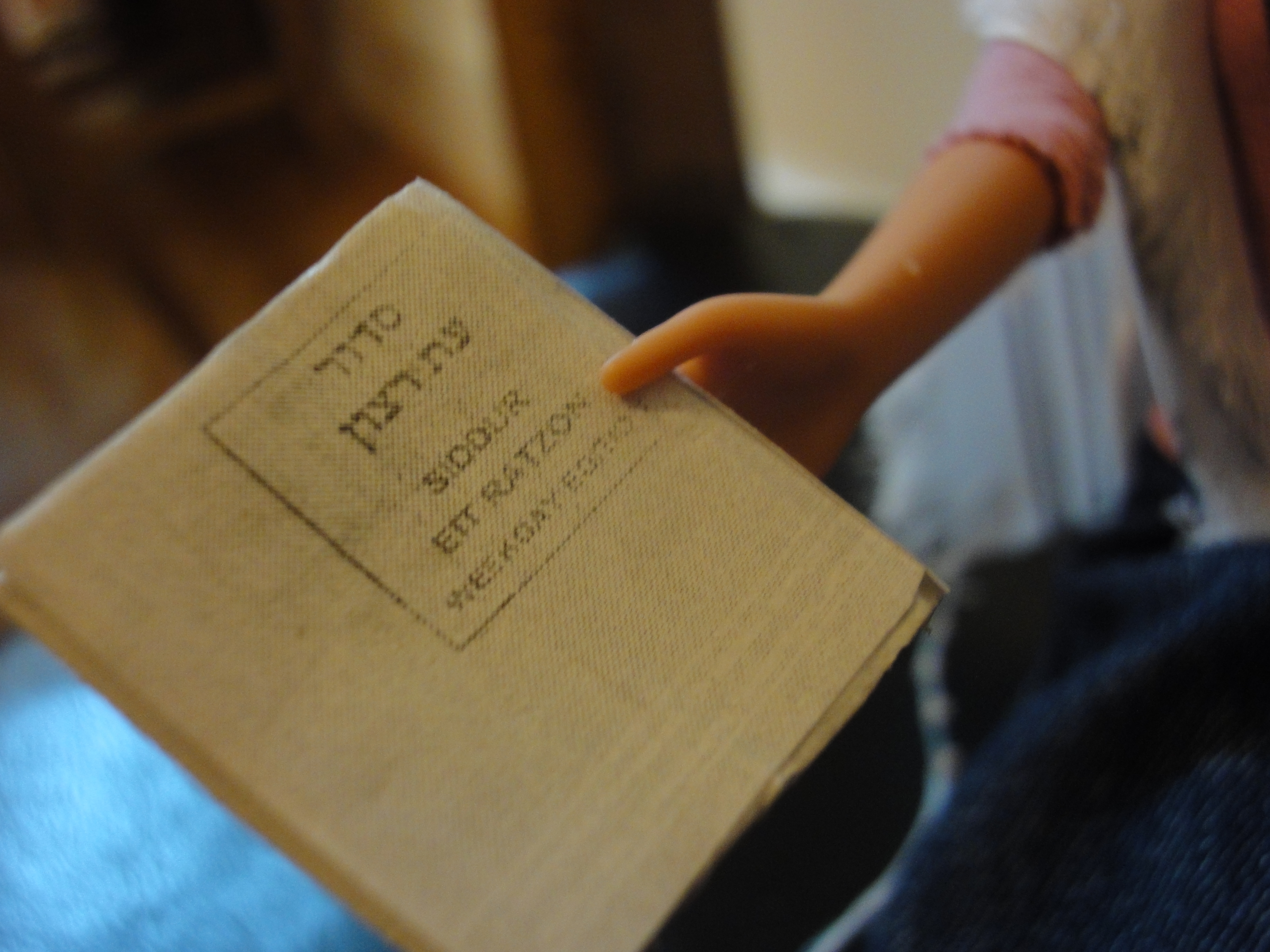
Tiny version of Siddur Eit Ratzon Weekday Edition, with Hebrew and English lettering
Siddur Eit Ratzon

She, like me, is experimenting with locally sourced lulav and etrog as part of a wider exploration of Diaspora Judaism.

Very blonde Barbie holds homemade lulav in her sukkah
DC Tefillin Barbie with lulav

RETURN to top


For Shelter Protecting ALL of Us

Meditation I wrote today contemplating the sukkah and the state of our shelters: the temporary ones Jews put up this week and the longer term ones that the state pretends to offer to all.

For Shelter Protecting All_Sukkot5780 (PDF) contains meditation for sitting in the sukkah while conscious of the lack of shelter available to Black people when police are around as well as a meditation for waving the lulav on a related theme. Some of the latter is based on an earlier meditation created for Occupy Judaism in 2011.


Sukkot and Babylon

Exploring Babylon: Chapter 1.1

“As You rescued the communities You exiled to Babylonia and Your merciful Presence accompanied them — so save us.” — from “Ani Va-ho,” a Sukkot prayer

Prayers begging for rescue and mercy often take the format, “You helped them; help us.” The unusual aspect of this prayer, recited each day of Sukkot in Conservative and Orthodox Jewish liturgies, is its implication that God needs saving, too. Long before Eleazar Kallir (c.570–c.640 CE) developed this poem, however, Jews were teaching that God follows the People into exile.

“These bold interpretations are a way of saying that when there is suffering in the world, God is not to be found on the side of the oppressors” (Or Hadash festival supplement; link below. Click here for basics on ancient Sukkot practices).

Fragility and Sukkot

Many centuries of prayers linked the fragility of Sukkot with exile. For example:

…In the merit of the Mitzvah of Sukkah, redeem us from exile,
protect us, that our enemies not reign over us.
And gather us from the four corners of the earth
and rescue us from captivity and from false imprisonment.
Let no evil eye rule over us ever.
Rebuild Your Holy Temple and restore your presence to Jerusalem….
– from Machzor Rav Peninim (R. Moses ben Hayyim Alshekh c1508-1600)

A different perspective appeared with Haskalah [“Enlightenment”]:


For thousands of years
Israel has been a wandering people.
Our houses are but fragile huts –
And these huts have been torn asunder too many times
By unrest and the hatred of others.
We have only your mercy to thank
That we have not perished from the earth.
Your compassion has held us and carried us
Through storm and flood, over every abyss
That has threatened to devour us,
And now, after generations of wandering,
You have allowed us to taste the sweetness of home.
Thanks to you, we have found a homeland –
A beautiful, wonderful country
That recognizes us as its children.
Safe and free, like ancient Israel
In the shade of its palm and fig trees,
We rest beneath the tent of peace
Provided to us by the law,
Along with all our brothers and sisters in this land….
– “On the first days of Sukkot”
in Fanny Neuda’s Hours of Devotion (1855)

The “homeland” Neuda had in mind was her native Moravia. The first edition of Hours of Devotion was published in German and included a blessing specifically naming Emperor Franz Joseph. Neuda’s family supported Haskalah, promoting the limited citizenship then allowed to Jews as well as sermons in the vernacular, modernizations of of prayers, and other religious adaptations that led to the Reform Movement. The prayerbook was later translated into Yiddish and was being reprinted in both languages up through the early part of the 20th Century.

Some Questions for Consideration

  • Where does the fragility of your personal Sukkot experience take you?
  • In what ways do you feel protected by a “tent of peace, provided to us by law”?
  • In what ways does your experience reflect exile, as expressed by Machzor Rav Peninim?
  • What about the fragility of the Jewish community, locally and worldwide?
  • And what about the wider world?
  • Are there lessons to be drawn from identifying ourselves and God as together in need of rescue?


sukkah78
Spatz-O’Brien sukkah, Oct. 2017

NOTES

In Temple days, hoshanot were recited while circling the altar on Sukkot; some denominations still recite them, while circling the bima — once on the first six days of the Sukkot and seven times on the seventh day, Hoshana Rabba. Hoshana is a contraction of hosha [save] and na [please]. Eleazar Kallir’s hoshana poem is known by its first line: “ani va-ho.”

ani va-ho hoshi’a na” from Mishnah Sukkah 4:5 is variously translated as “Save Yourself and us,” “I and You, may You deliver us both,” or “Please rescue me and the divine name.” Babylonian Talmud (Shabbat 104a) explains that “ho” is one of God’s names.

See commentaries on this prayer in Conservative Siddur Lev Shalem and Orthodox The Koren Mesorat Harav Siddur. Or Hadash: A commentary on Siddur Sim Shalom‘s festival supplement is (available for download here).
See also pages 110-111 in Abraham Joshua Heschel’s Heavenly Torah (more here).

Many Jews, including the Reform movement, do not observe Hoshana Rabba — or perform the hoshanot prayers during the rest of Sukkot.

BACK

Dwelling Within a Fallible Construction

Sukkot is the holiday “most closely associated with the Oral Law,” according to Rabbi Joseph Soloveitchik, as so much of the holiday — from identifying “p’ri eitz hadar” [“fruit of goodly trees”] (Lev 23:40) to determining what constitutes a sukkah — is determined via Oral Law (see below). Taking this thought one step further: Throughout this holiday, we dwell, more literally than usual, within a divine-human collaborative construction.

hoshana1Each year, we erect a new structure resembling the ones our ancestors built but using the materials and hands available to us at the time. Each year, our conception of Torah carries the teachings of our ancestors but makes use of new insights and adaptations to changing circumstances.

Sukkot asks us to dwell, for a time, deeply in shakiness: for some this translates into awareness that all depends, ultimately, on God; for others, the focus is on interdependence with others in living through forces far beyond our control.

In the sukkah we also dwell, for a time, deeply in an awareness of the human, fallible construction of our Torah understanding and of our abilities, individually and collectively, to put Torah into practice.

As we prepare to leave the sukkah, we may hope that next year’s construction will be of even stronger, more beautiful materials erected by even surer hands. But that hope for the future need not throw doubt on the value of this year’s construction or diminish our enjoyment in this year’s dwelling place.

Only through the Oral Law, can we identify the words
פרי עץ הדר with an etrog, the fruit of the citron tree. The Beit HaLevi (Derush 18) suggests that it was on Yom Kippur, when Moses came down with the second Tablets, that the Oral Law was conferred on the people of Israel. But while Yom Kippur commemorates the giving of the Oral Law, Sukkot is the holiday which actually celebrates it. The Sadducees and Pharisees argued about some very basic rules involving the Sukkot festival. Indeed, what is a sukka? What should its height be? From what materials may it be made? The vast majority of the rules of Sukkot are oral traditions from Sinai. Sukkot is therefore the festival of the Oral Law.
Koren Mesorat HaRav Siddur p.891-893

BACK

Psalm 27 for the season (4 of 4)

“If you’re not 20 minutes early, you’re late,” my ballet teacher, Marie Paquet, used to tell her adult students: Without time to leave behind the outside world and prepare to focus, warm up physically and mentally, class could be frustrating, even dangerous. Over the years, I’ve realized that her adage also applies to worship services. Still, life and public transportation don’t always support early arrival to services.

But necessity, as I’m sure “they” rarely say, is the mother of invention in kavanah [intention]….

This past Shabbat, Shabbat Sukkot, I entered the sanctuary un-early and a little frazzled. Moreover, this particular service skipped over some introductory prayers that ordinarily help me focus. This left me struggling to follow the service. But, then, in a moment provided for silent prayer, I stopped struggling and simultaneously “heard,” quite clearly:

“On Your behalf, my heart says: ‘Seek My face!'” (Psalms 27:8)

I wish I could say that this verse instantly helped me find my way into the service. But I can say that I my inability to keep up became suddenly irrelevant. Moreover, I stumbled into a three-part message encapsulating the fall holidays. I am hoping it will carry — for me and others, I hope — the essence of the season of teshuva into the mundane, post-holiday world.
Continue reading Psalm 27 for the season (4 of 4)

“The Jews Welcome…

…God”

LulavDiagramEach Sukkot morning, many of us stand momentarily with God’s name across our chests, facing away from us, like so many tour guides awaiting the same unfamiliar customer.
Continue reading “The Jews Welcome…

“A Whisper Will Be Heard”: Babel, the Wake and Echoes of Sukkkot

What went wrong at Babel, and how might the situation be redeemed? One answer, I think, is to be found in a whisper still reverberating from our shaky sukkot and the rustling of the lulav.
Continue reading “A Whisper Will Be Heard”: Babel, the Wake and Echoes of Sukkkot

Remember: Ki Teitzei Prayer Links

Abraham Joshua Heschel’s challenge to explore the “soul” of words in our prayers (see last week’s post) suggests consideration of “zakhor [remember],” which occurs several times in the portion Ki Teitzei:

Remember [zakhor] what HASHEM, your God, did to Miriam on the way, when you were leaving Egypt. — Deut./Devarim 24:9

You shall not pervert the judgment of a proselyte or orphan, and you shall not take the garment of a widow as a pledge. You shall remember [v’zakharta] that you were a slave in Egypt, and HASHEM, you God, redeemed you from there; therefore I command you to do this thing. — Deut./Devarim 24:17-18

Remember [zakhor] what Amelek did to you on the way when you were leaving Egypt….wipe out the memory [zekher and/or: zakhor] …you shall not forget! — Deut./Devarim 25:17
— all translations from Stone Chumash*

Continue reading Remember: Ki Teitzei Prayer Links

Awaiting the Harvests: Re’eh Prayer Links

“You find three verses [two in this week’s portion] that command you to rejoice in the Feast of Tabernacles….For Passover, however, you will not find even one command to rejoice. Why not?” Several explanations are offered in the commentary for the variations of joy-related commandments (there is one command to rejoice for Shavuot). Each explanation suggests important ideas about the calendar, including the upcoming fall holidays, and reciting Hallel throughout the year.

(For more on the festival cycle, see, e.g., Michael Strassfield’s article at My Jewish Learning.)
Continue reading Awaiting the Harvests: Re’eh Prayer Links

“…The Time That We Get Shabbat…”: (Pinchas Prayer Links)

The People’s time in the wilderness with God — “the love of your bridal days” (Jer. 2:2) — is coming to an end in the portion Pinchas. This is perhaps reflected in the portion’s “extras”: the additional sacrifice for Shabbat (Numbers/Bamidbar 28:9-10) and the eighth day “atzeret,” at the close of the festival of Sukkot (Numbers/Bamidbar 29:35-39). These small, ephemeral extras help imbue Shabbat and Shemini Atzeret with a sense of intimate, transitory pleasure.
Continue reading “…The Time That We Get Shabbat…”: (Pinchas Prayer Links)