Blog

Gathering Sources: Va’etchanan

Some thoughts and resources for exploring the Torah portion Va’etchanan — sometimes spelled Va’eschanan — Deuteronomy 3:23-7:11. In 2019, reading begins with minchah 8/10/19, concluding with Shabbat Nachamu, 8/17/19. This is part of a series of weekly “gathering sources” posts, collecting previous material on the weekly Torah portion, most originally part of a 2010 series called “Opening the Book.”

Something to Notice: Rhetorical Strategy of Witness

Great Source(s): On the Shema

Praying to Pray: Va’Etchanan Prayer Links

How Does the Faithful City Harbor Murderers?!

Eichah?! How is it that our city is now the home of murderers? That’s one question (Isaiah 1:21) we are asked in the prophetic reading (Isaiah 1:1-27) for the Shabbat before Tisha B’av, the day of mega-mourning in the Jewish calendar. It’s one that many in the District of Columbia, and other cities in the U.S., are asking ourselves this year, as in years past.

In DC, we recently lost an 11-year-old child, Karon Brown, who spent his summer days selling water and Gatorade on the street; Jamal Bandy, a 27-year-old assistant coach at the rec center where Karon played; and a 17-year-old student and poet, Ahkii Washington-Scruggs, who wrote shortly before his death:

In D.C., it’s nothing but people trying to take your life away
I’m from a city where it’s a blessing to see the age 20

These are just three of the 96 lost to violence since January inside our city limits. This doesn’t count the many more injured in gun violence, the communities traumatized, the educations disrupted, and the constant grief and fear in which some parts of the city live…while other neighborhoods are free to enjoy the city, tuning in or out, at will, to the dreadful conditions a short distance away.

In Isaiah’s frightful prophecy, we are told that two true things are:

1) we are a rotten mess, harboring thieves and murderers while hiding behind empty rituals, and

2) we can stop adding more blood to our hands and turn things around:

And when you spread forth your hands, I will hide My eyes from you;
Though you pray at length, I will not hear; your hands are full of blood.
Wash you, make you clean, put away the evil of your doings from before My eyes, cease to do evil;
Learn to do well;
seek justice, relieve the oppressed, judge the fatherless, plead for the widow.
— Isa 1:14-17 (JPS 1917 translation adapted)

Multiple Mournings

The state of my city is what I hear when first Moses, in the Torah reading for Shabbat Hazon (right before Tisha B’av; Deuteronomy 1:12), and then Isaiah (above), and finally Lamentations (read on Tisha B’av, which begins with nightfall on August 10), cry Eichah?!

So it is hard for me to enter into prayers on Tisha B’av, as Truah is calling us to do, to mourn in solidarity with immigrants and demand closing the camps, without also acknowledging the many other ways families have been torn apart, caged, and otherwise brutalized since the last Tisha B’av.

I strongly support Jews standing against the camps and witnessing that Never Again is Now. When non-Jews called for Lights for Liberty protests a few weeks ago, I advocated for bringing a strong Jewish presence to those events. But I don’t understand how it is — again, however unintentionally, that Eichah?! — that we can mourn for the one set of griefs, and atone for the one way in which our hands are bloody, without acknowledging the other… and the many other ways in which our country has been complicit in murder, here and abroad.

Last year, I joined the Truah Tisha B’av observance at Lafayette Park ONLY because I saw that DC’s listing included this statement: “…not just on the southern border, but every time a parent is put in prison for months on end, is brutally murdered by police—we lament” (excerpts from the 2018 announcement below). In actual practice, however, it turned out that the focus was entirely on refugees except for some words around the mourners’ kaddish about local gun violence deaths.

Eichah?!: How is it that this second year of solidarity with refugees for Tisha B’av, there is still not one resource that Truah provides — as far as I can see; if I missed something someone please let me know — that allows Jews to mourn separations and cages and death in more ways than one?

Whether you or your community join a Truah event or pray and mourn in another way on Tisha B’av, please consider acknowledging the many ways our country has ripped families apart, caged, and otherwise brutalized refugees AND OTHERS. There is still time. I know we can do better.

Some resources that might be adapted to the purpose — or we can write new ones!


Eichah! How My city
אֵיכָה הָיְתָה לְזוֹנָה קִרְיָה נֶאֱמָנָה
מְלֵאֲתִי מִשְׁפָּט צֶ֛דֶק יָלִין בָּהּ וְעַתָּה מְרַצְּחִים׃
How is the faithful city become a harlot! She that was full of justice, righteousness lodged in her, but now murderers. — Isaiah 1:21

לִמְדוּ הֵיטֵב דִּרְשׁוּ מִשְׁפָּט, אַשְּׁרוּ חָמוֹץ; שִׁפְטוּ יָתוֹם, רִיבוּ אַלְמָנָה
Learn to do well; seek justice, relieve the oppressed, judge the fatherless, plead for the widow. — Isa 1:17
TOP

Excerpts from DC’s 2018 Truah co-sponsored Tisha B’av

Our grief is compounded by holding many overwhelming tragedies together in one day.

It is written that baseless hatred and paralyzing humility were the reasons the Holy Temple was destroyed. We read from the Book of Lamentations and bare witness, through our lament, to the horror of children separated from parents—not just on the southern border, but every time a parent is put in prison for months on end, is brutally murdered by police—we lament. In the face of the fear and uncertainty plaguing our immigrant communities, plaguing Black mothers who fear for their children’s safety, of Muslim children, witnessing daily state violence, of indigenous families, ripped from their land, we lament.
— full 2018 announcement; scroll down for Washington DC

BACK

PS — Some Starting Points

Just a few resources that could be adapted

Materials with some beautiful and pertinent adaptable bits:

From this blog:

Gathering Sources: Devarim

Some thoughts and resources for exploring the Torah portion Devarim — sometimes spelled “D’varim,” occasionally “Debarim” — Devarim 1:1-3:22. This is part of a series of weekly “gathering sources” posts, collecting previous material on the weekly Torah portion, most originally part of a 2009-10 series called “Opening the Book.”

Language and Translation: Words and Bees
Great Source(s): On bible and Jewish culture
Another Great Source: Torah in Motion
A Path to Follow: On rebuke
Something to Notice: Consolation

See also: Devarim Prayer Links

Devarim is next read in the Diaspora Shabbat August 10, beginning with mincha on August 3.

yellow and black bee in macro photography
Photo by David Hablützel on Pexels.com

Gathering Sources: Mattot-Masei

Some thoughts and resources for exploring the double Torah portion Matot-Masei. Matot — also spelled Mattot, sometimes Mattoth or Matos — is composed of Numbers 30:2- 32:48 and is usually read along with Masei — also spelled — Numbers 33:1-26:13. In some leap years, but not all, the two portions are read separately.

The double portion is next read in most of the Diaspora and beginning with minchah on July 27 and concluding with on Shabbat morning August 3, 2019. (At Temple Micah in Washington, DC — which follows an idiosyncratic schedule — the two portions are read separately, putting the congregation’s reading schedule back in synch with the rest of the Jewish world with August 10 reading of Devarim.)

Matot A Path to Follow: What’s the Beef with Midian?

Matot Something to Notice: Kashering utensils

Masei Great Source: Ahad Ha-am on the prophet


See also:

Prayer Link: Seeing You in 42 Familiar Places

Dvar Torah: You Didn’t Have to Be There

Dvar Torah in memory of Max Ticktin (z”l): Heavy Tongue, or the House of Cards theory of bible study


This is part of a series of weekly “gathering sources” posts, collecting previous material on the weekly Torah portion, most originally part of a 2010 series called “Opening the Book.”

Resources on Psalms

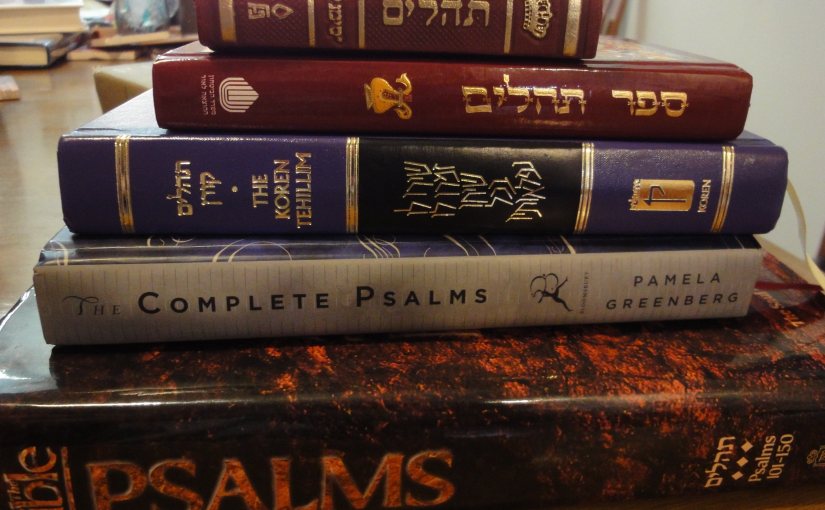
I’ve been collecting resources on individual psalms for study on a monthly basis. (Local to DC? Check out Temple Micah, third Tuesdays of the month, 1:30 – 3 p.m.) Here are the materials so far (last updated 7/17/19 — here is the stable page where more will be added.)

Psalm 1 Resources (PDF)

Psalm 92 Resources (PDF)

Psalm 8 Resources(PDF)

Psalm 22 Resources (PDF)

Coming soon, a few notes, by request, on Ugaritic and the Psalms, and more resources related to individual psalms as they are gathered.

Gathering Sources: Pinchas

Some thoughts and resources for exploring the weekly Torah portion, Pinchas — also sometimes spelled “Pinechas” or “Pinhas” or “Pin’has” — Numbers 25:10-30:1. This is part of a series of weekly “gathering sources” posts, collecting previous material on the weekly Torah portion, most originally part of a 2010 series called “Opening the Book.”

Language and Translation: “zeal” or “jealousy,” “wrath” or “passion”
A Path to Follow: Father of the daughters of Zelophehad
Something to Notice: Serah bat Asher
Great Sources: Rosh Chodesh

See also
The Time That We Get Shabbat: Pinchas Prayer Links
Dvar Torah: Pinchas and the Scary Friend
and More on Mouse
Pinchas’ Sword, Plowshares, and Musical Instruments

Gathering Sources: Behaalotekha

Some thoughts and resources for exploring the Torah portion Behaalotekha — also spelled Behaalotecha, Beha’alotecha, or Beha’alothekha; sometimes: Behaaloscha– Number 8:1-12:6. This is part of a series of weekly “gathering sources” posts, collecting previous material on the weekly Torah portion, most originally part of a 2010 series called “Opening the Book.”

Language and Translation: “If there be a prophet

Great Source: The Cushite Woman and Blank Ink

A Path to Follow: Elders and Siblings

Something to Notice: The inverted nuns

For those attempting to follow Gathering Sources weekly postings, note that this one is appearing out of order, after schedule got off-track with Shavuot. Apologies. Nearly caught up.

Lights for Liberty: An Intention

Rabbi Yose son of Judah taught: Two ministering angels, one good and one evil, accompany a person home on the Sabbath eve. If a lamp is burning, table set, and seating arranged, the good angel says, “May it be thus on the next Sabbath,” and the evil angel unwillingly answers “amen.” If not, the evil angel says, “May it be thus on the next Sabbath,” and the good angel unwillingly answers “amen.” (based on B. Shabbat 119b)

For too many Sabbaths, our national home has been devoid of safety, nourishment, and comfort for those seeking refuge and asylum, and for many others in our midst. Each week of these conditions reinforces toleration of the same next week, with our good angels, however unwillingly, answering “amen.” This Friday, we gather for a turning point, calling forth new and better angels.

In the spirit of “Lights for Liberty,” in Washington DC and beyond, a prayer:

Holy One, wherever lamps are burning,
tables set, and seating arranged on Sabbath Eve,
nurture those gatherings;
inspire all who experience this sanctuary in time
to renewed effort toward safety, nourishment, and comfort for all.

Hear this, too, Holy One —
wherever light is lacking,
food sparse, and conditions rough this week,
accept no prayer — angel or human — on our behalf for a continuation of suffering.
Let no appearance of indifference, helplessness, or political confusion
be understood as a plea in our name for the perpetuation of evil.

Holy One, we welcome the Sabbath
in gratitude for its peace and blessing
and we dedicate ourselves, and beg Your help,
to extend that peace and blessing to those most in need.
Help us, as we work to end the horrors perpetuated in our name.
May this week’s lamps and tables and seating persist and multiply. And we all say: Amen

For study passages and another prayer, visit Jews United for Justice resource page. Here is a PDF of this kavanah with Talmudic introduction (not shared on the JUFJ website).

Visit http://www.lightsforliberty.org for details of July 12 anti-Concentration Camp gatherings around the country.

Visit https://jufj.org for details about DC- and Baltimore-area Jewish justice efforts.

Visit https://www.neveragainaction.com/ for national Jewish responses.

Gathering Sources: Balak

Some thoughts and resources for exploring the Torah portion, Balak (rarely spelled differently, sometimes: Balaq), Numbers 22:2-25:9. This is part of a series of weekly “gathering sources” posts, collecting previous material on the weekly Torah portion, most originally part of a 2010 series called “Opening the Book.”

Balak is next read in most of the Diaspora the week of Shabbat July 20, beginning with mincha July 13.

Something to Notice: Seeing and Gazing

A Path to Follow: Moabites and Ammonites

Great Source: “Opening the Tent

Language and Translation: Theme, Parable, Rhapsode

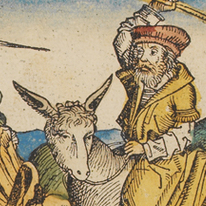
Michel Wolgemut, Wilhelm Pleydenwurff
– Bil’am et l’Ange Balaam, the Angel and the Ass;
Woodcut from the Nuremberg Chronicle

See also

Balak, Dead50, and Frederick Douglass

” The Tents and Dwellings and YOURS (and they’re plural)”

Gathering Sources: Naso

Some thoughts and resources for exploring the Torah portion, Naso — sometimes spelled Nasso — Numbers 4:21-7:89. This is part of a series of weekly “gathering sources” posts, collecting previous material on the weekly Torah portion, most originally part of a 2010 series called “Opening the Book”:

A Path to Follow: Cherubim

Something to Notice: Priestly Blessing and Peace

Great Source(s): Bob Dylan and Mystery Midrash

Language and Translation: the offense

See also: Naso: Prayer Links on their own gifts

God’s Shadow: Naso Prayer Links

For those attempting to follow Gathering Sources weekly postings, note that this one is appearing out of order, after schedule got off-track with Shavuot. Apologies. Nearly caught up.