Malcolm X and The Power of Small Things

“The fame we get from fighting for the freedom of others creates a prison for us,” Malcolm X wrote in 1964 to Azizah al-Hibri, then a college student at the American University in Beirut. Their brief in-person connection and subsequent correspondence are still treasured by Dr. al-Hibri, now retired as chair of KARAMAH: Muslim Women Lawyers for Human Rights, the international organization she founded. Moreover, the papers and their story illustrate some important things about leadership, race, gender, and media.

Originally posted in slightly different form on May 19, 2015.
Story published in East of the River, July 2012.

from correspondence between Dr. Azizah al-Hibri and Malcolm X

As president of the college debating society, al-Hibri arranged for Malcolm to speak on campus while he was touring and also had the opportunity to get to know him during his brief visit. A shared ice cream at the airport launched a correspondence between the two that continued until his death in February 1965. At his request, al-Hibri kept her correspondence private for over 40 years.

In 2012, al-Hibri released a few pieces of correspondence and donated other papers (still private for now) to America’s Islamic Heritage Museum. She said then, in a speech at DC’s Masjid Muhammad, that she wanted to ensure that Muslims are “proud” and “happy” about connections with the slain leader and to forge bonds between the African American Muslim community, with historical connections to the Nation of Islam, and what many call the “immigrant” Muslim community, with different historical roots.

Here’s more from the July 2012 East of the River Magazine story:

From his correspondence it is clear that he already suspected that his life and work were coming to an end. But he knew, even though al-Hibri didn’t yet, that her future as a leader was ahead of her.

It was unusual in 1964, for a woman to be president of an organization like the college debating society, al-Hibri notes. And she, like many women of that decade, had not yet envisioned for herself anything like her role today as professor of U.S. law and international human rights advocate. It was similarly odd to consider that women might be leaders of Islam. But Malcolm X saw beyond the confines of his time, says al-Hibri, pointing to words of encouragement – to her as a woman and a Muslim leader – inscribed in a book he gave her: “You have and are everything it takes to create a new world – leadership is needed among women as well as among men…”
full article here


The Power of Small Things

Of all the stories I covered for East of the River Magazine, this is one that sticks with me as most fascinating and important —

    • the young al-Hibri’s not knowing about U.S. racial dynamics, what her college dean meant about “airing the country’s dirty laundry”
    • al-Hibri’s struggle to reconcile the man she met with the picture she later saw portrayed in the U.S. media
    • the race-sensitive context of her later decision to share her experience, while keeping most of the correspondence private
    • Malcolm X’s interest in corresponding with someone outside the “prison” of his work
    • his recognition of the need for women leaders in politics and in Islam, before many saw it in 1964

I share this today, in honor of Malcolm X, El-Hajj Malik El-Shabazz (born Malcolm Little, 5/19/25-2/21/65). I share it in recognition of the work of Dr. al-Hibri and KARAMAH — a small, powerful organization. I share it as a shout out to the too-little-known Americas Islamic Heritage Museum. And I share it to acknowledge the hard and complex work of overcoming racism between religious brothers and sisters.

Perhaps most importantly, I return to this story again and again as an example of the power of small interactions to shape our world.

Originally posted on May 19, 2015.

Teapots in Babylon

“This is what travelers discover: that when you sever the links of normality and its claims, when you break off from the quotidian, it is the teapots that truly shock. Nothing is so awesomely unfamiliar as the familiar that discloses itself at the end of a journey.” This week, I’ve been hearing Psalm 137 among these lines from Cynthia Osick’s “The Shock of Teapots” (Metaphor & Memory. NY: Knopf, 1989). The result sounds like this:

How is that we have a teapot,
symbol of normalcy, and even comfort,
amidst all this confusion and fear?
Are we to enjoy and share
cups of tea here
in this strange, oppressive land?

The opening lines of Psalm 137 are primarily about the challenge of expressing joy, and making music in particular, distant from Zion, mocked and alienated from oppressors. But I think we also hear something like the “shock of teapots” — normalcy, even comfort, or celebration here!?

By the rivers of Babylon,
there we sat down,
yea, we wept, when we remembered Zion.
There, upon the willows, we hung up our harps.
For there our captors asked of us words of song,
and our tormentors asked of us mirth:
‘Sing us one of the songs of Zion.’
How shall we sing the LORD’S song in a foreign land?
–Ps. 137:1-4, translation sort of a mishmash based on Old JPS
Complete Old JPS and Hebrew here

MicahNext12Of course, many people, in the US and elsewhere, have long been conscious of living in Babylon. So the puzzlement and shock expressed by so many in this past week is a little surreal to some.**
My personal connection to the language of “Babylon” has been growing for some time as the central liberation story of Judaism — being freed from Egypt — seems unsuited to circumstances where Jews, as individuals often profiting from White privilege, and as a people are too often Pharaoh. See, e.g., “April 22: 1968 and 2016” (Who can say we’ve actually left Egypt?). The “Trouble to See” series from which graphic at right is taken, was published over the summer. And a few years back, “A Mountain Called Zion,” offered thoughts on “Zion” and how close/distant it is, as well as a nice link to Jimmy Cliff’s “Waters of Babylon.”

Most importantly for further exploration, this blog welcomes comments and guest blogs from Jews and non-Jews.

Normalcy on Good Hope Road

Yesterday I posted the following on Facebook:

OK, so I’m walking down Good Hope Road in Southeast DC and there’s this guy standing on the sidewalk with his car doors open blaring that song “FDT” — the one which goes, “…I like white folks, but I don’t like you…” with a chorus of “[expletive deleted] [president elect].” Cheered me right up.
#AnacostiaUnmapped #LoveDC #NotmyPresident

One friend, not a DC resident, asked “why?” and it took me some time to come up with a response other than “maybe you had to be there.” What warmed my heart, I now think, was the normalcy of the scene for Good Hope Road, although the place is undergoing gentrification. Moreover, the song was not something written in a flurry on election night. Folks had been playing the piece, from the rapper/writer YG, for some time:

“You gave us your reason to be President, but we hate yours.”

They were playing it on November 7 and they were playing it on November 10.  The sentiments — which are to the point, if crude (“FDT“) — hadn’t changed with election results. It was a little like discovering a teapot at the end of a journey.

Time to Go!

In one common cycle of Torah readings, this is the week of Lekh Lekha [“Go!” or “Go (to/for yourself),” often transliterated Lech Lecha]. And so, whether this week was a shock to, or a confirmation of, your reality, events are calling us to embark on a new journey, toward better individual and collective selves…maybe even out of Babylon.

**NOTE

Many posts on this blog are “political” in plenty of ways, but direct attention to electoral politics is a rarity. There is no getting around it this week, though. And, here is a powerful and cogent exploration of what was meant by “surreal” above:

 For a lot of people of color, this election was really about trying to find the lesser of two evils. America asked us: “How do you prefer your racism — blatant or systemic?”

— “On ‘Woke’ White People advertising their shock that racism just won a presidency

BACK

Trouble to See #3: Beyond the Romance

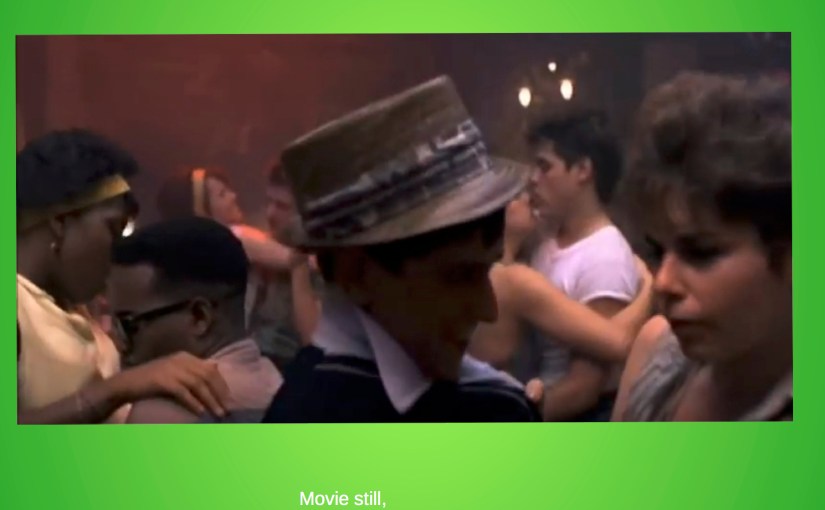
I never visited the Catskills in the heyday of Jewish resorts. But Eleanor Bergstein’s portrait of one liminal summer there reflects something essential in my own experience, albeit in a non-Jewish neighborhood of Chicago, and in the story of “Jews and Racial Justice.” Thus #3 of “Trouble to See,” my singular excursion — with background and resources — into the topic of Jews and Racial Justice.

I do realize that many viewers actually enjoy the movie, “Dirty Dancing,” for its dance and music and love story. (I don’t think anyone loves the plot-line about the dancer facing a life-threatening, illegal abortion – although it represents another important a chapter in our history.) But I am pretty sure that Bergstein and I are not alone in also holding a soft spot in our hearts for a time when, as she puts it, “you could reach out your hand, and if your heart was pure, you thought you could change the world forever.”

Beyond the Catskills

The Chicago school boycott of 1963 is less well-known than other events of that year in the Civil Rights movement. But it illustrates a great deal about the Chicago of my youth, organization in the Black community to achieve equity, and efforts in many quarters to create positive change that would work for all residents and all neighborhoods.

Nevertheless, Chicago remained one of the most hyper-segregated cities anywhere, with powerful color lines as well as lines between areas welcoming to Irish and Italian, Lithuanian and Ukrainian residents, etc. Sociologists at the time called the neighborhood change we experienced “invasion-succession.” There may be a less war-like term for it now. But it was pretty devastating for all concerned:

Near my home, Urban Renewal razed one whole commercial strip, replacing it with rubble and a sign that read, “Courtesy: Richard J. Daley, Mayor.” They eventually put up a senior citizens home, at that point isolated from pedestrian traffic and with virtually nowhere for residents to walk. A few blocks away, the Arson Squad was kept busy while owners of another commercial strip bailed. In the same time period, we later learned, the Chicago Police Department’s “Red Squad” – organized decades earlier to root out communists and others they considered subversive – infiltrated the Organization for a Better Austin, which, along with the rival Town Hall Assembly, was supposedly attempting to create a stable, integrated neighborhood.

There were more than 80, mostly White, students in our class in first grade. We graduated with 24 students, a very different mix of kids, and we were the last graduating class of the school. Despite many community meetings, the Archdiocese of Chicago decided not to prioritize neighborhood stabilization, instead closing first the local high school and then the elementary school, where I was a student, followed shortly afterward by the church. Patterns similar to this were seen in places like Philadelphia when synagogues fled the city.

Beyond the Romance of Civil Rights

All of the above made for a pretty wild ride in my first 14 years on the planet, as my family remained in the same apartment while everything changed around us. Eventually, our landlord decided to sell, and – after exploring affordable options inside the city – we moved a mile west, to the village of Oak Park. The whole thing left me with pretty dim views of every major institution charged with promoting the common good. And also with some very particular ideas about how racial integration does and does not work — and what it can and cannot accomplish.

I retain a deep affection for that brief sliver of struggle-filled, yet hopeful, time – when we thought a better, racially just world was right around the corner. As grown-ups, though, I think we have a responsibility — “we,” meaning here “White” people, in general, and Jewish communities, in particular — have to look beyond any romantic views of Civil Rights. We have to admit that, exciting as that season might have been, full of possibility and hope, we let ourselves ignore some of the realities. And, even though we probably couldn’t have known any better then, now we must look seriously at what has transpired since then and ensure that we make different choices today, ones that work for all parties involved.

In the meantime, regardless of past history and how it evolved, economic and political equity did not appear. As a journalist covering two of the poorest wards in the city,  both predominantly black, I can testify that whole areas of the District  have been been short-changed for generations on education, housing, and employment opportunities while being over-policed and over-incarcerated.

So, I want to go back to the fictional Catskills and take the trouble to see a little more carefully.

Continued in “Trouble to See #4”

“Wrestling Jerusalem” and Listening thru Oppression

“…but they did not heed because of shortness of spirit-breath” (Exodus)
“It’s complicated…” (“Wrestling Jerusalem”)


Early on in the Exodus story, we learn that the Hebrew slaves in Egypt were unable to absorb Moses’ message of imminent redemption because of “shortness of breath” or “crushed spirit” due to “hard work” or “cruel bondage” (Exodus 6:9; see note below).

At this point, Moses asks God how it is that he, of “blocked speech,” will be able to communicate God’s message to Pharaoh, when even the Israelites won’t listen to him. The story continues with a strong focus on Pharaoh’s inability to hear, alternately attributed to “stubbornness” (e.g., Ex 7:13) and “hardness of heart” (e.g., Ex 8:11). Hebrew below.

Aaron Davidman in Wrestling Jerusalem (Photo: Teddy Wolff)
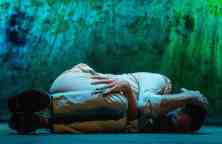
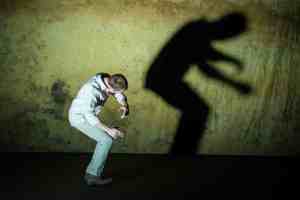
Aaron Davidman in “Wrestling Jerusalem,” now at DC’s Mosaic Theater (Photo: Teddy Wolff)

So, at the center of the Exodus story is a massive, multi-faceted failure to communicate: a prophet/leader with blocked speech (more literally: “uncircumcised lips”), slaves who cannot breathe well enough to communicate clearly, and a ruler who cannot even hear his own magicians (Ex 8:15) and servants (Ex 10:7). The story reminds us how difficult it is for communication to succeed across communities and through oppression. And the story warns us of the dangers of failing in those communication attempts.

Aaron Davidman‘s one-man play, “Wrestling Jerusalem” — currently [January 2016] at Mosaic Theater Company of DC — embodies at least 17 different voices, from across Israel and Palestine, in monologue and in argument. Each voice provides a very specific perspective, unique to the conflict he is exploring. Throughout the performance, however, echoes of the U.S. conflict come through loud and clear.

Wrestling Jerusalem and the U.S.

In the play, one Palestinian voice explains that the only Israelis he has met are soldiers who often mistreat him and rarely recognize his humanity. How many people of color in the U.S. have a similar experience with white people?

Photo: Teddy Wolff
Photo: Teddy Wolff

Many Black communities in the U.S. view police, not as protectors of peace, but as a “White” power structure occupying and terrorizing their neighborhood. Too many people of color know white people only as government representatives and developers ready to view them as problems to be “fixed.”

“Wrestling” characters, alternately inhabiting Davidman’s body, argue about Hamas: Is it a community organization with a strong feeding program? or an armed group bent on the destruction of Israel? Would donations ear-marked for food programs simply enable violent resistance? With minor changes, these same words have been used to discuss the Black Panther Party or the Nation of Islam: Caring for the ‘hood? Or plotting the downfall of the U.S. power structure?

It’s Complicated
The performance opens with a brilliant “multi-logue” beginning with the pronouncement: “It’s complicated.” Davidman tries to identify the conflict’s start: With the ’67 war? Or 1948 — called either “the Catastophe” or the “War of Independence,” depending on one’s perspective? Maybe with earlier Arab or Jewish violence…or with the British or the Romans? It closes with cries of “If only the world would just leave us alone!” and “If only the world would get involved!”

It’s hard not to hear another set of wrestlers with a parallel litany of “how it started.” Beginning perhaps with Sandra Bland or Trayvon Martin, extending to Emmett Till and Medgar Evers, lives and livelihoods lost in riots of the 20th Century or the 19th, uprisings and mobs of the 18th Century. Then stretching back through U.S. economic dependence on labor of enslaved people and beyond to European views of the “Dark Continent.”

“Help us!” “Leave us alone!”
We might also hear, echoed in the final lines, calls for police to stop “occupying” black neighborhoods and for “Displacement Free” development zones, on the one hand, and on the other, attempts to involve the the U.N. in human rights violations within the United States.

Photo: Teddy Wolff
Photo: Teddy Wolff

The “Aaron” character of “Wrestling Jerusalem” tells us, as he rides the bus through security checkpoints, that he’s been to Israel many times but never before crossed into Ramallah. Likewise, how many residents of north or west Chicago rarely, if ever, cross 75th Street to the South? How many residents of western Washington, DC, seldom cross the Anacostia River? And, of course, vice versa.

Listen!

So many other elements of “Wrestling Jerusalem” — from description of inter- generational trauma to discussion of if/when to take up arms — apply equally to the United States. Davidman’s gift to the conflict around Israel is in embodying and weaving together, with respect, so many voices: Arab and Jew, Israeli and Palestinian, settler and soldier, partier, tourist, and long-time Liberal Israeli rabbi. Each is given the floor and heard in turn. In giving them each something of himself as well as their own unique voices, commonality and difference, Davidman helps us listen across conflict and through oppression.

In a sense, “Wrestling Jerusalem” is an antidote for the Exodus’ failures to communicate. May we listen equally well to the many, often-overlooked perspectives of conflict in the United States.

-1Tickets still available for limited DC run, through January 24.


Thanks to Elliot Eder and participants in Fabrangen West and to the LCVY Hill Torah Discussion Group for Exodus insights that inspired these remarks.

Exodus 6:9
וַיְדַבֵּר מֹשֶׁה כֵּן, אֶל-בְּנֵי יִשְׂרָאֵל; וְלֹא שָׁמְעוּ, אֶל-מֹשֶׁה, מִקֹּצֶר רוּחַ, וּמֵעֲבֹדָה קָשָׁה.
Moses [delivered God’s message of imminent redemption] to the Children of Israel. But they did not heed Moses, because of shortness of breath and hard work [or crushed spirits due to cruel bondage].

מִקֹּצֶר רוּחַ mi-kotzer ruach
ruach = “breath” and “spirit”
mi-kotzer ruach = “shortness of breath” or “crushed spirit”

וּמֵעֲבֹדָה קָשָׁה m’avodah kashah
avodah = “work,” “bondage,” and “worship”
m’avodah kashah = “hard work” or “cruel bondage”

וַיֶּחֱזַק לֵב chazak lev
“stubbornness” (literally: strong of heart; e.g., Ex 7:13)

וְהַכְבֵּד אֶת-לִבּוֹ kh’veid et-libo
“hardness of heart” (literally: heavy of heart; e.g., Ex 8:11)
BACK

Praying STILL with Voices of Grief

GriefWindowSandra Bland.
Alonzo Smith.
Natasha McKenna.
Jamar Clark.
The heartbreaking and indicting list goes on.

Activists and mourners from the DC area and around the country joined together last year, at this season, for “Voices of Grief and Struggle,” focusing on ten mothers who lost black sons in police custody around the U.S.

Since, then, sadly and to our shame, we have lost too many more in similar circumstances.

It is time to listen again to these mothers:
Deborah Copp Elliott, mother of Archie (“Artie”) Elliott III (Age 24)
Collette Flannigan, mother of Clinton Allen (Age 25)
Darlene Cain, mother of Dale Graham (Age 29)
Rev. Wanda Johnson, mother of Oscar Grant, III (Age 22)
and the others who shared their powerful messages, “ Voices of Grief and Struggle,” in the nation’s capital last year.

SmithVigilIt is also time to stand with Beverly Smith, mother of Alonzo Smith (age 27), discovered dead in custody of private security at Marbury Plaza Apartments in Southeast Washington, DC, on November 1.

Prayers and support are needed to uplift Beverly Smith (left, at December 1 vigil), all who knew Alonzo (“Zo”) Smith, all who seek justice for this young man and the many others lost to police brutality, and all who demand an end to this on-going horror.

In the DC area, consider joining the rally on December 12. (See flyer)

And, from anywhere, please consider signing the petition.

SmithFlyer

Life, Liberty, and the Promise of Peace

Readers may have noticed a long silence on this blog. But I have not been entirely silent.

At start of June 2015, I began an additional blog, #SayThisName, to mark those lost to homicide and police action in the District of Columbia. Since then, I have personally typed out and said aloud the names of 95 individuals lost in our city in less than six months. The list includes friends of friends, a domestic murder-suicide a few blocks from my home, and a shooting on the steps of a church across from my work. I glimpsed a few seconds of the latter scene nearly three months ago, and the picture rarely leaves me for long. These are not statistics or abstractions. And this recitation has, it seems, captured a large part of my voice.

I am grateful to Temple Micah (DC), one of my spiritual homes, for their practice — several months old now — of listing the names of those lost to violence in the city as we rise to recite Mourners Kaddish. It is clearly having an effect on many in the congregation, including our new rabbi, Susan Landau, who is also new to DC. While guns are not behind every death in our town, they play a big role. And Rabbi Landau is joining with others nationally to address this problem.

Rabbi Landau spoke powerfully at the interfaith “United to Stop Gun Violence,” November 3, at the National Cathedral.

Project End Gun Violence activists with Rep. Elizabeth Esty (D-CT 5th, Newtown-Sandy Hook) at the Cathedral 11/3/15

Rabbi Landau’s remarks begin at 23:00 above.
Imam Talib Shareef of DC’s Masjid Muhammad speaks at 28:00.
Film includes other local and national activists, prayers, and song.

Many national groups working on gun violence from one angle or another participated in the November 3 event. Some of the resources shared there appear on this page.

See also this blog with resources on childhood trauma, a big part of the situation.

Additional related sources: “Stragglers on the Road Away from Bondage” and “Honoring a Teacher,” and “Meditations on Morning Blessings.”

Prayer Draft

To support National Gun Violence Prevention Sabbath, which is coming up December 10-14, 2015, I am crafting a prayer to be part of Temple Micah (DC) services on that weekend.

It is based on the prayer “for our country” in Mishkan T’filah, the most recent prayerbook of the Central Conference of American Rabbis. (Mishkan T’filah, NY: CCAR, 2007. This prayer is on p.258 here.)

[this blog originally shared a draft for comments]

Here is an updated version for considering, sharing, and, most importantly, for praying!

Prayer Amid Gun Violence Prayer Amid Gun Violence

Morning: Blessing, with Echo of Gunshots

How lovely are these tents!
not far from housing that has seen better days
and housing that has seen too many awful ones.

I love the place of Your house, reached through streets
collecting cigarette butts, the odd chicken wing, echoes of homicide.

Through Your abundant love, I enter Your house,
where these peaceful walls remind us: “If I am for myself alone, what am I?”
while a few miles away homes reel from gunshots and mourning,
makeshift memorials of teddy bears and candles pooled with tears and rain.
Meetings and vigils and “let this be the last.”

My prayer seeks a favorable time –
Does joy come in the morning, where weeping has not tarried for the night?
Can we dance together, if we have not yet joined in lament?

You answer with your saving truth:
Your glory’s dwelling-place spans mountain top and pit.
We are shaken and we stand firm.
Remove our sackcloth and dress us to praise You, Source of Healing and Help.

— Virginia Spatz, August 21, 2015

See Mah Tovu [How lovely are your tents] and Psalm 30 in the early morning prayers

…weeping may tarry for the night, but joy cometh in the morning.
…When I was carefree, I thought, “I shall never be shaken.”…
LORD, when I enjoyed your favor, You made me stand firm as a mighty mountain; when You hid Your face, I was terrified….
You turned my lament into dancing;
You removed my sackcloth and girded me with joy

See also, “Prayer Warm Up” and handout on Psalm 30

Seek the Peace of the City

Houses of worship across the United States are separated by many things: culture, religious denomination, style of prayer, theology and language. We’re also separated by demographics and location, even in the same town.

I believe it was DC’s former police chief Isaac Fulwood who noted that 10 a.m. on Sunday is the most segregated hour of life in the city. Of course, many things have changed since Fulwood’s tenure in the late 80s — and Jews, as well as some other religious communities, don’t hold their biggest weekly worship on Sunday. But his basic point remains.

The relative segregation of our lives and our worship communities means that, in cities like the District of Columbia, some communities mourn violent deaths with terrible regularity while others, in the same city, remain largely unaffected.

It has been one of my deepest prayers that we can find ways, in our various worship communities, to ensure that our worship reflects the welfare of our own city, specifically, while never losing cite of our wider place as citizens of the world. One place we must start, I continue to believe, is for every house of worship in the city to acknowledge the violent losses of its citizens, even if those lost and their primary mourners are not members of the congregation.

#SayThisName

In this past week, the District of Columbia has been bereaved of the following individuals through homicide:

  • June 26 1200 block of Raum Street, Northeast
    23-year-old Kevin Cortez Johnson, of Southeast, Washington.
  • June 28 1600 block of E Street, Northeast
    33 year-old Darrell Michael Grays of Northeast, Washington, DC.
  • June 29 Unit block of Galveston Place, Southwest
    25 year-old Rodney Delonte Davis, of Manassas, Virginia.

We are still in the 30-day period of mourning for these individuals, lost to homicide:

  • June 8 5100 block of Southern Avenue
    21-year-old Qur’an Reginald Vines of Southeast, Washington, DC.
  • June 10 (after June 3 injuries) Gallaudet and Kendall Streets, Northeast
    57 year-old Anthony Ray Melvin of Clinton, Maryland.
  • June 13 3200 block of 23rd Street Southeast
    54 year-old Kenneth Fogle of Southeast, Washington, DC.
  • June 13 2300 block of 15th Street, Northeast
    44 year-old Donald Franklin Bush of Upper Marlboro, Maryland.
  • June 14, 5200 block of Central Avenue, Southeast
    26-year old James Brown of Northeast, Washington, DC.
  • June 17 1300 block of Orren Street, Northeast
    25 year-old Larry Michael Lockhart of Northeast, DC.
  • June 17 3300 block of D Street, Southeast
    28 year-old Antonio Lee Bryant of Southeast, DC.
  • June 18 800 block of 51st Street, Southeast
    42 year-old Brian Sickles of Southeast, Washington, DC.
  • June 18 1300 block of 5th Street, Northwest
    26 year-old Patrick Shaw of no fixed address.
  • June 19 3600 block of Calvert, Northwest
    53 year-old Joel Johnson of no fixed address.
  • June 20 (after June 16 injury)
    16 year-old Malik Mercer of Clinton, MD (former 10th grader at Ballou SHS in SE).
  • June 23 (after June 21 injury) 2200 block of H Street, Northeast
    26-year-old Arvel Lee Stewart of Northeast, Washington, DC.
  • June 23 1200 block of Holbrook Terrace, Northeast
    19 year-old Heineken McNeil of Southeast, Washington, DC.
  • June 24 at the Tidal Basin
    20 year-old Deante Tinnen of Southeast, DC.
  • June 25 16th & Galen Streets, Southeast
    21 year-old Stephon Marquis Perkins of Maryland.

Continue reading Seek the Peace of the City

(Beyond 39)

“With social media, people were no longer talking. The [contemporary storytelling] movement really began because people missed people. That’s what storytelling does: It connects people.” So Syd Lieberman told Sam Payne of “The Apple Seed” radio program some time back.

After news this week of Syd Lieberman’s passing, the Apple Seed today re-broadcast the conversation as well as some of Syd’s stories.

“As James Bond” from sydleiberman.com

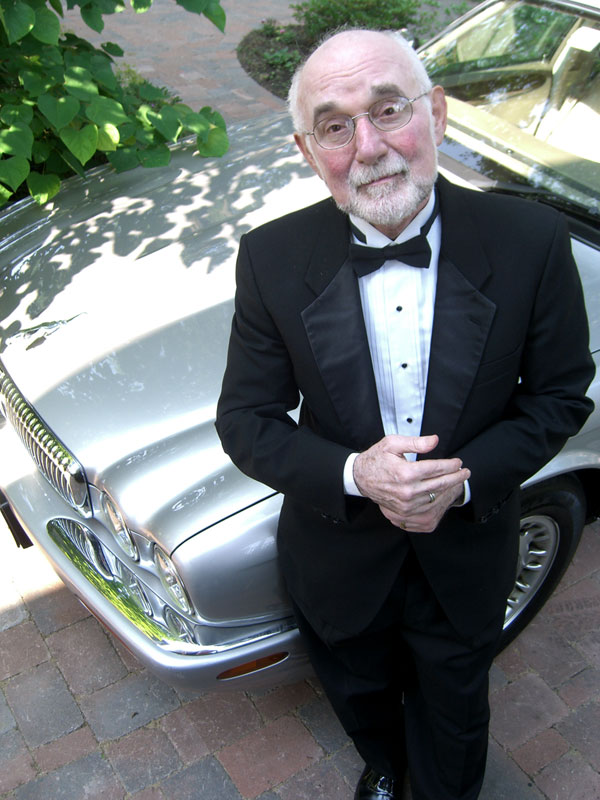
Syd was an internationally acclaimed storyteller, an award-winning teacher, and an author. This photo appears, along with several in far more casual dress, in the “for the press” section of his website, with the caption: “As James Bond.” It seems a fitting companion both to my favorite of his stories — The Wise Shoemaker of Studena — and to the piece on having schnapps with God (below).

Several educational groups suggest The Wise Shoemaker to teach about hospitality — the wise man is not welcomed to a celebration when his clothes are muddy and he’s assumed to be a beggar — a worthy use of the tale. But the point is really about appearances and honoring packaging over substance: “You didn’t want me here at all. You wanted my clothes,” the shoemaker declares when he changes clothes and is welcomed. Available free of charge in audio format — scroll down to “Joseph the Tailor and Other Jewish Tales” — and in print format.

His “A Short Amidah” offers a powerful alternative to the imagery of the Standing Prayer as a kind of royal audience with God:


But what do we really know
of castles and kings?
My kitchen faucet constantly leaks
and the kids’ faces
usually need cleaning.
If a door opened to a real palace,
I’d probably forget
and carry in a load of groceries.


But in that small chamber,
for just a few moments on Sabbath,
God and I can roll up our sleeves,
put some schnapps on the table,
sit down together, and finally talk.
That’s palace enough for me.
— from “A Short Amidah,” by Syd Lieberman
Kol Haneshamah: Shabbat Vehagim. (Wyncote, PA: The Reconstructionist Press, 1996)

May his memory be for a blessing. And may our journey away from oppression always endeavor to keep people connecting to people.


We counted 39 on the evening of May 12. Tonight, we count….

Making the Omer Count

from On the Road to Knowing: A Journey Away from Oppression
A key element in the journey from liberation to revelation is understanding the workings of oppression, and our part in them. We cannot work effectively to end what we do not comprehend.

So this year, moving from Passover to Shavuot, I commit to learning more about how oppression works and how liberation is accomplished. I invite others to join me:

Let’s work together, as we count the Omer, to make this Omer count.

Thoughts and sources welcome.

JourneyOmer

Share this graphic to encourage others to participate.

A Meditation

Aware that we are on a journey toward knowing God — from liberation to revelation — I undertake to know more today than I did yesterday about the workings of oppression.

I bless and count [full Hebrew blessings in feminine and masculine address]:

Blessed are You, God, Ruler/Spirit of the Universe, who has sanctified us with Your commandments and commanded us to count the Omer.

Today is forty days which are five weeks and five days in the Omer.
Hayom arba’im yom shehaym chamishah shavuot vechamishah yamim la-omer.

In the spirit of the Exodus, I pray for the release of all whose bodies and spirits remain captive, and pledge my own hands to help effect that liberation.

Six Days to Share… (Beyond 38)

In the section of Leviticus dealing with the festival of Shavuot, we read:

And when ye reap the harvest of your land, thou shalt not wholly reap the corner of thy field, neither shalt thou gather the gleaning of thy harvest; thou shalt leave them for the poor, and for the stranger: I am the LORD your God
וּבְקֻצְרְכֶם אֶת-קְצִיר אַרְצְכֶם, לֹא-תְכַלֶּה פְּאַת שָׂדְךָ בְּקֻצְרֶךָ, וְלֶקֶט קְצִירְךָ, לֹא תְלַקֵּט; לֶעָנִי וְלַגֵּר תַּעֲזֹב אֹתָם, אֲנִי יְהוָה אֱלֹהֵיכֶם.
Leviticus 23:22, old JPS translation, via Mechon-Mamre

R. Avdimi ben R. Yose said:

Why does Scripture place this precept in the middle of the chapter of festivals? To teach that if someone leaves his gifts for the poor as he is commanded, it is regarded as if he had built the Temple and brought offerings in it.

And Chatam Sofer (Rabbi Moshe Sofer, 1762-1839), further taught that Shavuot is only one day, instead of the seven for Passover and Sukkot, because the rest of the week for Shavuot is spent sharing one’s prosperity with the poor.

As Shavuot approaches, we might consider: In the system of thought identifying Shavuot with Revelation — making the holiday about Torah and how we receive it (as well as about the wheat harvest) — what would it mean to extend the holiday for the remainder of the festival week? I.e., what is the “Torah” equivalent of “sharing one’s prosperity with the poor”?

I’ll just leave this question, so as not to prejudice your answer. If you have an idea, please share!


Click here if you’d like to see one suggestion.


We counted 38 on the evening of May 11. Tonight, we count….

Making the Omer Count

from On the Road to Knowing: A Journey Away from Oppression
A key element in the journey from liberation to revelation is understanding the workings of oppression, and our part in them. We cannot work effectively to end what we do not comprehend.

So this year, moving from Passover to Shavuot, I commit to learning more about how oppression works and how liberation is accomplished. I invite others to join me:

Let’s work together, as we count the Omer, to make this Omer count.

Thoughts and sources welcome.

JourneyOmer

Share this graphic to encourage others to participate.

A Meditation

Aware that we are on a journey toward knowing God — from liberation to revelation — I undertake to know more today than I did yesterday about the workings of oppression.

I bless and count [full Hebrew blessings in feminine and masculine address]:

Blessed are You, God, Ruler/Spirit of the Universe, who has sanctified us with Your commandments and commanded us to count the Omer.

Today is thirty-eight days which are five weeks and three days in the Omer.
Hayom shmonah ushloshim yom shehaym chamishah shavuot ushloshah yamim la-omer.

In the spirit of the Exodus, I pray for the release of all whose bodies and spirits remain captive, and pledge my own hands to help effect that liberation.


Six Days to Share…

What if, instead of just sharing “our” prosperity with others, we took six days to really grapple with the underlying problems that affect the earning power and so many other aspects of life for people of color? (Remember, all the produce is really God’s, according to the Torah.)

Many posts in this blog have attempted to move us in this direction. Brave New Films — a media, education, and grassroots organization that “inspires, empowers, motivates, and teaches civic participation” — offers a number of resources of use in this effort. Here, in case you have not yet seen it or want to easily share it with someone else, is a video Brave New Films created to highlight these points

  • Something is wrong when thousands of resumes are mailed to employers with identical information and black-sounding names are 50% less likely to get a call back.
  • Something is wrong when black people are charged prices roughly $700 higher than white people when buying cars.
  • Something is wrong when black drivers are twice as likely to get pulled over by the police and black male teens are 21 times more likely to be killed by cops than their white counterparts.
  • Something is wrong when black people are incarcerated at nearly six times the rate of white people.
  • And something is terribly wrong if we stand by and continue to let this happen.


BACK