“Claiming the center stage, just like Pharaoh and Caesar did in their time, has always been a blasphemous overreach that actually places oneself on the margins of God’s reign,” thus writes Drew G.I. Hart in Trouble I’ve Seen.
This new title focuses on “Changing the Way the Church Sees Racism,” but much of what Hart says needs equal attention in the Jewish thought. (Trouble I’ve Seen: Changing the Way the Church Sees Racism. Harrisonberg, VA: Herald Press, 2016.)
Religious Thought and Practice
Hart notes the optional or alternative status of “women’s,” “peace,” or “black” theology:
According to [teacher John Franke] white male theologians have often seen themselves as objective and neutral overseers of Christian tradition. They function as “theological referees” for everyone else, while imagining their position as neutral and unbiased in the center of all the action….Missing is that white men have a social context too.
— p. 163, Trouble I’ve Seen
A parallel situation still applies all too well in much of the Jewish world. As does his analysis of how well-intentioned attempts at diversity and inclusion often fail to create real change. Many of his recommendations for the Church are ones other faith communities should explore as well:
“See the world from below,” by changing reading habits, for example. (See “Range of Possibilities” for some suggestions.)
“Subvert racial hierarchy in the [religious infrastructure].”
“Soak in scripture and the Spirit for renewed social imagination.” (Explore “Pharaoh’s Hardened Heart,” e.g. and these resources from Reform Judaism’s Religious Action Center.)
“Seek first the kingdom of God.”
Engage in self-examination.
— from p. 176, Trouble I’ve Seen
Current and Historical Re-Examination
Hart’s exploration of “White Jesus” and related Church history may seem irrelevant to those outside the Christian faith. This is important background for every U.S. citizen, however, and worth review for those as yet unfamiliar.
Moreover, Jewish communities would do well to consider whether our members are aware of essential demographics — such as a recent study showing white men with criminal convictions more likely to get positive job-application responses than black men without a record (see p. 145) — and the individual and cumulative effect of everyday racism experienced by the author of Trouble I’ve Seen.
Most importantly, Jews must join our Christian neighbors in examining how we “resemble this remark”:
Too many in the American Church have perpetuated the myth that this land was build on Christian principle rather than on stolen land and stolen labor.
p.145, Trouble I’ve Seen
Hart’s new volume provides important food for thought as we continue to read Exodus this winter and experience it in the upcoming Passover season.
“…but they did not heed because of shortness of spirit-breath” (Exodus)
“It’s complicated…” (“Wrestling Jerusalem”)
Early on in the Exodus story, we learn that the Hebrew slaves in Egypt were unable to absorb Moses’ message of imminent redemption because of “shortness of breath” or “crushed spirit” due to “hard work” or “cruel bondage” (Exodus 6:9; see note below).
At this point, Moses asks God how it is that he, of “blocked speech,” will be able to communicate God’s message to Pharaoh, when even the Israelites won’t listen to him. The story continues with a strong focus on Pharaoh’s inability to hear, alternately attributed to “stubbornness” (e.g., Ex 7:13) and “hardness of heart” (e.g., Ex 8:11). Hebrew below.
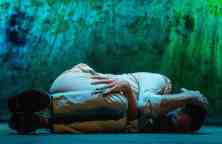
Aaron Davidman in “Wrestling Jerusalem,” now at DC’s Mosaic Theater (Photo: Teddy Wolff)
So, at the center of the Exodus story is a massive, multi-faceted failure to communicate: a prophet/leader with blocked speech (more literally: “uncircumcised lips”), slaves who cannot breathe well enough to communicate clearly, and a ruler who cannot even hear his own magicians (Ex 8:15) and servants (Ex 10:7). The story reminds us how difficult it is for communication to succeed across communities and through oppression. And the story warns us of the dangers of failing in those communication attempts.
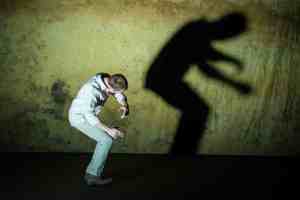
Aaron Davidman‘s one-man play, “Wrestling Jerusalem” — currently [January 2016] at Mosaic Theater Company of DC — embodies at least 17 different voices, from across Israel and Palestine, in monologue and in argument. Each voice provides a very specific perspective, unique to the conflict he is exploring. Throughout the performance, however, echoes of the U.S. conflict come through loud and clear.
Wrestling Jerusalem and the U.S.
In the play, one Palestinian voice explains that the only Israelis he has met are soldiers who often mistreat him and rarely recognize his humanity. How many people of color in the U.S. have a similar experience with white people?
Photo: Teddy Wolff
Many Black communities in the U.S. view police, not as protectors of peace, but as a “White” power structure occupying and terrorizing their neighborhood. Too many people of color know white people only as government representatives and developers ready to view them as problems to be “fixed.”
“Wrestling” characters, alternately inhabiting Davidman’s body, argue about Hamas: Is it a community organization with a strong feeding program? or an armed group bent on the destruction of Israel? Would donations ear-marked for food programs simply enable violent resistance? With minor changes, these same words have been used to discuss the Black Panther Party or the Nation of Islam: Caring for the ‘hood? Or plotting the downfall of the U.S. power structure?
It’s Complicated
The performance opens with a brilliant “multi-logue” beginning with the pronouncement: “It’s complicated.” Davidman tries to identify the conflict’s start: With the ’67 war? Or 1948 — called either “the Catastophe” or the “War of Independence,” depending on one’s perspective? Maybe with earlier Arab or Jewish violence…or with the British or the Romans? It closes with cries of “If only the world would just leave us alone!” and “If only the world would get involved!”
It’s hard not to hear another set of wrestlers with a parallel litany of “how it started.” Beginning perhaps with Sandra Bland or Trayvon Martin, extending to Emmett Till and Medgar Evers, lives and livelihoods lost in riots of the 20th Century or the 19th, uprisings and mobs of the 18th Century. Then stretching back through U.S. economic dependence on labor of enslaved people and beyond to European views of the “Dark Continent.”
“Help us!” “Leave us alone!”
We might also hear, echoed in the final lines, calls for police to stop “occupying” black neighborhoods and for “Displacement Free” development zones, on the one hand, and on the other, attempts to involve the the U.N. in human rights violations within the United States.
Photo: Teddy Wolff
The “Aaron” character of “Wrestling Jerusalem” tells us, as he rides the bus through security checkpoints, that he’s been to Israel many times but never before crossed into Ramallah. Likewise, how many residents of north or west Chicago rarely, if ever, cross 75th Street to the South? How many residents of western Washington, DC, seldom cross the Anacostia River? And, of course, vice versa.
Listen!
So many other elements of “Wrestling Jerusalem” — from description of inter- generational trauma to discussion of if/when to take up arms — apply equally to the United States. Davidman’s gift to the conflict around Israel is in embodying and weaving together, with respect, so many voices: Arab and Jew, Israeli and Palestinian, settler and soldier, partier, tourist, and long-time Liberal Israeli rabbi. Each is given the floor and heard in turn. In giving them each something of himself as well as their own unique voices, commonality and difference, Davidman helps us listen across conflict and through oppression.
In a sense, “Wrestling Jerusalem” is an antidote for the Exodus’ failures to communicate. May we listen equally well to the many, often-overlooked perspectives of conflict in the United States.
Tickets still available for limited DC run, through January 24.
Thanks to Elliot Eder and participants in Fabrangen West and to the LCVY Hill Torah Discussion Group for Exodus insights that inspired these remarks.
Exodus 6:9 וַיְדַבֵּר מֹשֶׁה כֵּן, אֶל-בְּנֵי יִשְׂרָאֵל; וְלֹא שָׁמְעוּ, אֶל-מֹשֶׁה, מִקֹּצֶר רוּחַ, וּמֵעֲבֹדָה קָשָׁה.
Moses [delivered God’s message of imminent redemption] to the Children of Israel. But they did not heed Moses, because of shortness of breath and hard work [or crushed spirits due to cruel bondage].
מִקֹּצֶר רוּחַmi-kotzer ruach ruach = “breath” and “spirit” mi-kotzer ruach = “shortness of breath” or “crushed spirit”
וּמֵעֲבֹדָה קָשָׁהm’avodah kashah avodah = “work,” “bondage,” and “worship” m’avodah kashah = “hard work” or “cruel bondage”
וַיֶּחֱזַק לֵבchazak lev
“stubbornness” (literally: strong of heart; e.g., Ex 7:13)
וְהַכְבֵּד אֶת-לִבּוֹkh’veid et-libo
“hardness of heart” (literally: heavy of heart; e.g., Ex 8:11) BACK
Chapter 21 of Deuteronomy (Shoftim: Deut 16:18-21:9) tells the Israelites what to do, upon entering the land, “if a corpse be found..the identity of the slayer not being known.” This is the elaborate ritual involving the Red Heifer in which the elders of the nearest town must be prepared to declare, “Our hands did not shed this blood…”
It turns out that this is not so simple, according to commentary across the centuries. First of all, many point out, neglect and indifference are sins and not easy ones to disavow.
Abraham Joshua Heschel taught, in the middle of the 20th Century:
“Few are guilty, but all are responsible.” (See The Prophets, and Essays on Moral Grandeur and Spiritual Audacity, Essays edited by Susannah Heschel)
Ibn Ezra, the 12th Century Spanish commentator, writes that elders in Red Heifer cases have some responsibility for the fact of sinfulness was present in their town, without which the crimes could not have occurred.
Samson Raphael Hirsch, a 19th Century commentator, hypothesized that the only case where a body would be left out in the open, in apparent mocking defiance of public officials, would be if town officials had sent a hungry traveling stranger on his way without food and so he resorted to highway robbery. In this case, Hirsch says, the slayer is guiltless and the blameworthy ones are the officials who failed to exercise Jewish communal duty.
Child Trauma
With this background in mind, here is information from the DC Children’s Law Center on factors contributing to child trauma:
One in four District of Columbia school-age children lives in poverty – which is defined as living on less than $24,000 for a family of four.
Over 4000 public school students were homeless in the 2013-2014 school year.
Adult incarceration is higher among DC residents than anywhere else in the country, leaving many children without one or more of their parents.
In DC, forty percent of high school students reported hearing or seeing violence in the previous year. This is far higher in some neighborhoods where gunshots and violent crime are constants.
A friend who ran two day camps in Southeast housing projects this summer had to help children cope with shootings in both locations. Heartbreaking, but not unusual occurrences there. She also returned to her office, after letting camp out early one day, to find a bullet hole in her window and a bullet lodged in the wall behind her desk.
Other friends are coping as we speak this morning (Temple Micah, August 22) with the aftermath of two juveniles shooting at one another on Tuesday, resulting in serious injuries to both boys and the death of the younger one’s mother. I witnessed the shooting death of a 21-year-old in another neighborhood on the same day, as did many people who were on that street, just going about their business, or inside the church while Amari Jenkins was shot outside.
A number of children witnessed the aftermath of both incidents. I know little about the third shooting of that same day. (All readers are encouraged to #SayThisName for each individual lost to homicide in DC; news stories about the high murder rate in DC and other US cities abound.)
A guest on the Education Town Hall, a weekly radio program I help organize, spoke on August 20 of how an annual back-to-school picnic he arranges now provides children with first-aid kits. Why would that be a back-to-school supply? Because, he says, these kids live in a war zone, and we need to acknowledge it.
Blameworthy Elders?
The history and sociology of how this reality developed is too complex for this dvar Torah. But I think the Torah portion is asking us to consider our communal responsibility for helping children cope with situations that endanger them, lest we become as blameworthy as the elders in Hirsch’s hypothetical town.
Early childhood trauma affects the way the brain develops, and trauma in older children makes it difficult, if not impossible, for students to learn, often appearing in attention and behavioral problems in the classroom. The eventual result, according experts, is that trauma is transmitted, through further violence in many cases, if young people are not helped to transform it.
Taking positive action is important in recovering from the helplessness of a traumatic event, according to psychologists. I continue to seek ways to turn the energy of the tragedy I witnessed into something healing. Several possible courses of action, to help us take positive steps amidst this chaos, are shared here “Prayer, Advocacy, and #RippleEffect.”
Murder Pollutes
Returning to the Red Heifer…
The Plaut commentary focuses on the practicality of the ritual, suggesting that it would attract so much attention as to enhance a sense of communal responsibility and help ensure that the murderer is apprehended.
The 15th Century Portuguese commentator, Abarbanel, said the shock value of the ritual would prevent people from forgetting the murder and keep alive the search for the offender.
However, the Mishnah (redacted around 200 CE) reports that the Red Heifer ritual had already ceased when crimes of murder multiplied to such a degree that the ritual was no longer feasible. I didn’t have the heart to read what Sanhedrin says about this (Babylonian Talmud, Sanhedrin 27b and forward), and I cannot imagine what the ancient Rabbis would make of DC and other major US cities today.
But it’s clear that we need some new approaches. And I’ve been thinking about that double “tzedek” in this week’s “Tzedek, tzedek tirdof” [“Justice, Justice you shall pursue] (Deut 16:20).
Toward a New Approach
“Justice, justice you shall pursue”
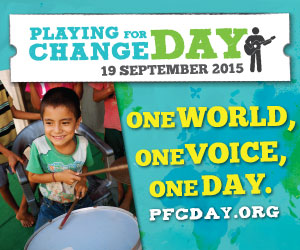
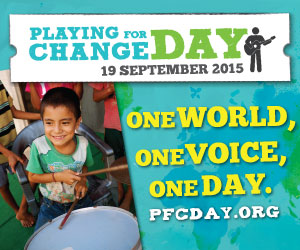
Efforts like the #RippleEffect Campaign and Playing for Change Day are no expiation for murder, of course, and they’re no substitute for direct, head-on, immediate action in pursuit of justice. But we’re not all in a position to effectively take up that work —
The direct approach accounts for only the first “justice” in “justice, justice you shall pursue.” I suggest that the second “justice” calls for something completely different.
“Justice, justice you shall pursue”
Maybe a large public ritual PFC Day — one based on music, not blood — can capture a 21st Century world’s attention, to inspire some introspection and improvements, launch some creative energy and community building.
One of the reasons given for setting up judges at all the gates — at the start of this week’s Torah portion — is to ensure that justice enters into daily life in every location, a little like those ripples of kindness beginning from a variety of centers.
I also know that those of us facing the constant stress and grief of life today in some parts of the District — and what I experience is minor compared to what many others face — need the joy and release and uplifting power of music now more than ever.
Sometimes I image that music is the conduit the prophet Amos had in mind when he said that justice should roll down — or “well up” — like waters (Amos 5:24; see also below). Like water, music can exert its power with flexibility, perhaps in torrents or flood, perhaps through softer means, carrying us great distances, operating in ways we easily sense, and in ways below the surface and beyond our control that help bring transformation.
Stains and Ripples
The ritual of the Red Heifer warned the People that shrugging or hoping someone else would step up was not an option, reminded the elders that the conditions of their town could leave innocent blood on their hands.
This portion tells us that murdered blood pollutes the land and requires atonement.
I have watched a young man’s blood power-washed off concrete, and I can tell you the stain is still there.
We’re going to need some serious creative collective strength to address all the stains from all the murders in this town — and all the youth left to deal with what their elders should be managing.
Power washing doesn’t work.
Force doesn’t work.
More blood won’t work.
We need a new approach. For, now —
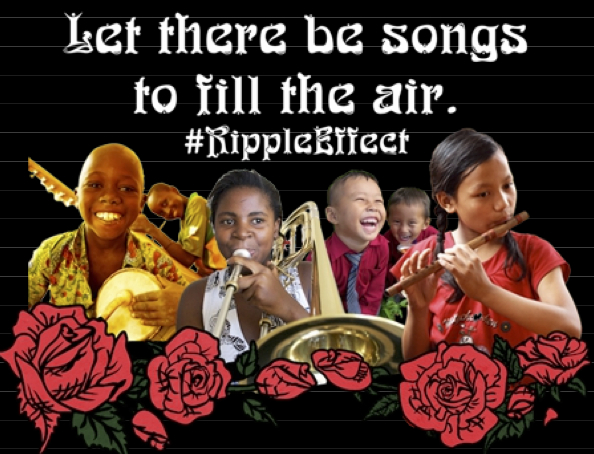
…Let there be songs to fill the air
Ripple in still water
When there is no pebble tossed
Nor wind to blow
Reach out your hand if your cup be empty
If your cup is full may it be again
Let it be known there is a fountain
That was not made by the hands of men
— Robert Hunter (Grateful Dead, 1970)
NOTE: Amos, Water, and Justice
I confess that I largely know the quote “until justice rolls down like waters, and righteousness like a might stream,” from its use by Martin Luther King and, consequently, in Maya Lin’s Civil Rights Memorial.
How fascinating and disconcerting, in this context, then, to be reminded just now of what Amos says about music —
Amos 5:כא שָׂנֵאתִי מָאַסְתִּי, חַגֵּיכֶם; וְלֹא אָרִיחַ, בְּעַצְּרֹתֵיכֶם. 21 I hate, I despise your feasts, and I will take no delight in your solemn assemblies.
כב כִּי אִם-תַּעֲלוּ-לִי עֹלוֹת וּמִנְחֹתֵיכֶם, לֹא אֶרְצֶה; וְשֶׁלֶם מְרִיאֵיכֶם, לֹא אַבִּיט. 22 Yea, though ye offer me burnt-offerings and your meal-offerings, I will not accept them; neither will I regard the peace-offerings of your fat beasts.
כג הָסֵר מֵעָלַי, הֲמוֹן שִׁרֶיךָ; וְזִמְרַת נְבָלֶיךָ, לֹא אֶשְׁמָע. 23 Take thou away from Me the noise of thy songs; and let Me not hear the melody of thy psalteries.
כד וְיִגַּל כַּמַּיִם, מִשְׁפָּט; וּצְדָקָה, כְּנַחַל אֵיתָן. 24 But let justice well up as waters, and righteousness as a mighty stream.
Continuing the discussion, at “If a corpse be found…”, about the need for new approaches to meeting our communal responsibilities.
Some possible responses to the trauma and tragedy of multiple murders, particularly in Washington, DC —
Prayer
Residents in some of the most affected neighborhoods of the District are asking for prayers, calling on everyone in and around the city to #Pray4DC, as one united town. If you know others who engage in intercessory prayer, please pass along this prayer concern. And, however you approach such requests yourself, please keep the need for “one DC” in mind.
Also, if you know members or clergy in other congregations who might be willing to prayerfully acknowledge DC’s losses to homicide — as Temple Micah has begun to do — please ask them to sign up for #SayThisName.
Learn and Advocate
Learn a little about child trauma and how it affects learning and then advocate for trauma-sensitive schools – particularly in Washington, DC. The District also needs trauma-response units to help young people on the scene cope with the violence they too often face.
For DC residents, please note particularly, that the DC Council held a roundtable on this topic in June and should be poised to act.
Playing for Change
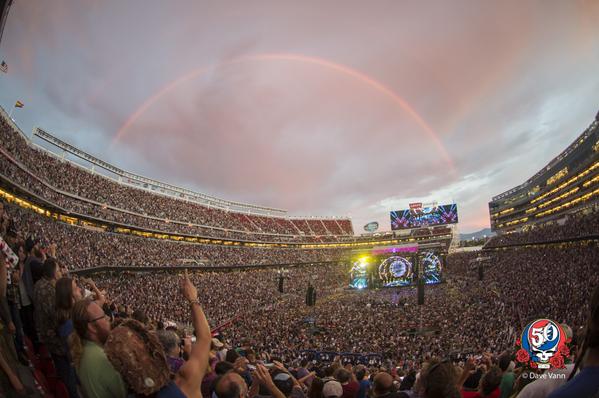
This one involves the Grateful Dead — some Temple Micah (DC) people know I hate to let a summer pass without somehow bringing in the Dead. And those who follow such things know this summer is the Dead’s 50th anniversary….
Ripple Effect Campaign
As we began the Standing Prayer, I mentioned the idea of ripples of pain moving outward from a bomb or a bullet and how kindness and prayer can also have a ripple effect. (See “Prayer in the Midst of Bullets and Bombs“)
The #RippleEffect Campaign — named for the Grateful Dead son, “Ripple” — simply involves engaging in acts of kindness or telling about a how an act of kindness affected you… and then encouraging others to do so as well, creating a kindness ripple.
Part of the effort involves social media, for those interested. But it’s certainly not required for the spreading of kindness, or for doing so with the intention of helping to heal all that is broken in DC and beyond.
Playing for Change Day
A second goal of the Ripple Effect Campaign is to raise awareness and funds for a project called “Playing for Change” that teaches music and dance to young people around the world, including in the U.S. Playing for Change (PFC) helps youth use music for everything from improving education to resolving conflicts, preserving cultural heritage, and building community, locally, and connections worldwide.
PFC Day — with activities in 61 countries last year — is an annual effort, scheduled this year during the Days of Awe.
Organizers say
This day of music, peace, and change keeps instruments, music instruction, and inspiration flowing to children around the world, … and contributes to positive vibration that connects and inspires us all.
Justice, Justice you shall pursue
The related dvar Torah, “If a corpse be found…”, continues the discussion of ripples — ones of pain, outward from bullets and bombs, and ones of healing.
Is anyone else interested in pursuing a Playing for Change activity in DC and/or the Jewish world?
How lovely are these tents!
not far from housing that has seen better days
and housing that has seen too many awful ones.
I love the place of Your house, reached through streets
collecting cigarette butts, the odd chicken wing, echoes of homicide.
Through Your abundant love, I enter Your house,
where these peaceful walls remind us: “If I am for myself alone, what am I?”
while a few miles away homes reel from gunshots and mourning,
makeshift memorials of teddy bears and candles pooled with tears and rain.
Meetings and vigils and “let this be the last.”
My prayer seeks a favorable time –
Does joy come in the morning, where weeping has not tarried for the night?
Can we dance together, if we have not yet joined in lament?
You answer with your saving truth:
Your glory’s dwelling-place spans mountain top and pit.
We are shaken and we stand firm.
Remove our sackcloth and dress us to praise You, Source of Healing and Help.
— Virginia Spatz, August 21, 2015
See Mah Tovu [How lovely are your tents] and Psalm 30 in the early morning prayers
…weeping may tarry for the night, but joy cometh in the morning.
…When I was carefree, I thought, “I shall never be shaken.”…
LORD, when I enjoyed your favor, You made me stand firm as a mighty mountain; when You hid Your face, I was terrified….
You turned my lament into dancing;
You removed my sackcloth and girded me with joy
Instructions to appoint judges “for yourselves,” in “all your tribes,” or, more literally, “in all your gates,” opens the Torah portion Shoftim [judges] (Deut 16:18-21:9), and the famous line, “Tzedek, tzedek tirdof… [Justice, justice you shall pursue…],” follows:
Judges and officers shalt thou make thee in all thy gates, which the LORD thy God giveth thee, tribe by tribe; and they shall judge the people with righteous judgment.
— Deut. 16:18 (mechon-mamre.org; translation “Old JPS”)
Appoint yourselves judges and police for your tribes in all your settlements that God your Lord is giving you, and make sure that they administer honest judgment for the people.
— another translation, from Bible.Ort.Org
Last week at Temple Micah, the commentary discussed the emphasis, throughout Deuteronomy, on centralizing ritual. In contrast, we see here that judges and justices are to be local concerns.
Julia Watts Belser writes in Torah Queeries:
We are asked to find judges who recognize the landscape of our lives, who have lived in similar terrain and can help us navigate its cliffs and fissures. We are expected to come before judges who expect holiness within us and consequently find it – who know our goodness and consequently call it forth.
–“Setting Yourselves Judges,” pages 250-253
She notes that we all belong to many tribes – pointing out that for example, she is a bisexual rabbi with a disability and that queerness alone means belong both to one tribe and many. She asks how her white skin and wheels and Jewishness intersect, concluding that “no single judge will hold all our answers, and no single officer will provide us with a perfect map.”
I had hoped to discuss various tribes to which we all belong and how they intersect. Events forced my attention toward different local justice issues. But I wanted to share her commentary, which I found inspiring and hope to pursue further another time, before moving in the different direction I was led.
The words of Torah I did write are a bit much, in a number of ways, for one post. So look for more on this shortly. Continue reading In All Your Gates
This week’s Torah reading closes the Book of Numbers, leaving the People — who have journeyed for 40 years, losing many people in the process and raising new generations — poised to cross the Jordan. The narrative includes a 42-stage recitation of journeys: “These are the stages of the children of Israel…” (Numbers 33:1-49). Each of the stages is reported as follows: “…and they journeyed FROM [old place]….and they camped [new place].”
One lesson of the reading seems to be the importance of noting every stage on the way. And the repetition of “journeyed from” — forty-two times! — hammers home the idea that you have to leave one place to get to a new one. But events of recent weeks in the nation, as well as some travel of my own, suggest that recognizing where we are is no simple matter.
Flags
In South Carolina a few days ago, the Confederate flag was removed from the State House. (See, e.g., Al Jazeera.) Observers reportedly chanted “USA! USA!” as well as “nah nah nah nah…goodbye,” and the removal was heralded by many as a victory over hate and divisiveness. In addition, other instances of the same flag, in stained-glass windows at the Washington National Cathedral, for example, also face possible removal.
from Al Jazeera
However, there are some who mourn the loss of what they consider a “heritage symbol.”
Still others argue that the US flag, Mount Rushmore, the faces on our currency, and a variety of other national symbols and observances need to go as well. (See, e.g., Black Agenda Report.)
So, if we had to name this stage in our country’s history, what would it be?
Where are we leaving?
Where are we headed?
Are we making a collective journey at all, if we don’t share a starting point?
Horns
Stained-glass window at Kenyon College’s Church of the Holy Spirit
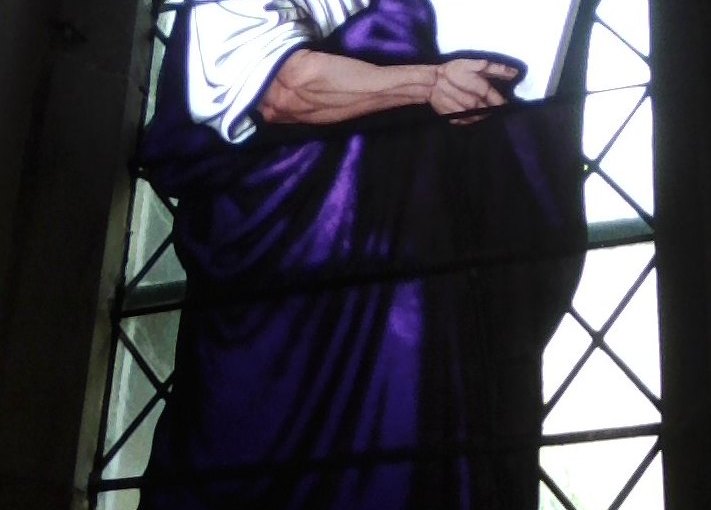
Meanwhile, I am visiting Kenyon College in Gambier, OH, this week, where this image of Moses (right) holds a prominent place in the campus Church of the Holy Spirit.
The horns are based, most scholars think, on a mistranslation of the word קָרַן — as “keren” [“grew horns”] rather than “karan” [“sent forth beams (of light)”] in Exodus 34. They appear most famously on sculptures of Moses by Michelangelo and Donatello (both centuries before the window design).
The horns were a “widespread medieval negative image of the Jew,” according to My Jewish Learning, and “led to the widespread notion that all Jews had devilish horns.” Moreover:
Der Sturmer cover 1932
The Nazis seized upon the negative Jewish body image and used caricatures and other forms of propaganda to present the Jews as sub-human or as disfigured humans. The Nazi weekly Der Sturmer was famous for disseminating these images. (See right, e.g.; more here).
In a 1997 history of the church, Perry Lentz says, “in the left-most first window a Moses with a distractingly muscular forearm is bringing the ten commandments.”
A video, used in promoting the “Beyond Walls” program that brought me to Kenyon this week, pans the church windows at a distance too great to discern content, while a young spokesperson declares: “When Kenyon was founded, we were Episcopalian, but now we’re completely non-denominational.”
The U.S. was in a “lingering period of childhood,” said Frederick Douglass on the occasion of Independence Day in 1852. “Were the nation older, the patriot’s heart might be sadder, and the reformer’s brow heavier. Its future might be shrouded in gloom, and the hope of its prophets go out in sorrow. There is consolation in the thought that America is young.”
At this point, we’ve got another 163 years on us, and many a patriot’s heart is indeed sadder, reformers’ brows heavier: Too many of Douglass’ words still ring true today, however much has changed since 1852; for too many U.S. citizens, a day celebrating U.S. ideals is one “that reveals to him, more than all other days in the year, the gross injustice and cruelty to which he is the constant victim.”
Meanwhile, we are about the enter Shabbat Balak, with a fantastical Torah reading that centers around strange visions, an outside prophet’s view of an inchoate nation, and a people’s struggle with diversity.
In addition, tonight begins the final series of Fare Thee Well concerts, prompting many a meditation on youth, age, and the length of the strange trips we’re on as individuals and communities.
Houses of worship across the United States are separated by many things: culture, religious denomination, style of prayer, theology and language. We’re also separated by demographics and location, even in the same town.
I believe it was DC’s former police chief Isaac Fulwood who noted that 10 a.m. on Sunday is the most segregated hour of life in the city. Of course, many things have changed since Fulwood’s tenure in the late 80s — and Jews, as well as some other religious communities, don’t hold their biggest weekly worship on Sunday. But his basic point remains.
The relative segregation of our lives and our worship communities means that, in cities like the District of Columbia, some communities mourn violent deaths with terrible regularity while others, in the same city, remain largely unaffected.
It has been one of my deepest prayers that we can find ways, in our various worship communities, to ensure that our worship reflects the welfare of our own city, specifically, while never losing cite of our wider place as citizens of the world. One place we must start, I continue to believe, is for every house of worship in the city to acknowledge the violent losses of its citizens, even if those lost and their primary mourners are not members of the congregation.
#SayThisName
In this past week, the District of Columbia has been bereaved of the following individuals through homicide:
June 26 1200 block of Raum Street, Northeast
23-year-old Kevin Cortez Johnson, of Southeast, Washington.
June 28 1600 block of E Street, Northeast
33 year-old Darrell Michael Grays of Northeast, Washington, DC.
June 29 Unit block of Galveston Place, Southwest
25 year-old Rodney Delonte Davis, of Manassas, Virginia.
We are still in the 30-day period of mourning for these individuals, lost to homicide:
June 8 5100 block of Southern Avenue
21-year-old Qur’an Reginald Vines of Southeast, Washington, DC.
June 10 (after June 3 injuries) Gallaudet and Kendall Streets, Northeast
57 year-old Anthony Ray Melvin of Clinton, Maryland.
June 13 3200 block of 23rd Street Southeast
54 year-old Kenneth Fogle of Southeast, Washington, DC.
June 13 2300 block of 15th Street, Northeast
44 year-old Donald Franklin Bush of Upper Marlboro, Maryland.
June 14, 5200 block of Central Avenue, Southeast
26-year old James Brown of Northeast, Washington, DC.
June 17 1300 block of Orren Street, Northeast
25 year-old Larry Michael Lockhart of Northeast, DC.
June 17 3300 block of D Street, Southeast
28 year-old Antonio Lee Bryant of Southeast, DC.
June 18 800 block of 51st Street, Southeast
42 year-old Brian Sickles of Southeast, Washington, DC.
June 18 1300 block of 5th Street, Northwest
26 year-old Patrick Shaw of no fixed address.
June 19 3600 block of Calvert, Northwest
53 year-old Joel Johnson of no fixed address.
June 20 (after June 16 injury)
16 year-old Malik Mercer of Clinton, MD (former 10th grader at Ballou SHS in SE).
June 23 (after June 21 injury) 2200 block of H Street, Northeast
26-year-old Arvel Lee Stewart of Northeast, Washington, DC.
June 23 1200 block of Holbrook Terrace, Northeast
19 year-old Heineken McNeil of Southeast, Washington, DC.
June 24 at the Tidal Basin
20 year-old Deante Tinnen of Southeast, DC.
June 25 16th & Galen Streets, Southeast
21 year-old Stephon Marquis Perkins of Maryland.
Singing Dayenu [“enough for us”] is a 1000-year old Passover tradition. The 15-stanza poem thanks G-d for 15 blessings bestowed upon the Jews in the Exodus. Had G-d only parted the seas for us, “It would have been enough” we say for each miracle or divine act, thus humbly appreciating the immensity of the gifts. KB Frazier’s reworking of the poem addresses us, rather than G-d. It calls us to greater action for justice, saying “lo dayenu” (it would not have been enough) in recognition of the work still unfinished.
1. If we had sparked a human rights revolution that would unite people all over the world and not followed our present day Nachshons as they help us part the sea of white supremacy and institutional racism
— Lo Dayenu
….
10. If we had truly listened to the stories, pain and triumphs of our brothers and sisters of color without feeling the need to correct, erase or discredit them and did not recognize the Pharaohs of this generation
— Lo Dayenu
11. If we had worked to dismantle the reigns of today’s Pharoahs and had not joined the new civil rights movement
— Lo Dayenu
12. If we had marched, chanted, listened, learned and engaged in this new civil rights movement and not realized that this story is our story, including our people and requiring our full participation
— Lo Dayenu 13. If we had concluded that our work is not done, that the story is still being written, that now is still the moment to be involved and that we haven’t yet brought our gifts and talents to the Black Lives Matter movement
— Lo Dayenu
We counted 47 on the evening of May 20. Tonight, we count….
Making the Omer Count
from On the Road to Knowing: A Journey Away from Oppression A key element in the journey from liberation to revelation is understanding the workings of oppression, and our part in them. We cannot work effectively to end what we do not comprehend.
So this year, moving from Passover to Shavuot, I commit to learning more about how oppression works and how liberation is accomplished. I invite others to join me:
Let’s work together, as we count the Omer, to make this Omer count.
Thoughts and sources welcome.
Share this graphic to encourage others to participate.
A Meditation
Aware that we are on a journey toward knowing God — from liberation to revelation — I undertake to know more today than I did yesterday about the workings of oppression.
Blessed are You, God, Ruler/Spirit of the Universe, who has sanctified us with Your commandments and commanded us to count the Omer.
Today is forty-eight days which are six weeks and six days in the Omer. Hayom shmonah v-arba’im yom shehaym shishah shavuot veshishah yamim la-omer.
In the spirit of the Exodus, I pray for the release of all whose bodies and spirits remain captive, and pledge my own hands to help effect that liberation.

 A parallel situation still applies all too well in much of the Jewish world. As does his analysis of how well-intentioned attempts at diversity and inclusion often fail to create real change. Many of his recommendations for the Church are ones other faith communities should explore as well: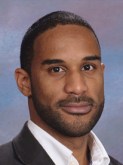







 "A Song Every Day"