Devarim and Eichah

Here are some background materials relating to the Torah portion Devarim, the Grateful Dead, and Shabbat Hazon. Also included are a selection from Marge Piercy’s “Nishmat” and an excerpt from Fanny Neuda’s Hours of Devotion to be included in the Shabbat morning service, August 10 at Temple Micah. Handout for August 10.

Here are the full articles excerpted in the handout:

“What the Grateful Dead Can Teach Us About Tisha B’av” (Times of Israel June 2017) by Rabbi Simeon Cohen
“Tuning In Together” by Granville Ganter (1999 article)

Also attached are some notes and quotes from Yoram Hazony’s book, The Philosophy of Hebrew Scripture (Cambridge University Press, 2012) from the chapter, “Truth and Being in the Hebrew Bible.” He discusses a number of verses from the book of Devarim, several from the opening portion, in the process of outlining his ideas about words, objects and dualism (or, he argues, lack thereof) in the Tanakh. I prepared this PDF for discussion of this Torah portion but then decided to talk about something entirely different this week. Perhaps eventually I’ll write up the notes for the drash I decided not to give; meanwhile, here’s the PDF: “Davar and Devarim: What is a davar and when is it true or false?

Gathering Sources: Bamidbar

Thoughts and resources for exploring the Torah portion, Bamidbar — sometimes: Bemidbar or B’midbar — Numbers 1:1-4:20. This is part of a series of weekly “gathering sources” posts, collecting previous material on the weekly Torah portion, most originally part of a 2010 series called “Opening the Book”:

A Path to Follow: From One Month

Something to Notice: God Grieves

Great Source: The Biography of Ancient Israel

See also: Bamidbar: Prayer Links

Note to those trying to follow the Gathering Sources series: Postings lagged following Shavuot. Sorry. Catching up.

Dedication of THIS House

mezuzah
Spending extra time with Psalm 30 over these last few weeks, inspires me to suggest that I want my house to reflect many of its sentiments.

Regardless of which house was originally meant by the psalmist or how the words were used and understood over the centuries, this, is my prayer, today:

Thank you, God, for lifting me out of depths of my own making,
for helping me over self-criticism and abdication of dreams,
for keeping me from adopting an enemy’s eye view of my life.

This house has seen some tranquility
and it’s seen days that seemed too much like the pit.
We’re grateful to have reached this point,
and ask Your help through the future ups and downs.

With Your help, let this house be
a place that hears crying,
welcoming expressions of truth from those who suffer,
a place of healing, working through the struggle,
and a place of joy.

This house, built and maintained by humans,
can seem pretty shaky,
but if it’s a place where the Name is recognized,
in all the varied ways God comes through the door,
maybe that mountain of strength won’t seem so far off.
— V. Spatz, 2018, based on Psalm 30
copy left (copy left: share with attribution)

I stress that this is my prayer, today, because, while this isn’t exactly a first draft, it doesn’t yet entirely capturing what I meant to say.

9 of 30 on Psalm 30
As a National Novel Writing Month Rebel, I write each day of November while not aiming to produce a novel. This year I focus on Psalm 30 (“Thirty on Psalm 30”) in the hope that its powerful language will help us through these days of turmoil and toward something new, stronger and more joyful, as individuals and as community. Whole series (so far)

…For anyone wondering: I am writing each day in November but not necessarily posting every day. Sorry if this is confusing anyone and hope days with multiple posts, as the blog catches up with my notes, are not too annoying.

Babylon Background

Basic Background

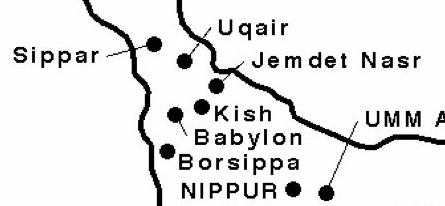
Babylon’s Ever-Shifting Past

Scholarship is always changing the past.

Ur and Har(r)an in Bible and History

Narratives of Genesis are tied up with historical places that carried specific meanings we will miss without some background on those ancient places.


Books Cited

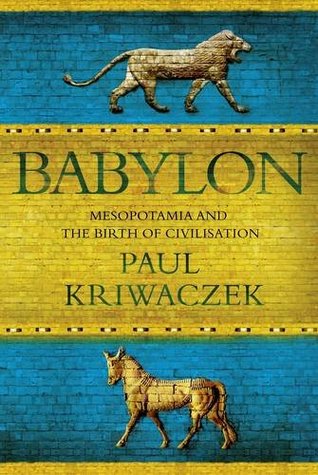
Babylon by Kriwaczek

Paul Kriwaczek. Babylon: Mesopotamia and the Birth of Civilization (NY: St. Martin’s Press, 2010)

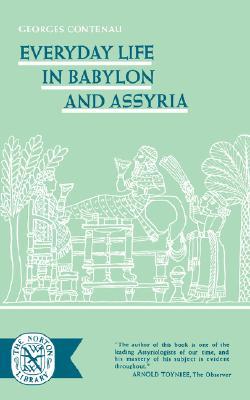
Everyday Life

Contenau, Georges. Everyday Life in Babylon and Assyria (NY: The Norton Library, 1966).

Babylon Complex

Babylon is a surprisingly multivalent symbol in U.S. culture and politics. Erin Runions devotes 300 pages to unpacking…

Israel in Exile (Albertz)

Oft-cited “biblical, historical, literary, and theological masterpiece” exploring the Babylonian Captivity through bible and history.

Song of Exile

Stowe explores Psalm 137 in three parts: History (“…there we sat and wept…”), Memory (“If I forget thee, Jerusalem…”), and Forgetting (“O daughter of Babylon, who art to be destroyed…”) with a strong emphasis on the psalm in music and popular culture.

Israel’s Resistance Poetry

“Israel’s earliest responses to earth-shaking changes were cast in the powerfully expressive language of poetry…”

Belshazzar and the Wall

“Mene, Mene, Tekel” Harold Rome (1908 – 1993), from 25th Anniversary “Pins and Needles” (1962) Zimmers, Tighe E. Lyrical Satirical Harold Rome. Jefferson, NY (McFarland & Company 2014) Obituary NY Times Joe Glazer (1918-2006), from “The Jewish Immigrant Experience” 1989 Glazer, Joe. Labor’s Troubadour. (Urbana, IL: Univ. of Illinois, 2001) Obituary NY Times Lyrics (both … Continue reading Belshazzar and the Wall

The Hebrew Bible (Greenspan)

The Hebrew Bible: New Insights and Scholarship. Jewish Studies in the Twenty-First Century. Greenspan, Frederick E., ed. (NY: NYU Press, 2008) “There has been a veritable revolution, and possibly more than one, in biblical studies over the past generation….questions have led to a dramatic reexamination of the very nature of the biblical account, including both … Continue reading The Hebrew Bible (Greenspan)

Tanakh: An Owner’s Manual

Tanakh: An Owner’s Manual: Authorship, Canonization, Masoretic Text, Exegesis, Modern Scholarship, and Pedagogy. Moshe Sokolow. (NY: Ktav, 2015). Moshe Sokolow, a professor at Yeshiva University, is unapologetic in focusing solely on orthodox scholarship. He mentions the Documentary Hypothesis only in order to explain why and how orthodox scholars responded to it. Nehama Leibowitz stands out … Continue reading Tanakh: An Owner’s Manual

Diaspora Model and Black Theology

In 1973, Charles Shelby Rooks floated the “untested suggestion about a possible new image” for Black Theology: that of an African Diaspora based on the Biblical story of the Babylonian Exile and the final Jewish Diaspora. It is to the end of the Biblical history of Israel that black America must look rather than to … Continue reading Diaspora Model and Black Theology


Related Music

Belshazzar and the Wall

“Mene, Mene, Tekel” Harold Rome (1908 – 1993), from 25th Anniversary “Pins and Needles” (1962) Zimmers, Tighe E. Lyrical Satirical Harold Rome. Jefferson, NY (McFarland & Company 2014) Obituary NY Times Joe Glazer (1918-2006), from “The Jewish Immigrant Experience” 1989 Glazer, Joe. Labor’s Troubadour. (Urbana, IL: Univ. of Illinois, 2001) Obituary NY Times Lyrics (both … Continue reading Belshazzar and the Wall

Zion Songs

Some Songs of Zion and Babylon The Abyssinians “Forward Unto Zion” Bob Marley “Zion Train” Don McLean “Waters of Babylon” The Melodians “Rivers of Babylon” Jimmy Cliff “Bongoman/Rivers of Babylon” Discussion: “A Mountain Called Zion”

More Resources

Oriental Institute

Oriental Institute sponsors excavations and surveys, operates a museum, publishes many resources, and shares materials on-line.

Bible Readers’ Inventories

Many factors influence how we read any document, including — perhaps, especially — the Bible. Spending some time exploring factors that influence our own reading is an important and useful exercise. The complex, multi-faith territory of #ExploringBabylon is just one area in which a good grasp of one’s own filters can be clarifying. Here are … Continue reading Bible Readers’ Inventories


Heart Map Background

Jill K. Berry says the heart map project in her Personal Geographies: Explorations in Mixed-Media Mapmaking was inspired by cordiform maps of the 16th Century and later. (See “Covenant and Liturgy” as well as subsequent posts.)

a tiny bit of background —
In most common maps meridians, lines of longitude, are straight. When meridians are curved, instead, the result is a “cordiform,” or heart-shaped, map. (Read more on pseudoconic projections here.)

Geo Lounge notes that such maps were used in the Renaissance era, and that this was “closely tied to the concept of inner emotions affecting the physical world.” (Citation: Jerry Brotton. A history of the world in twelve maps. New York: Viking, 2013)

Here’s a lovely contemporary example, shared with Creative Commons license:

512px-werner_projection_sw
World Werner Projection. Daniel R. Strebe     CC BY-SA 3.0

“The world on Werner projection. 15° graticule. Imagery is a derivative of NASA’s Blue Marble summer month composite with oceans lightened to enhance legibility and contrast. Image created with the Geocart map projection software.”

Look for more on heart maps as “type your heart out” month continues.

NaBloPoMo NOTE: “A Song Every Day” signed up for National Blog Posting Month, a commitment to daily posting for the month of November. Circumstances intervened on some dates. This post is hereby declared, by way of catching up, the official post of November 6.

Wise Traits

Ancient Jewish thought recognized seven traits of a wise person:

A sage

  1. does not speak before one who is wiser* than he;
  2. does not interrupt the words of his fellow;
  3. does not answer impetuously;
  4. asks relevant questions and gives appropriate answers;
  5. deals with first things first, and last things last;
  6. about something he has not heard he says, “I have not heard”;**
  7. acknowledges the truth.

Pirkei Avot [Verses, or Ethics, of the Fathers] 5:9
This translation is borrowed from the Koren Mesorat HaRav Siddur

This means, Rabbi Adam Scheier said in an essay a few years back:

In other words, a wise person is not only defined by acquired knowledge. A wise person is one with whom it is easy to have a productive conversation; a wise person is thoughtful, responds on topic, is sufficiently open-minded to entertain new ideas; a wise person might even consider the possibility that he or she is wrong.

NOTES

*Many translations say “older and wiser” — Hebrew is “מי שגדל ממנו בחכמה” — with some adding that the “superior one” should speak first.
**Another translation: “admit their ignorance.”

NaBloPoMo NOTE: “A Song Every Day” signed up for National Blog Posting Month, a commitment to daily posting for the month of November. Circumstances intervened on some dates. This post is hereby declared, by way of catching up, the official post of November 5.
BACK

message to the Hebrew

Sandwiched in a Torah portion packed with narrative is “the war of the kings” with Lot’s capture and rescue (Gen. 14). It begins, really, with Abraham and his nephew Lot separating to avoid quarrel over land for cattle herding (Gen. 13). YHVH spoke to Abraham “after Lot had parted from him,” promising “descendants like dust of the earth,” and Abraham dwelt by the oaks of Mamre and built an altar to YHVH.

He is still living by the oaks of Mamre when the fugitive arrives to tell him that his nephew is in trouble, and Abraham sets off to rescue Lot:

And they took Lot, Abram’s brother’s son, who dwelt in Sodom, and his goods, and departed.

And there came one that had escaped, and told Abram the Hebrew [ha Ivri]…”

Does Abraham’s being an “ivri” — a “crosser-over” or “one from the outside” —  have anything to do with expectations about him and his response to Lot’s trouble? Why is this the first time Abraham is called by this name? Does being a Hebrew mean retainining sympathy — and a willingness to help — those on the other side?

NOTE

Lech Lecha (Gen. 12:1-17:27) includes the first “say you’re my sister” incident with Abraham and Sarah (Gen. 12:10-20), the weird episode of the Abraham and the covenant of the pieces (Gen. 15:1ff), and the first installments in the tales of Hagar and Ishmael (Gen. 16, 17:17-27).

BACK

“…I can be wrong”

sometimes I’m right, but I can be wrong

…we got to live together

— Sly and the Family Stone

Everyday People

Two messages from Playing for Change “Songs Around the World” seem in order. If you don’t know this organization, learn and support them — or at least give them a listen….

Sometimes in our lives we all have pain
We all have sorrow
But if we are wise
We know that there’s always tomorrow

— Bill Withers

Lean on Me

Whence have you come?

An angel encounters Hagar in the wilderness (Gen. 16:7). At this point, she has been introduced to us as maid to Sarah, who has been married to Abraham for ten years without producing a child (16:1). We are told that she was given by Sarah “as wife” to Abraham, that she became pregnant, and subsequently, scorned her mistress (“saw her as lightweight”). Sarah then afflicted Hagar, and Hagar ran away. Out in the wilderness, at the spring on the road, the angel speaks to Hagar.

No one in the story has addressed Hagar before this point. And only after the angel’s inquiry does Hagar speak. These obvious, but easily overlooked points are highlighted in Susan Niditch’s notes in The Torah: A Women’s Commentary and led me to marvel at the power of a few words.

With the fall holidays a few weeks behind us at this point, it’s not a bad idea to pause and (re-)consider* the angel’s query ourselves:

Whence have you come and
where are you going?

But we might also ask: How often have we needed someone to simply inquire and listen? How often do we stop to address someone encountered along the way?

*NOTE

For those observing two days of Rosh Hashanah, the story of Hagar is part of the first morning’s Torah reading.

Courageous Thoughts

Let’s return briefly to the questions which plagued author Sebastian Junger, in his suburban Boston youth, and set him a path that eventually led him to write Tribe: On Homecoming and Belonging:

How do you become an adult in a society that doesn’t ask for sacrifice? How do you become a man in a world that doesn’t require courage?
Tribe, p.xiv
(See “Covenant and Liturgy” for full citation and more)

Previous posts explored the concept of “sacrifice” and how it translates into Judaism. Here are a few notes on “courage.”

Ometz Lev

Like “sacrifice,” the word “courage” comes into English from Old French (corage) based on Latin (cor = heart). In Hebrew, the expression is “ometz lev [אַמִּיץ לֵב]” —   “to strengthen or reinforce [ometz]” one’s “heart [lev].”

One Jewish high school offers some useful remarks on how this value [middah] in Judaism might operate at different points in our lives:

Ometz Lev is the courage that allows us to accomplish goals in face of opposition. Often enough, that opposition comes from within us. The need for Ometz Lev (courage/ bravery) is not limited to outward challenges, but also to challenges from within. For example, neurological studies seem to suggest that in comparison to adult brains, adolescent brains have a tougher time maintaining long term focus. Conversely, the middle-aged brain is slower than the adolescent brain in starting a new task. It might take a bit of ometz lev to deal with pushing past natural inclinations.
— from “The Middah of Ometz Lev

Moving Traditions,” another teen-focused program, offers four texts for four types of courage people of all age could profitably consider:

Text #1 The Courage to Be Yourself

When the daughters of Yitro mistakenly called Moses an “Egyptian” Moses kept quiet. This is one of the reasons why he was not allowed into the Promised Land.

Moses cried out to the Holy One: Please, if I cannot enter the land in my life at least let my bones be buried there beside the bones of Joseph.

The Holy One said: Even when Joseph was captured, he said that he was a Hebrew.?But you pretended to be something you are not.

—Tanhuma Buber, 134


Text #2 The Courage to Control Impulses

Ben Zoma taught: Who is mighty? Those who conquer their evil impulse. As it is written: “Those who are slow to anger are better than the mighty, and those who rule over their spirit better than those who conquer a city.”

—Pirkey Avot 4:1


Text #3 The Courage to Question Authority

The finest quality of a student is the ability to ask questions that challenge the teacher.

—Solomon Ibn Gabirol


Text #4 The Courage to Rescue Others

Why do you boast yourself of evil, mighty fellow? (Psalms 52:3). David asked Doeg: “Is this really might, for one who sees another at the edge of a pit to push the other into it? Or, seeing someone on top of a roof, to push the person off? Is this might? When can someone truly be called a ‘mighty person’? When there’s an individual who is about to fall into a pit, and that someone seizes the individual’s hand so that he/she does not fall in. Or, when that someone sees another fallen into a pit and lifts the other out of it.”

—Midrash Tehillim 52:6